


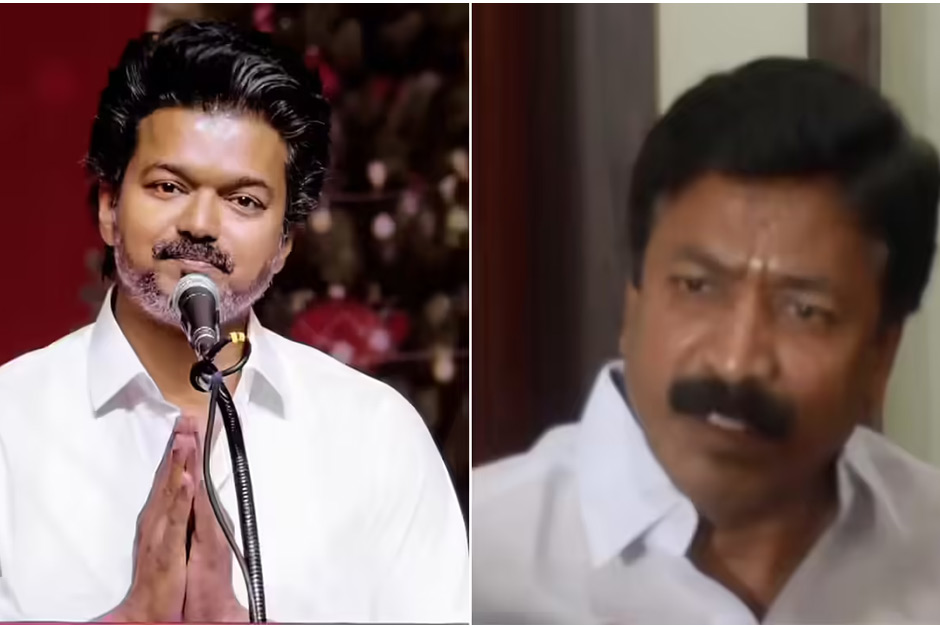
The political landscape of Tamil Nadu is once again abuzz with speculation and strategic warnings, particularly following remarks from senior political figure Shanmugam. His recent statement, urging the Communist Party of India (Marxist) to reconsider its support for the Thanthai Vazhi Katchi (TVK) if the latter opts to induct AIADMK rebels into its cabinet, has sent ripples through the state’s intricate power corridors. This cautionary note underscores the delicate balance of power and the ideological lines that often define alliances in Indian politics.
The Conditional Alliance: A Warning Shot
Shanmugam’s warning comes at a critical juncture, as the TVK navigates the complexities of government formation or consolidation, potentially relying on the crucial support of the CPM. The thrust of his message is clear: the inclusion of disgruntled or defecting members from the All India Anna Dravida Munnetra Kazhagam (AIADMK) into a new TVK-led cabinet would be an unacceptable move for the CPM, potentially forcing the Left party to withdraw its backing. The very premise of his statement suggests a deep understanding of the CPM’s ideological commitments and its historical aversion to what it perceives as opportunistic politics.
Speaking on the evolving scenario, Shanmugam did express a degree of hope, stating, “I think they will not go to that extent.” However, this expression of hope was immediately followed by a stern admonition to the CPM, highlighting the potential consequences should the TVK disregard this implicit boundary. This indicates not just a personal opinion, but a strategic observation of potential alliance fault lines. The induction of ‘rebels’ often signifies a tactical move to bolster numbers or weaken the opposition, but it can also be seen as a compromise on political principles, especially by ideologically driven parties like the CPM.
Unpacking the Political Ramifications
The CPM’s support, whether direct or indirect, is often vital for any coalition government in states like Tamil Nadu, particularly when electoral mandates are fragmented or majorities are thin. For the TVK, securing and maintaining this support is paramount for stability. The CPM, known for its strong stance against political defections and the horse-trading often associated with ‘rebel’ inductions, views such actions through the prism of political morality and commitment to its stated principles. Compromising on these values could alienate its core voter base and dilute its political identity. Therefore, a decision by the TVK to induct AIADMK rebels would put the CPM in a difficult position: either compromise its principles or risk destabilizing the government it supports.
For the TVK, the temptation to include AIADMK rebels might stem from several factors. It could be a strategy to consolidate power, reward new allies, or further weaken the already beleaguered AIADMK by attracting its disillusioned members. However, such a move carries significant political risks. Losing the CPM’s support could either lead to a loss of majority, forcing the TVK to seek new, potentially less stable, alliances, or even triggering a fresh round of political uncertainty. Furthermore, such an induction could also be perceived by the electorate as a sign of political opportunism, potentially eroding public trust.
A Precedent for Instability?
The phenomenon of ‘rebel’ factions and their induction into ruling cabinets is not new to Indian politics. It frequently occurs during periods of coalition formation or when governments seek to enhance their parliamentary strength. However, each instance sets a precedent and reflects on the ethical fabric of political discourse. Shanmugam’s warning serves as a reminder that alliances, especially those involving ideologically distinct parties, are often contingent on mutual respect for certain unwritten rules and principles.
The immediate future for Tamil Nadu’s political landscape now hinges on the TVK’s decision and the CPM’s reaction. Will the TVK prioritize political expediency and numerical strength by inducting the AIADMK rebels, or will it heed the warning and uphold the sanctity of its alliance with the CPM? The choice made by the TVK will not only determine the stability of the nascent government but also set a tone for future coalition dynamics in the state. It highlights the intricate dance between power politics and ideological convictions that continues to shape India’s diverse political narrative.
The coming days are expected to be crucial, with intense negotiations and deliberations likely taking place behind closed doors. Political observers and the public alike will be keenly watching to see whether the TVK chooses to ‘go to that extent’ and what implications that choice will have for the region’s political stability.
The article does not endorse any political party or viewpoint and aims to provide an objective analysis of the reported political developments.

