


Quick Summary
Astronomers have identified an extremely distant galaxy, observed through a gravitational lens, which existed a mere 800 million years after the Big Bang. This discovery offers a crucial look into the universe’s nascent stages.
What Happened
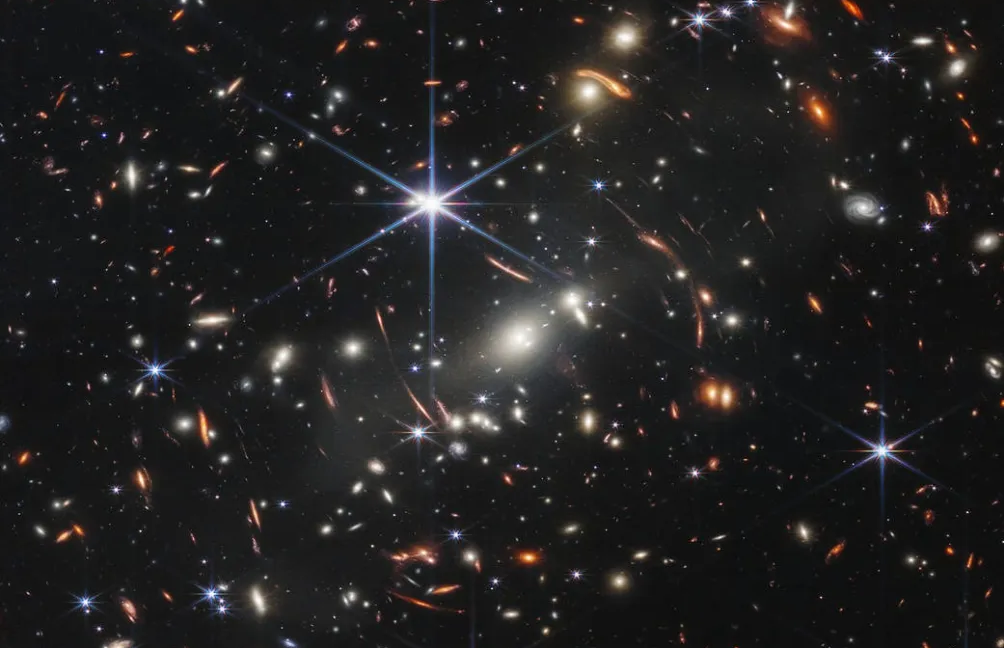
Researchers utilized a massive galaxy cluster acting as a cosmic magnifying glass, or gravitational lens, to detect and amplify light from this ancient galaxy. The lensing effect allowed for detailed analysis of the galaxy’s properties, which would otherwise be too faint to observe.
This early formation challenges existing models of galaxy development in the universe’s infancy, suggesting star formation and structural complexity may have occurred more rapidly than previously thought.
Why It Matters
The detection of a relatively well-developed galaxy so early in cosmic history provides invaluable data for understanding the conditions immediately following the Big Bang. It sheds light on processes like cosmic reionization and the initial assembly of galactic structures.
As one expert remarked, “Seeing a galaxy this evolved so early truly pushes the boundaries of our understanding of cosmic evolution.” This observation helps refine theories about the universe’s first billion years.
Bottom Line
This remarkable finding offers a rare glimpse into the universe’s formative era. It underscores the power of gravitational lensing in uncovering the universe’s deepest secrets, paving the way for a more complete picture of cosmic origins.

