


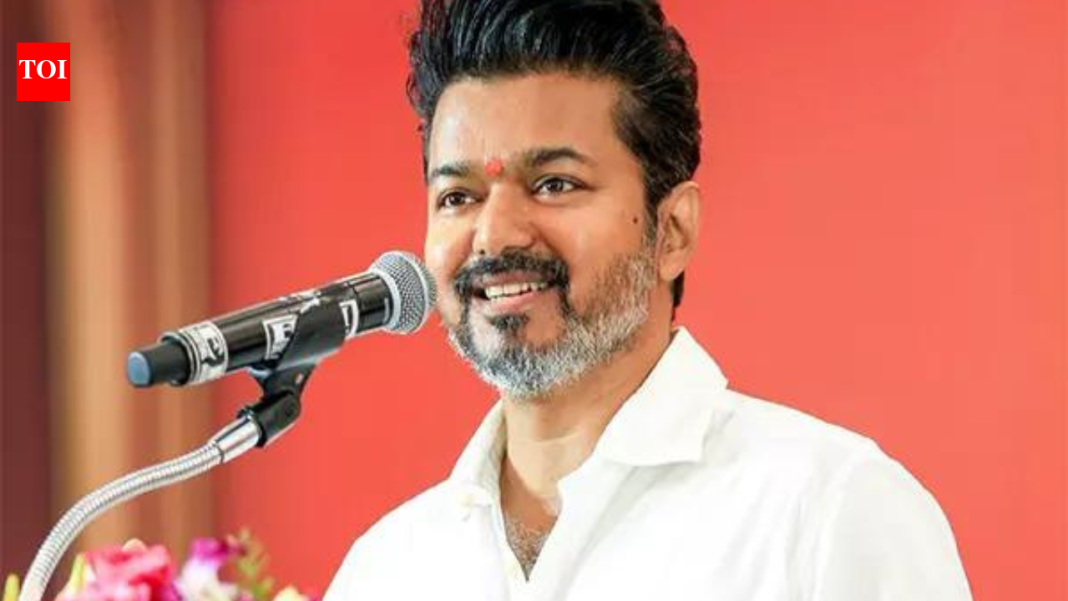
The political landscape of Tamil Nadu has been gripped by an unexpected turn of events following the recent assembly elections. While the much-hyped Tamilaga Vettri Kazhagam (TVK) alliance, led by actor-turned-politician Vijay, emerged as the single largest bloc, it has fallen critically short of the simple majority mark by a mere five seats. This unforeseen outcome has plunged the state into a period of intense political negotiations and, crucially, delayed the much-anticipated oath-taking ceremony of CM-designate Vijay, as his party scrambles to demonstrate a clear majority.
The results, which defied many exit poll predictions, have set the stage for a high-stakes political drama. The initial euphoria among TVK supporters has been tempered by the harsh reality of parliamentary arithmetic, leaving both the party and the state in a state of suspense. The coming days are poised to be a true test of political maneuvering and strategic alliances, as the TVK+ attempts to bridge the deficit and form a stable government.
The Stalled Mandate: A Race for Five Seats
The final tally saw the TVK+ alliance securing a significant number of seats, yet stopping just shy of the crucial 118-seat majority threshold in the 234-member assembly. This razor-thin margin has fundamentally altered the post-election narrative from a triumphant mandate to a frantic search for additional support. The immediate aftermath of the results has seen TVK leaders engaging in frantic parleys, with senior strategists reportedly reaching out to independent candidates and smaller regional parties who have now, inadvertently, become significant power brokers.
The constitutional process dictates that while the Governor invites the single largest party to form the government, the Chief Minister-designate must demonstrate a clear majority on the floor of the House. This prerequisite has become the primary hurdle for Vijay. The delay in his oath-taking is not merely a ceremonial pause but a reflection of the intense, behind-the-scenes negotiations aimed at garnering the necessary numbers. Each independent MLA or leader of a minor party now holds disproportionate leverage, capable of swaying the balance of power. The focus has thus shifted from public rallies and campaign promises to closed-door discussions and delicate political calculations.
Behind Closed Doors: The Art of Coalition Building
The corridors of power in Chennai are abuzz with speculation as TVK strategists work round-the-clock to cobble together the requisite support. The challenge isn’t just about securing five additional votes, but ensuring their stability and loyalty for the long term. This process involves intricate negotiations, potentially involving portfolio promises, developmental commitments to specific constituencies, and assurances regarding policy implementation. The opposition, meanwhile, is keenly observing the developments, hoping for an opportunity to exploit any cracks in TVK’s efforts or to prevent the formation of a stable government.
The state has witnessed such moments of political brinkmanship before, making the current scenario a familiar, albeit intense, chapter in its democratic journey. Political analysts are quick to point out the inherent difficulties of governing with such a slender majority, even if TVK manages to cross the line.
“Forming a government with a majority of just five seats, or even less, can be extremely challenging for stability,” notes Dr. Priya Sharma, a Chennai-based political commentator. “Every legislative decision, every budget session, will be a tightrope walk. The government becomes vulnerable to internal dissent or external pressures, potentially leading to frequent floor tests and administrative instability. Vijay’s true leadership will be tested not just in forming the government, but in sustaining it.”
The ongoing discussions also include weighing the pros and cons of an outright alliance versus securing ‘issue-based’ support, where parties or independents pledge support on a case-by-case basis. Both options come with their own set of complexities and demands, requiring astute political judgment from the TVK leadership.
Governance on Hold: Implications for Tamil Nadu
The delay in government formation has broader implications for Tamil Nadu. A state known for its progressive policies and dynamic administration, Tamil Nadu now faces a period of administrative uncertainty. Key policy decisions might be stalled, budgetary allocations could be delayed, and the implementation of welfare schemes potentially impacted. The public, which voted with high hopes for change and stability, is now watching anxiously as the political drama unfolds.
For CM-designate Vijay, this initial challenge is monumental. His transition from a beloved film star to a political leader with executive power now hinges on his ability to forge consensus and demonstrate a functional majority. The current situation demands not just numerical strength but also a coherent vision for governance that can rally diverse support. The eyes of the entire nation are on Chennai, observing how this critical juncture will shape the future of one of India’s most politically vibrant states. The coming days are pivotal, not only for the TVK+ alliance but for the very democratic fabric and administrative continuity of Tamil Nadu.
The resolution to this political impasse will undoubtedly set a precedent for future coalition politics in the state, underscoring the delicate balance of power inherent in a multi-party democracy.

