


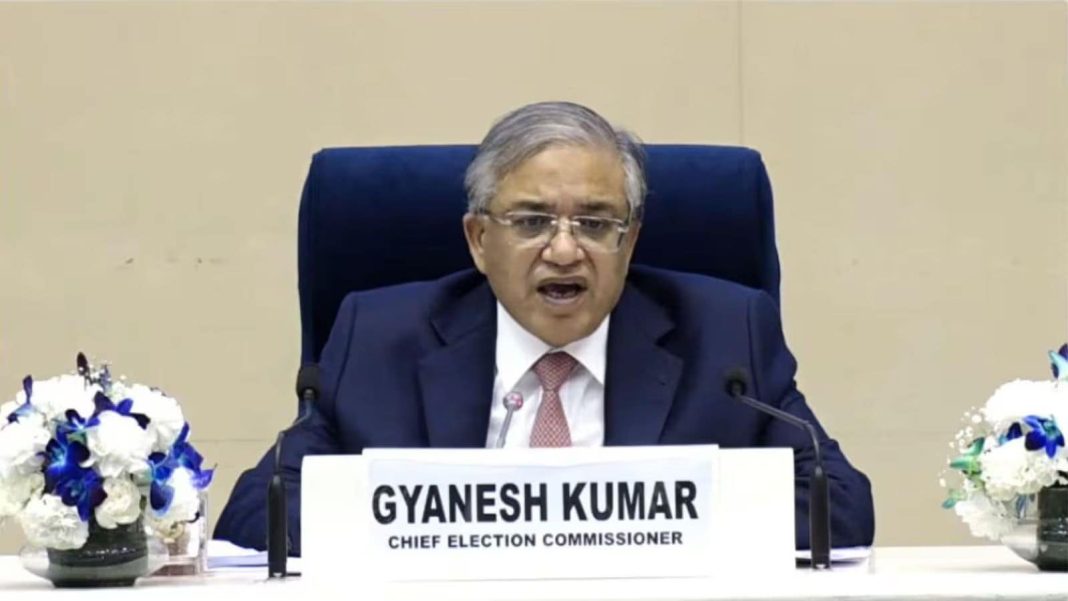
The Election Commission of India (ECI) has announced the commencement of Phase 3 of its Special Summary Revision (SSR) of electoral rolls across 16 states and 3 Union Territories. Set to begin on May 30, this critical exercise aims to update and purify voter lists, ensuring their accuracy and inclusivity ahead of future elections. This initiative underscores the ECI’s continuous commitment to strengthening India’s democratic framework by maintaining a robust and reliable electoral database.
Phase 3: Expanding the Purview of Electoral Integrity
The Special Summary Revision is a periodic and comprehensive process undertaken by the ECI to ensure that the electoral rolls are meticulously updated. Phase 3, following earlier revisions, focuses on integrating newly eligible voters, removing entries of deceased or permanently shifted electors, and correcting any discrepancies. The qualifying date for this phase, typically, is January 1st of the upcoming year, meaning citizens who will turn 18 by that date are encouraged to register.
The process involves a meticulous exercise of inviting claims and objections from the public. During this period, citizens can apply for inclusion in the electoral roll (Form 6), object to the inclusion of a name (Form 7), or request corrections to existing entries (Form 8). Booth Level Officers (BLOs), the grassroots functionaries of the ECI, play a pivotal role, conducting door-to-door verification and assisting citizens with the application process. This multi-layered approach ensures that the electoral rolls reflect the current demographics accurately.
“This phase is crucial for ensuring our electoral rolls are as accurate and inclusive as possible ahead of future elections,” commented a senior ECI official on condition of anonymity. “It’s a continuous commitment to democratic integrity, providing every eligible citizen the fundamental right to vote, and preventing any disenfranchisement or duplicate entries.” This statement highlights the dual objective of the revision: to include all eligible voters and to maintain the purity of the rolls.
Why Electoral Roll Revision Matters for Indian Democracy
The accuracy of electoral rolls forms the bedrock of free and fair elections, a cornerstone of Indian democracy. An outdated or error-ridden voter list can lead to significant issues, including the disenfranchisement of eligible voters, duplicate entries, or the presence of deceased individuals, all of which can compromise the integrity of the election process. Regular revisions, like Phase 3 of the SIR, are therefore indispensable.
For citizens, participating in this revision process is not merely an administrative task but an act of civic responsibility. It empowers them to ensure their names are correctly recorded, enabling them to exercise their franchise. Furthermore, the active participation of the public in identifying errors and submitting claims and objections acts as a crucial check and balance, contributing to the transparency and credibility of the entire system.
The ECI has consistently leveraged technology to streamline this process. Citizens can submit their applications online through the National Voter Service Portal (NVSP) or the Voter Helpline App, in addition to the traditional offline method of submitting physical forms at designated centres. This dual approach aims to maximize accessibility, catering to both digitally literate populations and those who prefer conventional methods.
The widespread coverage of Phase 3, spanning 16 states and 3 UTs, signifies the ECI’s resolve to cover vast geographical and demographic segments of the country. This extensive reach ensures that the benefits of the revision process are accessible to a broad spectrum of the population, from urban centres to remote rural areas.
Conclusion
As Phase 3 of the Special Summary Revision of electoral rolls commences on May 30, it presents a significant opportunity for citizens across the designated states and UTs to actively engage with the democratic process. The Election Commission of India’s proactive measures to update and purify voter lists are fundamental to upholding the integrity and fairness of elections. It is a collective responsibility—from the ECI’s meticulous planning to the citizens’ active participation—to ensure that India’s electoral rolls remain a true reflection of its vibrant democracy, ready for the challenges and opportunities of future polls.
Citizens are strongly encouraged to check their details and participate in the revision process to ensure their electoral rights are secure.

