


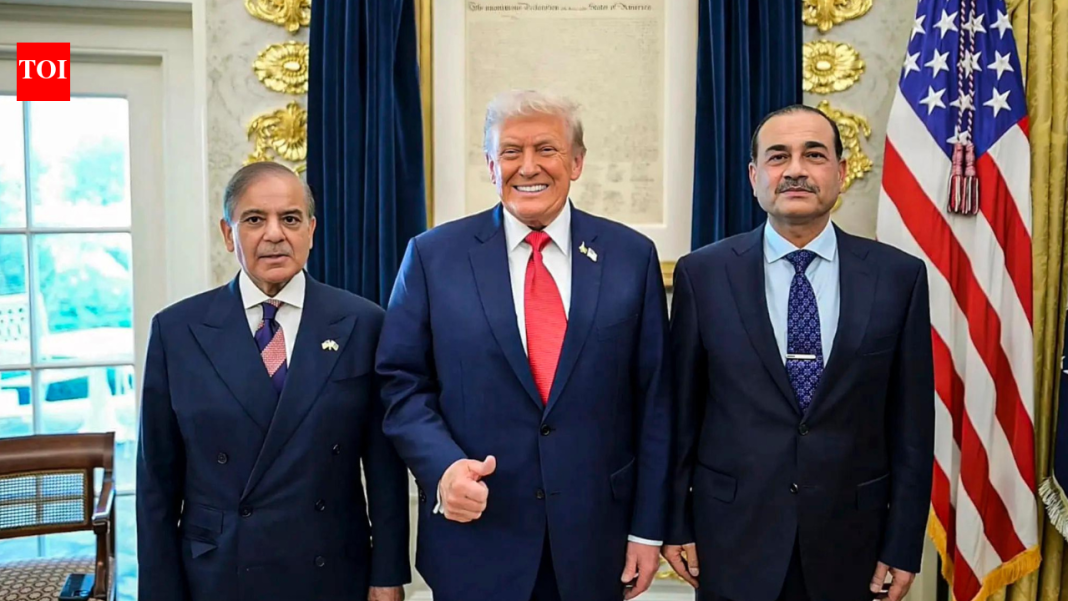
In a geopolitical landscape constantly shifting, remarks from world leaders often send ripples far beyond their immediate context. One such statement, attributed to former US President Donald Trump, has resurfaced and garnered significant attention, particularly in South Asia: “Did it as a favour to Pakistan.” This succinct phrase, reportedly referring to a de-escalation of tensions with Iran during his presidency, has sparked considerable debate, prompting nations like India to carefully assess its implications for regional stability and strategic alliances.
Trump’s alleged comment thrusts Pakistan’s role in high-stakes international diplomacy into the spotlight, suggesting a transactional dimension to its engagement with the United States regarding a critical regional flashpoint. For TrendLyric.com readers, understanding the layers behind this statement is crucial, especially given India’s intricate relationships with all three nations involved – the US, Pakistan, and Iran.
Understanding the Context: The 2020 US-Iran Standoff
The “Iran ceasefire” Trump alluded to likely refers to the de-escalation of tensions between the United States and Iran in early 2020. The period was marked by extreme volatility, following the US drone strike that killed Iranian General Qassem Soleimani in Baghdad, and Iran’s subsequent retaliatory missile attacks on US bases in Iraq. The world held its breath as fears of a full-blown conflict in the Middle East intensified.
During this critical juncture, Pakistan actively positioned itself as a mediator. Then-Foreign Minister Shah Mahmood Qureshi embarked on a diplomatic tour, visiting Tehran, Riyadh, and Washington D.C., attempting to facilitate dialogue and lower temperatures. Islamabad’s stated objective was to prevent a regional conflagration that could have devastating consequences, not just for the Middle East but also for South Asia. Pakistan has historically sought to play a bridging role between various Islamic nations and the West, leveraging its strategic location and diplomatic ties.
It was in this backdrop that Trump’s remarks surfaced, reportedly made during a private interaction and later reported by sources. The specific words, “Did it as a favour to Pakistan,” imply a direct link between US de-escalation policy towards Iran and a strategic benefit or concession extended to Pakistan. This narrative is a significant departure from standard diplomatic rhetoric, where such actions are typically framed in terms of broader national security interests or global peace. For many, it immediately raised questions about the nature of the US-Pakistan relationship and the underlying motives behind foreign policy decisions.
The “Favour” for Pakistan: Strategic Implications
The notion of the US undertaking a significant foreign policy move – easing tensions with a major adversary – as a “favour” to Pakistan carries considerable weight. It suggests a level of trust and strategic alignment that Islamabad has long sought from Washington. Pakistan, a non-NATO ally, has historically been a critical partner for the US in various regional security contexts, from the Cold War to the War on Terror. However, this relationship has often been characterized by periods of mistrust and transactional engagement.
If true, Trump’s statement could signify several things for Pakistan:
- Enhanced Diplomatic Clout: It bolsters Pakistan’s self-perception and international image as a crucial regional player capable of influencing major power dynamics.
- Improved US Relations: It might indicate a renewed appreciation from the US for Pakistan’s strategic utility, potentially leading to better economic or military cooperation.
- Regional Leverage: A perceived US “favour” could give Pakistan additional leverage in its diplomatic engagements with other regional actors, including Iran itself.
However, the statement also risks complicating Pakistan’s delicate balancing act, particularly with Iran. While mediating, Pakistan emphasizes neutrality and brotherhood. If its actions are seen as primarily serving US interests or securing a “favour,” it could undermine its credibility with Tehran, which views US foreign policy with deep suspicion. Furthermore, such a public declaration could be seen by critics as devaluing Pakistan’s independent diplomatic efforts, reducing them to a mere transaction within the US sphere of influence.
India’s Perspective: Navigating a Complex Triangle
For India, Trump’s alleged statement and the underlying dynamics present a complex web of considerations. India has maintained a strategic relationship with Iran, particularly focused on energy security and connectivity projects like the Chabahar Port, which provides India with a vital trade route to Afghanistan and Central Asia, bypassing Pakistan. A perception of stronger US-Pakistan alignment, especially on issues impacting Iran, could introduce new variables into India’s foreign policy calculations.
Firstly, India monitors US-Pakistan relations closely. Any indication of Washington granting Pakistan strategic concessions or elevating its regional role is viewed through the lens of potential implications for India’s security and regional influence. A stronger US-Pakistan axis could embolden Pakistan on certain fronts, or divert US attention from India’s concerns regarding cross-border terrorism.
Secondly, India’s engagement with Iran is nuanced. While aligned with the US on many global issues, India has consistently advocated for diplomatic solutions in the Middle East and maintained its independent relationship with Tehran, despite US sanctions. If the US-Iran de-escalation was indeed tied to a “favour” for Pakistan, it could suggest a more coordinated regional strategy by the US that might not entirely align with India’s independent interests or its desire for stability in the Persian Gulf region, unencumbered by external pressures.
Finally, the statement underscores the volatility of international diplomacy and the need for India to continue strengthening its multi-alignment strategy. New Delhi must adeptly navigate its relationships with the US, Iran, and Pakistan, ensuring its strategic autonomy and safeguarding its national interests amidst evolving geopolitical narratives. The alleged “favour” serves as a reminder that regional power dynamics are perpetually in flux, requiring constant vigilance and proactive diplomacy from India.
The full extent and true motivations behind Trump’s comment may remain subjects of speculation. Nevertheless, its echo reverberates across South Asia, prompting a re-evaluation of alliances, strategic partnerships, and the delicate balance of power that underpins regional stability. For India, the imperative remains clear: to safeguard its interests through robust diplomacy and strategic foresight in an increasingly complex world.

