


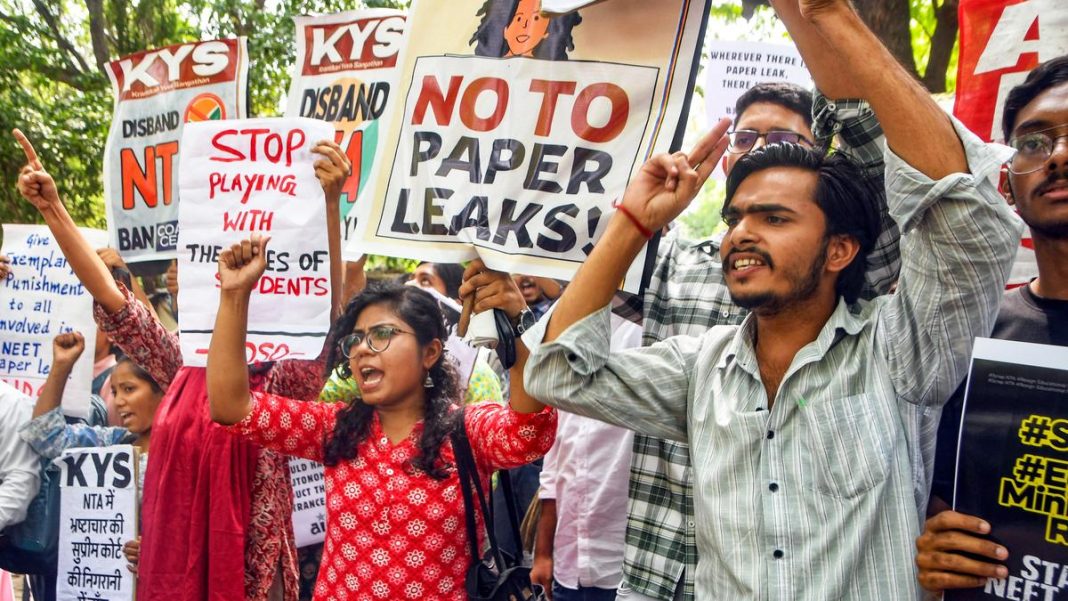
The integrity of India’s highly competitive examination system has once again been cast under a harsh spotlight, as the Central Bureau of Investigation (CBI) announced the apprehension of the alleged mastermind behind a sophisticated plot to leak the NEET-UG 2026 Chemistry paper. This significant breakthrough by the nation’s premier investigating agency sends a strong message to those attempting to subvert the meritocratic framework that millions of aspiring doctors rely upon. The arrest, made after an extensive intelligence operation, has brought a wave of relief, albeit tinged with concern, among students, parents, and educational institutions across the country.
The National Eligibility cum Entrance Test (NEET-UG) stands as a crucial gateway for students aspiring to pursue undergraduate medical courses. Its sanctity is paramount, making any attempt to compromise it a grave offence with far-reaching implications. The CBI’s swift action in identifying and arresting the alleged kingpin, identified as Rakesh Kumar Sharma, a former coaching institute owner with a suspected history of involvement in similar rackets, underscores the persistent threat of organized exam fraud and the unwavering commitment of authorities to combat it.
The Breakthrough: Unraveling a Sophisticated Conspiracy
According to preliminary reports from CBI sources, the arrest of Rakesh Kumar Sharma followed weeks of meticulous tracking, digital forensics, and network analysis. Sharma, 48, was reportedly apprehended in Delhi, where he was allegedly coordinating various aspects of the illicit operation. Investigators revealed that Sharma had established a clandestine network spanning multiple states, leveraging contacts within certain educational circles and utilizing advanced communication tools to solicit potential buyers for the ‘leaked’ paper.
The conspiracy, as unraveled by the CBI, involved claims of possessing the NEET-UG 2026 Chemistry paper far in advance, with an elaborate scheme to distribute it to a select group of students for exorbitant sums. While the CBI has not yet confirmed if the alleged ‘paper’ was indeed the authentic future examination material, or a meticulously crafted fraudulent document designed to deceive, the intent to subvert the examination process is clear. “Our investigation revealed a highly organized syndicate, not merely an individual acting in isolation,” a CBI spokesperson, who preferred anonymity, stated. “Sharma’s modus operandi suggested a deep understanding of examination logistics and a prior experience in orchestrating such scams. This wasn’t a one-off attempt; it was a professional enterprise aiming to compromise a critical national examination.”
The agency’s deep dive into Sharma’s digital footprint and financial transactions is expected to uncover further accomplices and beneficiaries of this alleged fraud. The scale of the operation suggests that Sharma may have been attempting to build a database of potential candidates, promising them access to the paper closer to the examination date, thereby exploiting their desperation and vulnerability.
Implications for NEET-UG and Future Examinations
The alleged attempt to leak a paper for an examination scheduled two years away, NEET-UG 2026, highlights a concerning evolution in exam fraud tactics. It points to a growing trend where unscrupulous elements attempt to establish their credibility and market their illicit services far in advance, creating prolonged periods of anxiety for legitimate aspirants. This incident, even if the material wasn’t authentic, significantly damages public trust in the sanctity of competitive exams.
For millions of students preparing for NEET-UG, such news can be incredibly disheartening. The mental and emotional toll of intense preparation is immense, and the thought that their hard work could be undermined by illicit means is a profound setback. “It’s frustrating to hear about these leaks every few years,” expressed Anjali Singh, a Class 11 student in Lucknow aspiring for NEET-UG. “We study so hard, sacrificing so much, and then these incidents make us question the fairness of the entire system. We just want a level playing field.”
The National Testing Agency (NTA), responsible for conducting NEET-UG, now faces renewed pressure to bolster its security protocols and ensure absolute impermeability. This incident serves as a stark reminder that vigilance must extend beyond the immediate examination cycle, requiring proactive measures to counter sophisticated, long-term plots. Authorities are likely to review existing security frameworks, incorporating advanced anti-leakage technologies and strengthening intelligence-gathering mechanisms to prevent such occurrences in the future. The focus will undoubtedly be on securing every stage of the examination process, from paper creation to distribution.
The Broader Battle Against Exam Fraud
This arrest is a crucial victory in India’s ongoing battle against exam fraud, a pervasive issue that has plagued various competitive examinations for years. The CBI’s consistent efforts, often working in tandem with state police forces, are vital in dismantling these criminal networks. Such incidents reinforce the need for robust legal frameworks, including stricter penalties for those involved in paper leaks and exam malpractice. While the investigation into Rakesh Kumar Sharma’s network is ongoing, his arrest serves as a powerful deterrent, signaling that no perpetrator, however cunning, will evade justice.
The ultimate goal is to restore and uphold the unwavering faith of students and parents in the Indian examination system. Ensuring fairness, transparency, and security in examinations like NEET-UG is not just an administrative task but a fundamental commitment to the future of the nation’s brightest minds. The CBI’s recent success brings hope that with continued vigilance and collaborative efforts, the integrity of India’s competitive landscape can be fully safeguarded.

