


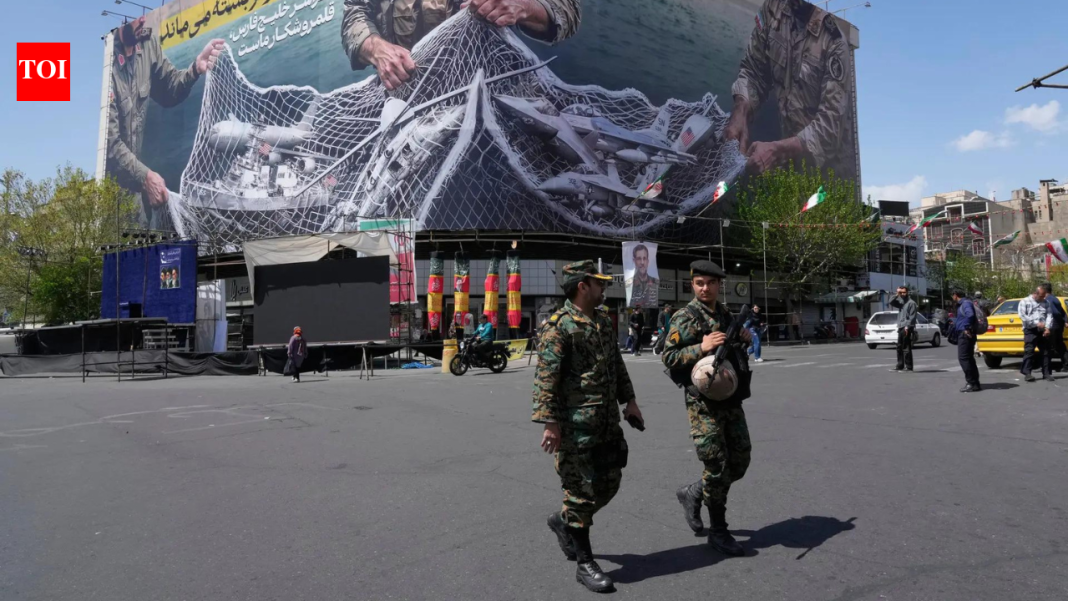
In a development underscoring the persistent diplomatic deadlock between Tehran and Washington, Iran has unequivocally rejected the prospect of a second round of talks with the United States hosted by Pakistan. Citing the ongoing economic “blockade” imposed by the US, Iranian officials have reiterated that without a fundamental shift in American policy, particularly the lifting of sanctions, substantive dialogue remains an impossibility. This rejection, conveyed through state media, not only dampens hopes for de-escalation but also highlights the intricate diplomatic challenges faced by countries like Pakistan attempting to bridge the chasm between the two adversaries. For India, a nation with significant strategic and economic interests in the Gulf region, this continued impasse represents a complex challenge to energy security, connectivity projects like Chabahar, and regional stability.
The Unyielding Stance: Sanctions as the Core Obstacle
At the heart of Iran’s refusal lies the comprehensive sanctions regime reimposed by the US following its unilateral withdrawal from the Joint Comprehensive Plan of Action (JCPOA) in 2018. Tehran views these sanctions, which target its oil exports, banking sector, and various industries, as an economic blockade designed to cripple its economy and force a change in its regional policies. From Iran’s perspective, engaging in talks while under such immense economic pressure would be tantamount to negotiating from a position of weakness, undermining its sovereignty and national interests.
An Iranian diplomatic source, speaking to state media, articulated this position clearly: “The blockade is the main obstacle. Until the oppressive and illegal sanctions are fully lifted, any talks that do not address this fundamental issue are merely a distraction and will not yield any meaningful results. Our position has been consistent: we are open to dialogue, but not under duress and certainly not while our people suffer under unjust economic warfare.” This statement encapsulates Tehran’s primary condition for any meaningful engagement, a condition that the US, under successive administrations, has been unwilling to meet without significant concessions from Iran on its nuclear programme, missile development, and regional proxy activities.
The first round of indirect talks, believed to have taken place earlier, seemingly failed to bridge this chasm. Iran’s rejection signals a hardening of its stance, indicating that mere engagement without a concrete agenda for sanctions relief is insufficient. This creates a difficult environment for any third party seeking to mediate, as the core demands of both sides appear to be mutually exclusive at present.
Pakistan’s Bid for Diplomacy: A Complex Regional Chessboard
Pakistan’s role as a potential host and mediator in US-Iran talks is a reflection of its historical ties with both nations and its strategic location. Islamabad has long maintained diplomatic relations with Tehran, sharing a border and cultural links, while also being a key non-NATO ally of the United States. For Pakistan, facilitating such dialogue could elevate its diplomatic standing, demonstrate its commitment to regional peace, and potentially unlock economic benefits through improved trade and transit routes with Iran.
However, Pakistan’s diplomatic ambitions are navigating a complex regional chessboard. Its own strained relationship with India, its deep strategic partnership with China, and its efforts to project stability in Afghanistan all factor into its foreign policy calculus. While Pakistan sees an opportunity to play a constructive role, the outright rejection from Iran highlights the limitations of its influence when core ideological and geopolitical differences persist. For India, Pakistan’s attempts at mediation are viewed with a cautious eye. While regional stability is a shared interest, India’s own robust and independent engagement with both Washington and Tehran often means it prefers direct diplomacy over third-party interventions, especially from its neighbour.
Wider Ramifications: India’s Stake in a Volatile Gulf
The continued stalemate between the US and Iran carries significant ramifications for the broader West Asian region, and by extension, for India. India relies heavily on the region for its energy needs, with a substantial portion of its oil and gas imports originating from the Gulf. Prolonged tensions and the risk of escalation directly impact global oil prices, posing a threat to India’s economic stability and import bill. Beyond energy, the region hosts millions of Indian expatriates whose remittances are vital to the Indian economy, making their safety and the stability of their host nations a paramount concern for New Delhi.
Furthermore, India’s strategic investment in Iran’s Chabahar Port, envisioned as a vital gateway for trade with Afghanistan and Central Asia, remains vulnerable to the vagaries of US sanctions. While the US has granted some waivers for the Chabahar project due to its humanitarian utility for Afghanistan, the overall environment of sanctions complicates financial transactions and infrastructure development, hindering its full potential. The inability to resolve the US-Iran deadlock therefore directly impedes India’s connectivity ambitions and its strategic outreach in the region.
New Delhi’s foreign policy has consistently advocated for dialogue and de-escalation in West Asia, emphasizing the need for all parties to engage constructively to find peaceful resolutions. The current rejection of talks by Iran underscores the deep-seated mistrust and divergent priorities that must be addressed for any progress to be made. For India, managing its relationships with both the US and Iran requires a delicate balancing act, navigating sanctions regimes while protecting its national interests and promoting regional peace.
The path to reconciliation between Iran and the US remains fraught with obstacles. Iran’s firm stance on sanctions as a prerequisite for meaningful dialogue, coupled with the US’s own strategic demands, creates a persistent diplomatic logjam. While regional actors like Pakistan may offer their good offices, the resolution ultimately hinges on a significant policy shift from one or both of the primary protagonists. Until then, the region, including India, will continue to grapple with the instability and uncertainty generated by this enduring geopolitical rivalry.

