


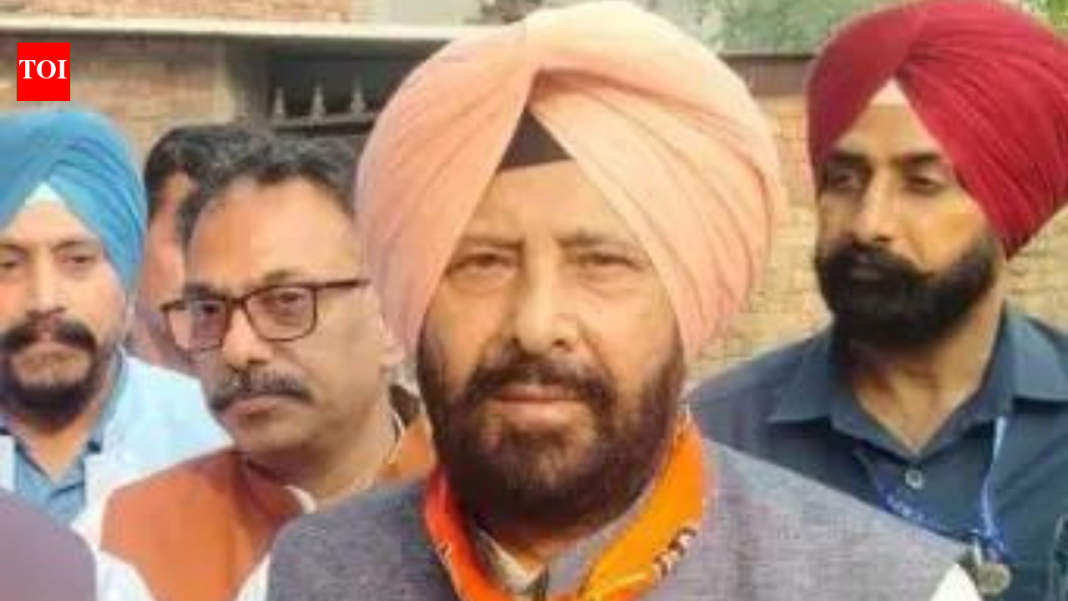
The Bharatiya Janata Party (BJP) recently announced a significant organizational overhaul across four of its state units, a move widely interpreted as a strategic realignment ahead of upcoming electoral battles. Among the most closely watched appointments is that of Kewal Singh Dhillon, a prominent Jat Sikh leader and former Congress strongman, as the new president of the Punjab BJP unit. This decision underscores the party’s intensified efforts to expand its footprint and appeal in a state where it has historically played a junior partner role and faces unique regional challenges.
A Strategic Shift in Punjab Leadership
The appointment of Kewal Singh Dhillon as the Punjab BJP chief is a clear signal of the party’s intent to broaden its appeal beyond its traditional urban Hindu support base. Dhillon, a seasoned politician with a strong presence in the Malwa region, particularly in Barnala, hails from the influential Jat Sikh community. His defection from the Congress party to the BJP in 2022 was already a significant development, and his elevation to the top party post in the state now positions him as a crucial figure in the BJP’s Punjab strategy.
For years, the BJP’s influence in Punjab was largely confined to urban centres and Hindu voters, while its former ally, the Shiromani Akali Dal (SAD), commanded the rural Sikh vote. Following the dissolution of their decades-long alliance over the contentious farm laws, the BJP has been striving to establish an independent identity and expand its rural penetration. Appointing a prominent Jat Sikh face like Dhillon is seen as an attempt to bridge the gap with the dominant agricultural community, which was deeply alienated by the farm laws and their subsequent protests. His leadership could help the party articulate its policies more effectively to a diverse electorate, potentially reshaping the political discourse in the state ahead of the Lok Sabha elections and the subsequent state assembly polls.
A political analyst, preferring anonymity, noted, “These appointments reflect the BJP’s intent to diversify its leadership pool and strengthen regional roots, particularly in states where it seeks to expand its footprint or consolidate its position ahead of crucial electoral battles. The choice of Kewal Singh Dhillon in Punjab is a calculated risk, signaling a direct outreach to a demographic that has traditionally been wary of the BJP’s presence.“
Broader Organizational Realignment Across Key States
Beyond Punjab, the BJP also announced new presidents for its state units in Andhra Pradesh, Telangana, and Jharkhand, each appointment reflecting a tailored strategy to address specific regional political dynamics.
Andhra Pradesh: Leveraging Legacy and Alliance
In Andhra Pradesh, Union Minister and former Congress leader D. Purandeswari has been appointed the new state president, replacing Somu Veerraju. Purandeswari, the daughter of legendary Telugu Desam Party (TDP) founder N.T. Rama Rao, brings with her a significant political legacy and a strong connection to the Kamma community, a powerful caste group in the state. This move is seen as an effort to consolidate support among sections of the electorate, especially given the BJP’s efforts to strengthen its alliance with the TDP and Jana Sena Party in the state. Her experience and stature are expected to provide a more unifying leadership, crucial for navigating the complex political landscape of Andhra Pradesh.
Telangana: Stabilizing Amidst Flux
The BJP’s Telangana unit will now be led by Union Minister G. Kishan Reddy, who replaces Bandi Sanjay Kumar. This change comes after the BJP’s less-than-stellar performance in the recent Telangana assembly elections. Kumar’s tenure was marked by both aggressive campaigning and some controversies. Reddy, a senior and experienced leader with a clean image, is expected to bring stability and a more inclusive approach to the party’s state leadership. His appointment aims to rejuvenate the cadre, resolve internal differences, and prepare the party for the upcoming Lok Sabha elections, where the BJP hopes to improve its tally.
Jharkhand: Consolidating Tribal Base
In Jharkhand, veteran tribal leader and former Chief Minister Babulal Marandi has been appointed as the state unit chief, taking over from Deepak Prakash. Marandi, a prominent figure in Jharkhand politics and one of the architects of the state, is expected to invigorate the party’s tribal outreach. Jharkhand, with its significant tribal population, is a crucial state for the BJP, and Marandi’s leadership aims to consolidate the tribal vote bank, which is currently largely swayed by the Jharkhand Mukti Morcha (JMM) and Congress alliance. His experience and deep understanding of the state’s socio-political fabric are vital as the party prepares for both the Lok Sabha and state assembly elections.
These organizational changes collectively highlight the BJP’s proactive approach to refining its leadership and electoral strategies across diverse states. By appointing leaders who bring specific regional strengths, community appeal, or a reputation for stability, the party aims to address local challenges, consolidate its base, and position itself strongly for the critical elections on the horizon. The effectiveness of these rejigs, particularly Kewal Singh Dhillon’s challenge in Punjab, will be keenly observed as India inches closer to the next round of democratic contests.

