


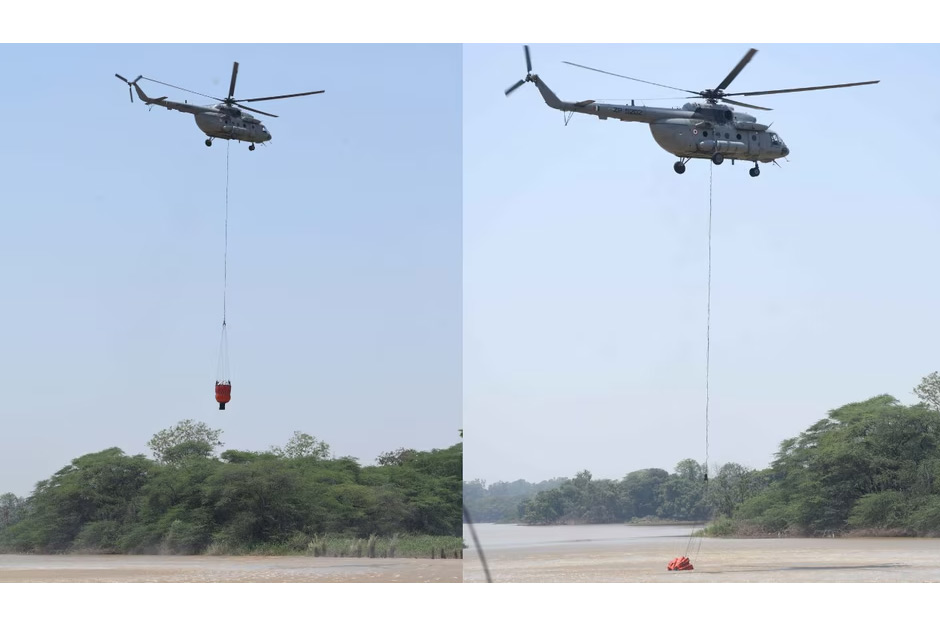
The serene, pine-clad hills of Kasauli, Himachal Pradesh, have been engulfed in a fierce battle against nature as massive forest fires continue to rage, leaving a trail of devastation and prompting an urgent call for specialized assistance. With ground efforts proving challenging, the Indian Air Force (IAF) has stepped in, deploying its formidable ‘Bambi bucket’ operations to douse the inferno from above. This critical intervention comes amidst preliminary estimates of losses soaring to approximately ₹67 lakh, highlighting the severe economic and ecological toll inflicted upon the region. The crisis underscores the escalating vulnerability of India’s forest ecosystems to climate-induced arid conditions and human activities.
IAF Deploys ‘Bambi Buckets’ Amidst Raging Inferno
The relentless forest fires in Kasauli, particularly in areas like Mandodhar and near the Air Force Station, necessitated a strategic and powerful response beyond the capabilities of conventional ground teams. Responding to a request from the Himachal Pradesh government, the Indian Air Force launched ‘Bambi bucket’ operations, deploying Mi-17 helicopters to undertake aerial firefighting. These specially designed flexible containers, capable of carrying thousands of litres of water, are slung beneath helicopters and precisely discharged over active fire zones.
The Mi-17 helicopters, known for their versatility and robust performance in challenging terrains, have been repeatedly ferrying water from nearby sources, meticulously targeting hotspots inaccessible to ground personnel. The dense smoke, treacherous slopes, and strong winds have made the task immensely difficult, yet the IAF pilots have demonstrated exceptional skill and precision. This aerial assault is crucial for creating fire lines and containing the spread, particularly as the blaze threatens residential areas, military installations, and vital communication infrastructure. The coordinated efforts between the IAF, the State Disaster Response Force (SDRF), Forest Department, and local volunteers are a testament to India’s unified approach to disaster management.
Mounting Losses and Ecological Impact
The financial repercussions of the Kasauli fires are already substantial, with initial estimates placing losses at a staggering ₹67 lakh. This figure encompasses the destruction of valuable timber, minor forest produce, damage to public and private property adjacent to the forests, and the significant costs associated with the extensive firefighting operations. However, the monetary loss only tells part of the story; the ecological devastation is profound and far-reaching.
Thousands of acres of pristine forest cover, home to diverse flora and fauna, have been reduced to ashes. The loss of vegetation leads to severe soil erosion, particularly critical in hilly regions, increasing the risk of landslides during the upcoming monsoon season. Air quality in the region has deteriorated significantly due to the smoke and particulate matter, posing health risks to residents. The fires have also displaced countless wildlife, forcing them to seek refuge in unfamiliar territories, often leading to human-animal conflict. Dr. Rakesh Kumar, an environmental scientist at Himachal Pradesh University, emphasized the long-term consequences, stating, “These fires don’t just consume trees; they destroy entire micro-ecosystems, disrupt hydrological cycles, and release massive amounts of carbon into the atmosphere. The recovery of such complex ecosystems can take decades, if not centuries.” The loss of biodiversity, including rare medicinal plants and indigenous species, represents an irreplaceable void in the region’s natural heritage.
Beyond Kasauli: A Recurring Challenge for Himachal
The Kasauli forest fire, while devastating, is unfortunately not an isolated incident but rather a stark reminder of a recurring environmental challenge confronting Himachal Pradesh. The state, renowned for its lush green landscapes, has witnessed a concerning increase in the frequency and intensity of forest fires in recent years. Factors contributing to this alarming trend include prolonged dry spells, unseasonal high temperatures attributed to climate change, and various human activities.
Negligence, such as discarded cigarette butts, unattended campfires, and intentional burning of agricultural waste, often triggers these blazes. Arson, too, remains a significant concern in certain areas, driven by various motives. The Forest Department, despite its continuous efforts to create fire lines, conduct awareness campaigns, and deploy ground teams, often finds its resources stretched thin during peak fire season. The escalating scale of these fires necessitates a multi-pronged approach involving enhanced surveillance, stricter enforcement against incendiary practices, community engagement in fire prevention, and further investment in modern firefighting technologies, including an expansion of aerial capabilities.
Conclusion
The battle against the Kasauli forest fires is far from over, but the combined efforts of the Indian Air Force, state agencies, and local communities offer a glimmer of hope amidst the devastation. The ‘Bambi bucket’ operations are a critical intervention, demonstrating the nation’s resolve to protect its natural assets. However, the ₹67 lakh loss and the extensive ecological damage serve as a sobering reminder of the urgent need for both immediate response and proactive, long-term strategies. Addressing the root causes of these fires, from climate change mitigation to community-level awareness and sustainable forest management, is paramount to safeguarding Himachal Pradesh’s invaluable green cover for future generations. The resilience of the region will ultimately depend on a concerted, collaborative effort to prevent, prepare for, and ultimately recover from such catastrophic events.

