


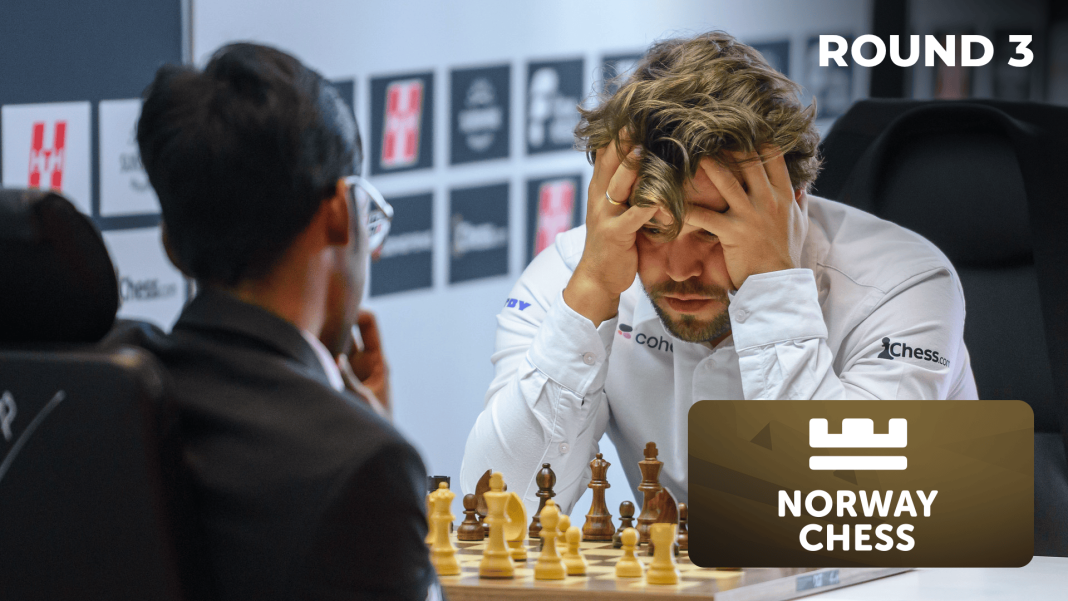
The global chess fraternity watched with bated breath as Round 3 of the prestigious Norway Chess 2026 tournament delivered a stunning upset. In a dramatic turn of events that saw World No. 1 Magnus Carlsen unravel from a dominant position, India’s teenage Grandmaster R. Praggnanandhaa, affectionately known as Pragg, secured a historic victory. This win not only adds another feather to the cap of the rapidly rising Indian chess star but also sent ripples through the tournament standings, proving once again that even the greatest masters are susceptible to pressure and miscalculation.
The Battle of Minds: Carlsen’s Early Dominance
The much-anticipated clash between the reigning World Champion, Magnus Carlsen, and the young Indian prodigy began with a palpable tension. Carlsen, known for his relentless positional squeeze and exceptional endgame technique, opened with his characteristic precision. Playing with the white pieces, he steered the game into a complex Queen’s Gambit Declined variation, an opening where his strategic prowess often shines. From the early middlegame, Carlsen meticulously built a significant advantage, demonstrating his unparalleled understanding of the board.
Praggnanandhaa, unfazed by the formidable opponent across the board, played a remarkably resilient game. Despite facing consistent pressure and a worsening position, the Chennai-born GM defended with tenacity, seeking any glimmer of counterplay. Spectators and commentators alike noted Pragg’s composure under fire, a hallmark of his growing maturity on the elite circuit. Carlsen, meanwhile, seemed to be consolidating his lead, his moves radiating confidence as he pushed closer to what appeared to be an inevitable victory. The engines, at one point, favored Carlsen with a substantial +4 advantage, indicating a near-decisive edge.
A Shocking Turn: Carlsen’s Self-Destruction
The chess world held its breath as the game approached its critical phase. Carlsen, seemingly in full control and heading towards a routine conversion, initiated a series of moves designed to finish off his opponent. However, under the lingering pressure from Pragg’s steadfast defense, Carlsen made an uncharacteristic miscalculation. In what can only be described as a moment of bewildering self-destruction, the Norwegian maestro, rather than simplifying to a winning endgame, overlooked a critical tactical nuance. This allowed Praggnanandhaa to suddenly equalize the position and, with an incredibly precise series of moves, turn the tables entirely.
The shift was sudden and dramatic. Carlsen’s winning advantage evaporated, replaced by a precarious situation for the World Champion. The blunder, reportedly a deep positional oversight in a seemingly simple sequence, shocked observers. Praggnanandhaa, seizing the opportunity with the alertness of a seasoned grandmaster, capitalized ruthlessly. He executed a flawless tactical sequence, exploiting Carlsen’s now vulnerable king position and material imbalances. The decisive moment saw Carlsen resign, acknowledging his position was beyond repair. The silence in the playing hall was broken only by a collective gasp from those following the live broadcast.
“It was an incredibly tense game,” Praggnanandhaa reportedly commented after the match, a subtle smile betraying his usual calm demeanor. “Magnus played very strongly for a long time, and I was just trying to stay in the game. When the opportunity came, I tried my best to seize it. You don’t get many chances against someone like Magnus.”
Implications for Indian Chess and Pragg’s Ascent
This victory marks a significant milestone for Praggnanandhaa, further solidifying his position as one of the most exciting talents in global chess. For India, this win is more than just an individual triumph; it underscores the country’s burgeoning dominance in the chess world. With a growing roster of young grandmasters like Gukesh D, Arjun Erigaisi, and Vidit Gujrathi, Pragg’s win against the legendary Carlsen serves as an immense source of inspiration for countless aspiring chess players across the subcontinent.
Pragg’s journey from a prodigy in Chennai to a regular challenger for the world’s best is a testament to his dedication and the robust chess ecosystem developing in India. His calm demeanor and sharp tactical vision, evident in this epic encounter, suggest that this is just one of many great achievements yet to come. The Norway Chess 2026 tournament is still in its early stages, but Praggnanandhaa has already etched his name into its history with a performance that will be discussed for years.
The chess world now eagerly awaits Pragg’s next moves, watching to see how he builds on this monumental win. His victory against Magnus Carlsen, born from the World Champion’s rare misstep, is a powerful reminder of chess’s unpredictable nature and the relentless rise of India’s chess prodigies.

