


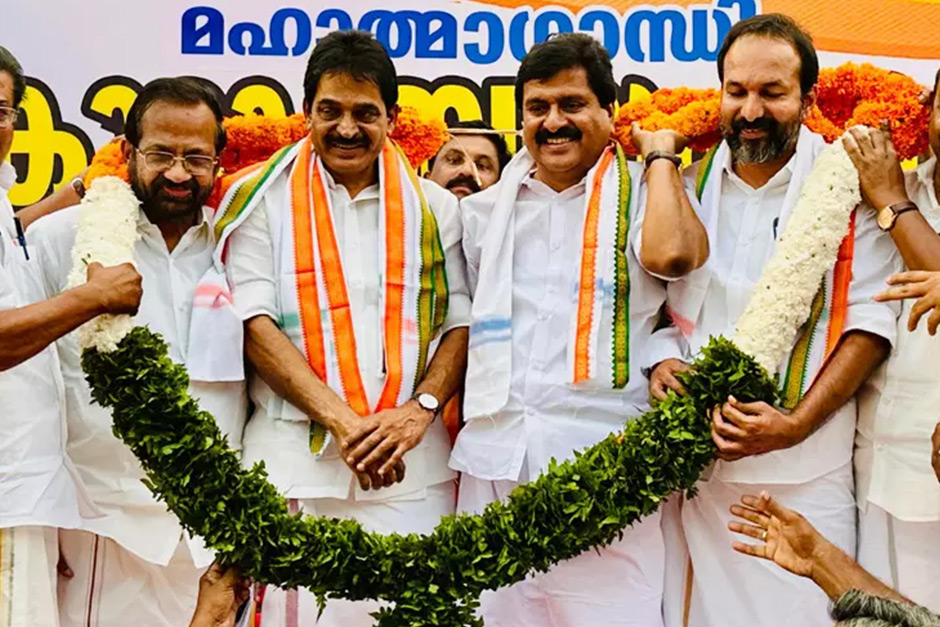
As the political landscape in Kerala buzzes with anticipation following the Lok Sabha elections, exit poll projections have ignited a fresh wave of discussion. The United Democratic Front (UDF), primarily spearheaded by the Indian National Congress, is widely projected to secure a significant majority of the 20 parliamentary seats in the state. While these projections offer a glimpse into the electorate’s mood, they have also thrust a pivotal question into the spotlight: Could Congress’s national General Secretary (Organisation), K.C. Venugopal, emerge as a potential chief ministerial candidate for the state in the future?
This speculation, though premature in the absence of a state assembly election, underscores the weight of a strong Lok Sabha performance and the perpetual search for a unifying, strong leader within the Kerala Congress. Venugopal, a powerful figure within the All India Congress Committee (AICC), represents a critical strategic asset for the party, both nationally and potentially, regionally.
UDF’s Projected Ascent and Its Implications
Kerala, a state renowned for its politically conscious electorate, has historically swung between the UDF and the Left Democratic Front (LDF). The current Lok Sabha exit poll trends suggest a significant tilt towards the UDF, a narrative largely attributed to factors such as anti-incumbency against the LDF state government, national sentiments, and the Congress’s consistent outreach. This projected strong showing by the UDF is not merely about parliamentary seats; it is widely seen as a crucial barometer for the political direction of the state, potentially setting the stage for the next assembly elections.
A resounding victory in the Lok Sabha polls could inject fresh vigour into the UDF cadre and solidify its position as the dominant force, at least in the interim. Such a mandate would naturally empower the front to contemplate its future leadership, especially as the memory of stalwarts like Oommen Chandy looms large, leaving a vacuum that many believe needs a strong, decisive leader to fill.
The KC Venugopal Conundrum: National Stature vs. State Leadership
K.C. Venugopal’s name surfacing in these chief ministerial discussions is hardly surprising, yet profoundly complex. As the AICC General Secretary (Organisation), he holds one of the most powerful positions within the Congress party nationally. His proximity to the high command, strategic acumen, and experience in managing intricate party affairs across various states make him a formidable figure. Having served as a Union Minister and a multi-term MP and MLA from Kerala, Venugopal possesses a deep understanding of both state and national politics.
The core of the “K.C. Venugopal as CM” question lies in a delicate balance. Would the Congress high command be willing to release such a vital national organiser to take on a state leadership role? Conversely, would Venugopal himself be inclined to leave the national stage for state politics? Sources within the party indicate a recognition of his organisational prowess but also acknowledge the fierce competition and established leadership aspirants within Kerala Congress, such as V.D. Satheesan and Ramesh Chennithala, who have been frontrunners in state politics for years. The move would undoubtedly signal the high command’s desire for a firm grip on the state, but it could also ruffle feathers among existing power centres.
As a political observer in Thiruvananthapuram noted, “‘Venugopal’s name emerging underscores the Congress High Command’s desire for a strong, stable leadership in a crucial state, but it also highlights the challenge of balancing national responsibilities with regional aspirations.‘
Navigating Internal Dynamics and Future Calculations
The Kerala Congress is known for its intricate internal dynamics, with various factions and leaders vying for prominence. The post-Oommen Chandy era has necessitated a re-evaluation of leadership structures, and a strong electoral performance could intensify these internal debates. If the UDF secures a commanding lead in the Lok Sabha polls, it will provide a significant psychological boost, but also bring to the fore the tough decisions regarding future leadership. The choice of a Chief Minister for a prospective UDF government in the assembly elections would require careful consideration of caste, community, regional balance, and most importantly, the ability to unite disparate factions.
For Congress, selecting a leader who can not only consolidate its traditional vote base but also attract new demographics, while effectively countering both the LDF and the Bharatiya Janata Party’s growing, albeit still nascent, presence in the state, is paramount. The speculation around K.C. Venugopal is a testament to his standing and the party’s perceived need for a strong hand, but the path to state leadership is paved with intricate political calculations and the navigation of deeply entrenched interests.
The strong performance projected for the UDF in the Lok Sabha exit polls has undoubtedly sparked a crucial conversation about the future leadership of the Congress in Kerala. While the official results are still awaited, and a state assembly election is a considerable time away, the emergence of K.C. Venugopal’s name as a potential Chief Ministerial candidate underscores the complex interplay between national strategy and regional aspirations within India’s oldest political party. The coming months will reveal how the Congress plans to leverage its projected success and what strategic shifts, if any, it might consider for its leadership in the southern state.

