


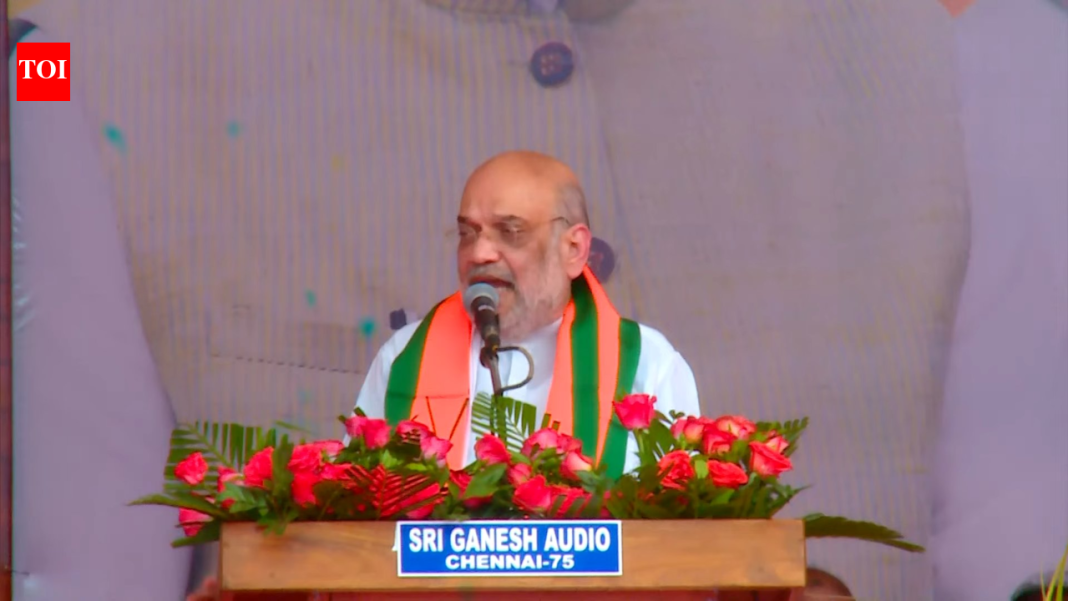
As the dust settles on a fiercely contested Lok Sabha election, the political spotlight in India has once again swivelled towards West Bengal. While the Trinamool Congress (TMC) largely maintained its dominance, the Bharatiya Janata Party (BJP) demonstrated its formidable presence, securing a significant number of seats. Now, with the national government formed, attention within the BJP’s West Bengal unit, and indeed across the state, shifts to the crucial decision of selecting a new Chief Minister face and reconstituting the party’s state cabinet. And at the heart of this pivotal choice, guiding the strategy and weighing the myriad factors, is Union Home Minister Amit Shah.
Shah, often dubbed the BJP’s master strategist, has historically played a central role in shaping the party’s state leadership across the country. His involvement underscores the high stakes the BJP places on West Bengal, viewing it as a critical frontier for its expansion plans. The anticipation is palpable, not just among party cadres but also across the state’s political landscape, as everyone awaits the blueprint for the BJP’s next chapter in Bengal under a potentially new leadership team.
The Post-Poll Landscape and BJP’s Ambitions
The recent Lok Sabha elections provided a mixed bag of results for the BJP in West Bengal. While the party couldn’t replicate its stellar 2019 performance, it managed to hold its ground in several key areas and even made inroads in others, indicating a strong anti-incumbency sentiment against the TMC in pockets. The BJP’s consistent presence, despite the TMC’s formidable organisational strength, confirms its status as the principal opposition and a serious contender for power in the 2026 Assembly elections.
This context makes the selection of the new Chief Minister face and cabinet members incredibly significant. It’s not merely about filling posts; it’s about signaling intent, projecting a strong, unified image, and addressing the diverse aspirations of Bengal’s electorate. The BJP needs a leader who can not only galvanise the party base but also appeal to a broader section of voters – cutting across caste, community, and regional lines. The new leadership will be tasked with consolidating the gains made and building momentum towards the next assembly polls, a challenge that requires both strategic acumen and grassroots connect.
Shah’s Strategic Mandate and the Selection Process
Amit Shah’s deep understanding of state-level politics and his reputation for meticulous planning mean that the selection process will be anything but arbitrary. His mandate will likely involve a careful evaluation of several factors: the candidate’s administrative experience, their appeal across different regions of West Bengal, their ability to counter the TMC’s narrative, and their loyalty to the central leadership’s vision. Furthermore, balancing various factions within the state unit and ensuring adequate representation for Scheduled Castes, Scheduled Tribes, and Other Backward Classes will be crucial.
The choice will inevitably send a strong message about the BJP’s long-term strategy for West Bengal. Will it be a fresh face, a seasoned politician, or someone with a strong ideological grounding? Each choice carries its own set of advantages and challenges. The cabinet formation will equally reflect this strategy, with portfolios allocated to ensure a blend of experience, youth, and representation, aiming to create a cohesive and effective team.
“The decision will be a finely calibrated one,” observes Dr. Pronab Sen, a Kolkata-based political analyst. “Shah is known for his strategic foresight. He will look for a leader who can not only manage the state unit effectively but also present a credible alternative narrative to the TMC, connecting with Bengal’s unique cultural and political sensibilities. It’s a chess move with the 2026 Assembly elections clearly in mind.” This quote encapsulates the strategic depth expected from Shah’s involvement.
Implications for Bengal and National Politics
The choice of the new Chief Minister and the composition of the cabinet will have profound implications, both within West Bengal and for the BJP’s national political trajectory. A strong, effective state leadership could rejuvenate the BJP’s cadre, strengthen its organisational structure, and help it address the local issues that resonate with Bengali voters. Conversely, a misstep could lead to internal discord and provide ammunition to the TMC.
For national politics, West Bengal remains a significant state. The BJP’s performance here is often seen as a barometer of its ability to penetrate diverse regions and expand beyond its traditional strongholds. The new leadership will face the formidable task of combating the TMC’s deeply entrenched political machinery, tackling issues like state finances, employment, and law and order, while also ensuring central government schemes reach the populace effectively. The stage is set for a significant realignment within the West Bengal BJP, with all eyes firmly on the decisions emanating from the party’s central leadership, spearheaded by Amit Shah.
As West Bengal awaits these crucial announcements, the political mercury continues to rise. The decisions made in the coming weeks will undoubtedly shape the political narrative of the state for years to come, determining the BJP’s path forward in its quest to establish a stronger foothold in this culturally rich and politically vibrant state.
*

