


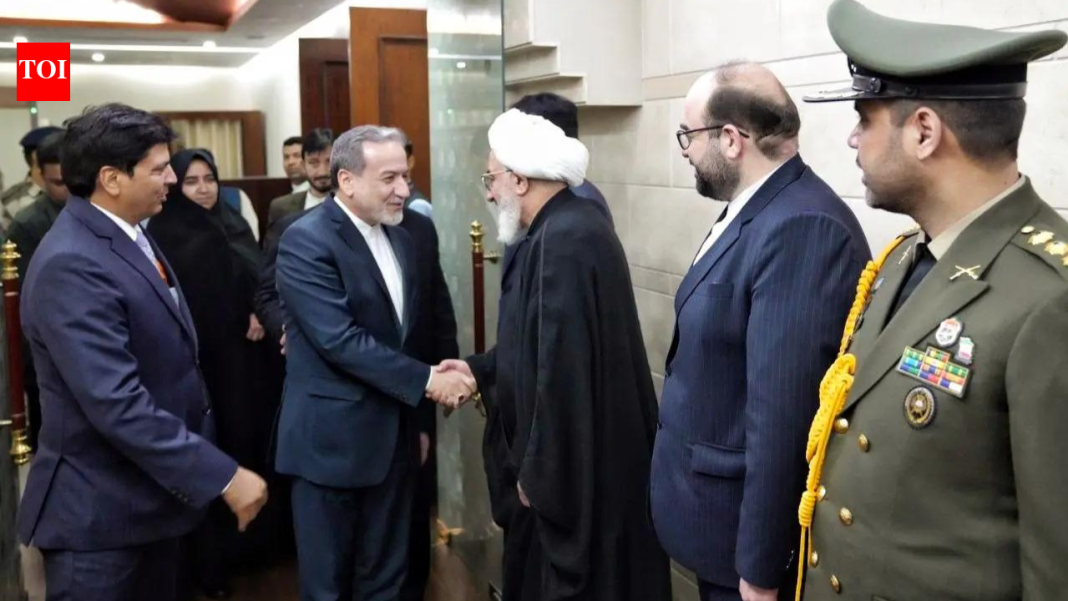
The upcoming BRICS summit in South Africa is drawing global attention, not just for its economic agenda but also for the intricate geopolitical currents swirling around potential expansions. Amidst this backdrop, Iran has voiced strong accusations against the United Arab Emirates (UAE) for allegedly hindering consensus on its BRICS membership bid. Paradoxically, Tehran has simultaneously signalled a significant opening for India, promising to facilitate increased passage for Indian commercial vessels. This dual development presents a fascinating study in regional diplomacy, with profound implications for India’s strategic and economic interests.
Iran’s BRICS Ambitions and Regional Friction
Iran has actively pursued BRICS membership, viewing it as a crucial platform to diversify its economy, circumvent Western sanctions, and assert geopolitical influence. The Islamic Republic’s recent statement, blaming the UAE for a perceived lack of consensus among existing BRICS members, highlights the complexities of the bloc’s expansion agenda. While specific details of the UAE’s alleged obstruction remain undisclosed, the accusation points to underlying regional rivalries that often spill over into multilateral forums.
The UAE and Iran have long had a fraught relationship, marked by disputes over Persian Gulf islands, ideological differences, and divergent regional strategies. The Abraham Accords, which saw the UAE normalize ties with Israel, further complicated this dynamic, creating new alignments in the Middle East. For Iran, BRICS membership is a strategic imperative to counter U.S. dominance and strengthen ties with major non-Western economies like China, Russia, and India. Any perceived block by a regional rival would naturally draw strong condemnation.
India, a founding BRICS member, generally supports expansion, advocating a merit-based approach. However, it also maintains robust diplomatic and economic ties with both Iran and the UAE, requiring a delicate balance. The BRICS consensus rule means even one dissenting voice can halt expansion, making Iran’s public accusation particularly significant as the summit approaches.
A Strategic Opening for Indian Maritime Trade
Amidst the diplomatic spat, Iran has extended a significant olive branch to India, expressing willingness to allow more Indian commercial vessels to traverse its waters. This move, primarily aimed at boosting bilateral trade and connectivity, holds immense strategic value for New Delhi. Iran’s Chabahar Port, developed with significant Indian investment, is a cornerstone of India’s vision for connecting with Afghanistan and Central Asian markets, bypassing Pakistan. Increased vessel access means smoother, faster, and more cost-effective transit for Indian goods, enhancing the port’s viability and utility.
“This Iranian overture isn’t just about trade logistics; it’s a clear signal of Tehran’s strategic priority for India, especially as it seeks reliable economic partners amidst global pressures,” commented Dr. Rohan Sharma, a maritime affairs analyst based in Mumbai. “For India, it reinforces the value of its sustained engagement with Iran, providing a crucial maritime corridor that underpins our broader connectivity initiatives.”
The decision is expected to streamline cargo movement, benefiting Indian exporters and importers reliant on the INSTC (International North-South Transport Corridor) and other regional trade routes. By facilitating smoother maritime passage, Iran not only strengthens its economic partnership with India but also leverages India’s position as a key player in the Indo-Pacific, potentially balancing some regional power dynamics. This development underscores the pragmatic approach of both nations in fostering mutually beneficial relationships despite broader geopolitical complexities.
India’s Delicate Balancing Act
This dual narrative places India in a familiar yet increasingly intricate position: balancing its strategic interests with multiple regional partners. New Delhi enjoys a robust partnership with the UAE, a critical source of energy, a major trade destination, and home to a large Indian diaspora. Simultaneously, its long-standing relationship with Iran is vital for energy security, regional connectivity, and its outreach to Central Asia. Managing the friction between these two important West Asian nations requires astute diplomacy.
India’s foreign policy consistently champions strategic autonomy, seeking partnerships based on national interests rather than aligning with specific blocs. In the context of BRICS expansion, India’s support for a structured, consensus-based process allows it to advocate for its partners without alienating others. The enhanced maritime access from Iran further solidifies India’s independent foreign policy trajectory, demonstrating New Delhi’s ability to cultivate strong bilateral ties even when regional rivalries run high. As the BRICS summit nears, India’s diplomatic agility will be closely watched, particularly in how it navigates the competing aspirations of its partners in a rapidly evolving global landscape.
The prelude to the BRICS summit is marked by a complex interplay of regional rivalries and strategic realignments. Iran’s accusation against the UAE concerning its BRICS bid, juxtaposed with its significant concession for Indian vessels, highlights the intricate web of diplomacy in West Asia. For India, these developments underscore the importance of its multi-faceted foreign policy – one that prioritises connectivity, economic interests, and strategic partnerships, all while navigating a volatile geopolitical environment. As global powers convene in South Africa, India’s ability to balance these relationships will be a testament to its growing diplomatic influence and pragmatic approach to international relations. The path forward for both BRICS expansion and regional stability will undoubtedly be shaped by such delicate, yet impactful, interactions.

