


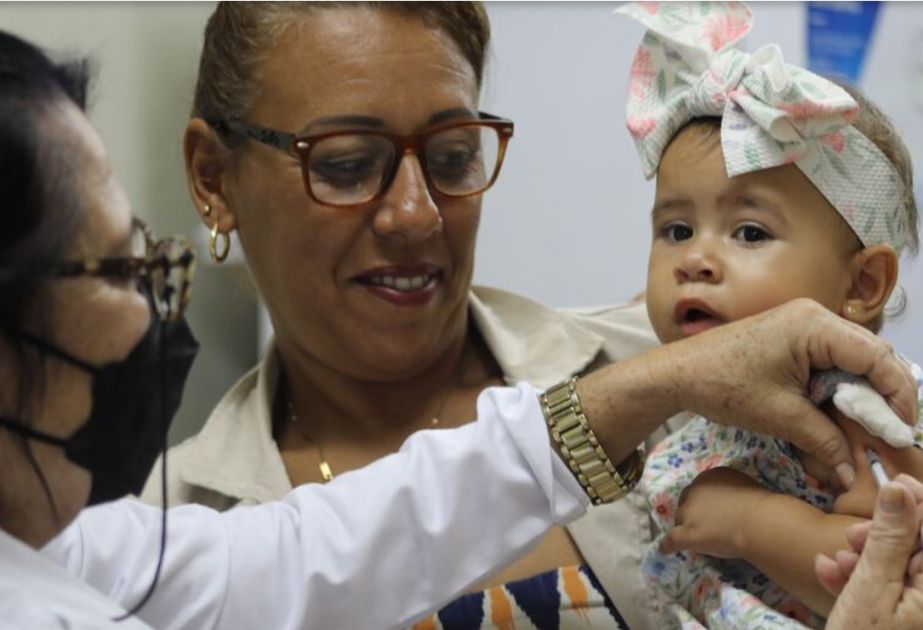
In a powerful testament to the enduring impact of public health initiatives, the World Health Organization (WHO) has recently unveiled a landmark report revealing that vaccination programmes have saved an estimated 154 million lives globally over the past 50 years. This staggering figure, predominantly comprising infants, underscores vaccines as one of humanity’s most successful and cost-effective interventions, reshaping global health landscapes and offering a profound sense of hope for future generations.
The report, released to coincide with the 50th anniversary of the Expanded Programme on Immunization (EPI), delves into half a century of relentless global efforts to make vaccines accessible. It highlights how these vital inoculations have not only prevented countless deaths but also averted debilitating illnesses, dramatically reducing child mortality and contributing significantly to longer, healthier lives worldwide. For a nation like India, which has been at the forefront of massive immunization drives, this global recognition resonates deeply, validating decades of concerted efforts in public health.
The Global Triumph of Immunization
The WHO’s analysis is a comprehensive retrospective, utilizing sophisticated modelling to estimate the number of lives saved by vaccination against 14 diseases. The vast majority of lives saved, an astonishing 101 million, were those of infants, showcasing the monumental role vaccines play in protecting the youngest and most vulnerable populations. Measles vaccination alone accounted for 60% of these saved lives, underscoring its critical importance in global health strategies. Beyond measles, vaccines targeting polio, diphtheria, tetanus, pertussis (whooping cough), and other infectious diseases have been instrumental in this extraordinary achievement.
The report doesn’t just present numbers; it paints a picture of societal transformation. Children who are vaccinated are more likely to survive, thrive, and contribute to their communities. This has a ripple effect on education, economic productivity, and overall national development. The collective action of governments, international organisations like GAVI, the Vaccine Alliance, healthcare workers, and communities has built a protective shield against pathogens that once ravaged populations with impunity. The report serves as a compelling reminder of the power of collective will and scientific innovation in addressing some of humanity’s greatest health challenges.
“The WHO’s revelation is a powerful reminder of what collective action and scientific innovation can achieve,” says Dr. Priya Sharma, a leading public health expert in Delhi. “For nations like India, which have invested heavily in immunization programmes, this report validates decades of relentless effort and provides crucial motivation to continue building a healthier future for all.”
India’s Pivotal Role in the Vaccine Saga
India’s contribution to this global triumph is immense and multifaceted. As the world’s largest vaccine manufacturer and consumer, India has played a pivotal role in the success of global immunization efforts. The country’s Universal Immunization Programme (UIP), launched in 1985, is one of the largest public health programmes in the world, targeting millions of children and pregnant women annually. Through programmes like Mission Indradhanush, India has dramatically improved immunization coverage, reaching even the most remote and underserved populations.
The eradication of polio from India stands as a shining example of what sustained political will, public participation, and dedicated health workers can achieve. Similarly, significant strides have been made in controlling tetanus, diphtheria, and measles, drastically reducing morbidity and mortality rates. India’s robust domestic vaccine production capacity has not only met its own massive demand but has also supplied affordable vaccines to numerous developing countries, cementing its position as the ‘pharmacy of the world’. This dual role as a beneficiary and a significant contributor to global vaccine supply chains underscores India’s indispensable position in the global health ecosystem.
Sustaining Momentum and Future Imperatives
While the WHO’s report celebrates a monumental achievement, it also casts a light on the ongoing need for vigilance and investment. The gains made are not irreversible. Challenges such as vaccine hesitancy fueled by misinformation, the equitable distribution of existing and new vaccines, and the imperative to innovate against emerging infectious diseases like future pandemics, remain critical. Ensuring that every child, regardless of their socio-economic status or geographic location, receives the full complement of life-saving vaccines is a moral and public health imperative.
For India, the path ahead involves strengthening primary healthcare infrastructure, leveraging digital technologies for better tracking and delivery, and continually adapting to evolving health needs. The lessons learned from half a century of successful immunization programmes provide a robust framework for tackling future health crises. The 154 million lives saved are not just statistics; they represent generations liberated from the fear of preventable diseases, empowered to live full and productive lives. It is a powerful reminder that continued investment in vaccines is an investment in humanity’s collective future.

