


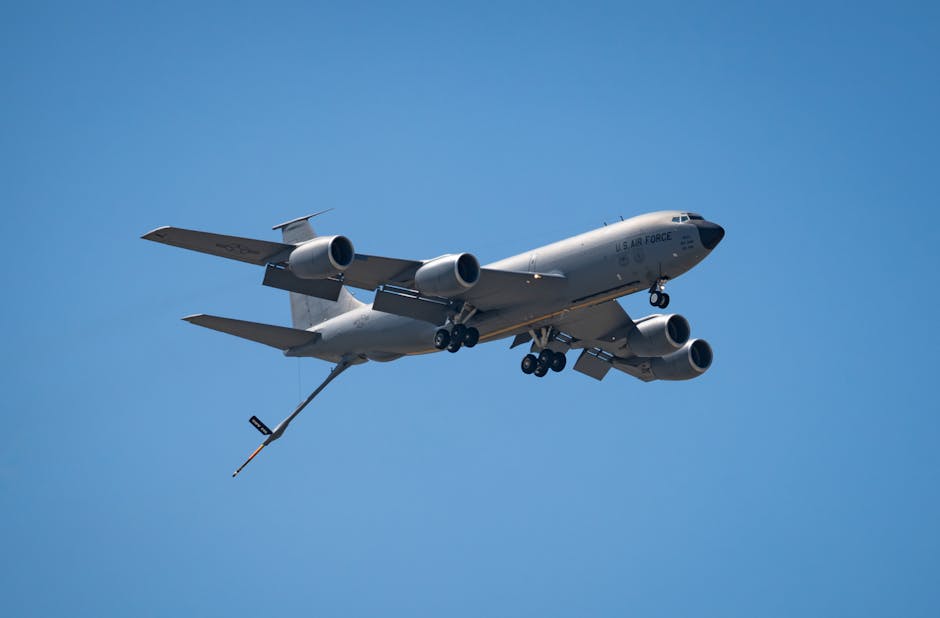
The skies over Qatar, usually a bustling corridor for international aviation and a critical hub for military operations, recently became the focal point of an alarming incident involving a vital US Air Force asset. Reports surfaced that a US Air Force KC-135 Stratotanker, often dubbed a “flying gas station” due to its aerial refuelling capabilities, issued a ‘7700 distress signal’ before its status became uncertain, leading to concerns about its whereabouts. This development immediately sent ripples through aviation circles and sparked significant interest, particularly in regions like India, where strategic air power and regional stability are closely observed.
A ‘7700’ squawk is an internationally recognised transponder code indicating a general emergency, signifying a critical situation aboard the aircraft. While the exact nature of the emergency remains officially undisclosed, the issuance of such a signal by a military aircraft in a strategically sensitive area like the Middle East automatically triggers high alert protocols and intense speculation.
The Alarm Over Qatari Airspace: A 7700 Distress
Details surrounding the incident remain scarce, with official statements from the US military and Qatari authorities yet to provide comprehensive clarity. What is known, however, is that the KC-135 Stratotanker, part of the US Air Force’s operational presence in the Middle East, transmitted the emergency code while operating in Qatari airspace. This immediate declaration of an emergency suggested a serious issue, whether mechanical failure, in-flight emergency, or another unforeseen circumstance.
The aircraft’s transponder, responsible for communicating its position and other data to air traffic control, would have broadcast the 7700 code, alerting all relevant ground stations and nearby aircraft to its critical status. Initial reports and unconfirmed social media discussions highlighted the suddenness of the event and the subsequent lack of immediate updates on the tanker’s condition or precise location after the signal, fueling the narrative of it having “gone missing.” Such incidents underscore the inherent risks of military aviation, even with the most advanced aircraft and highly trained personnel.
The Unseen Giants: KC-135’s Critical Role
The KC-135 Stratotanker is not merely another aircraft; it is a cornerstone of global air power projection. A four-engine aerial refuelling aircraft, it provides essential in-flight refuelling to bomber, fighter, cargo, and reconnaissance aircraft, significantly extending their range and endurance. Without these “flying gas stations,” modern air forces would be severely limited in their operational reach, especially in vast theatres like the Middle East where US forces maintain a substantial presence.
The region surrounding Qatar is particularly vital for US Central Command (CENTCOM) operations, with Al Udeid Air Base in Qatar serving as a major strategic hub. Tankers operating from such bases are crucial for sustaining air patrols, surveillance missions, and potential strike operations across the region. For countries like India, which operates its own fleet of IL-78 MKI aerial refuellers, understanding the operational implications of such incidents is paramount. It highlights the strategic importance of aerial refuelling capabilities and the need for robust safety and emergency protocols, not just for the aircraft itself, but for the entire ecosystem of air traffic control and regional security.
Regional Context and the Quest for Information
The Middle East is a geopolitical hotspot, characterized by complex alliances and simmering tensions. Any incident involving military assets, particularly those of a major global power, naturally draws heightened scrutiny. The absence of immediate, detailed official statements regarding the KC-135’s status following the 7700 distress signal amplifies concerns and leaves room for speculation, which can be detrimental in a sensitive region.
Aviation safety is a global concern, and incidents involving military aircraft, while often shrouded in operational secrecy, still necessitate a degree of transparency to assure public confidence and maintain international air traffic safety standards. “An incident involving such a crucial asset in a volatile region naturally raises concerns. While a 7700 signal doesn’t always imply a catastrophic failure, the silence from official channels amplifies speculation,” observes Dr. Rohan Mehta, a New Delhi-based geopolitical analyst. “For regional stability, clear communication, even if preliminary, is often better than prolonged silence.”
As the world awaits further details, the incident serves as a stark reminder of the complexities and inherent risks of modern military aviation. The focus now remains on the US Air Force and Qatari authorities to provide definitive information regarding the fate of the KC-135 Stratotanker and the circumstances that led to its emergency declaration over Qatar.

