


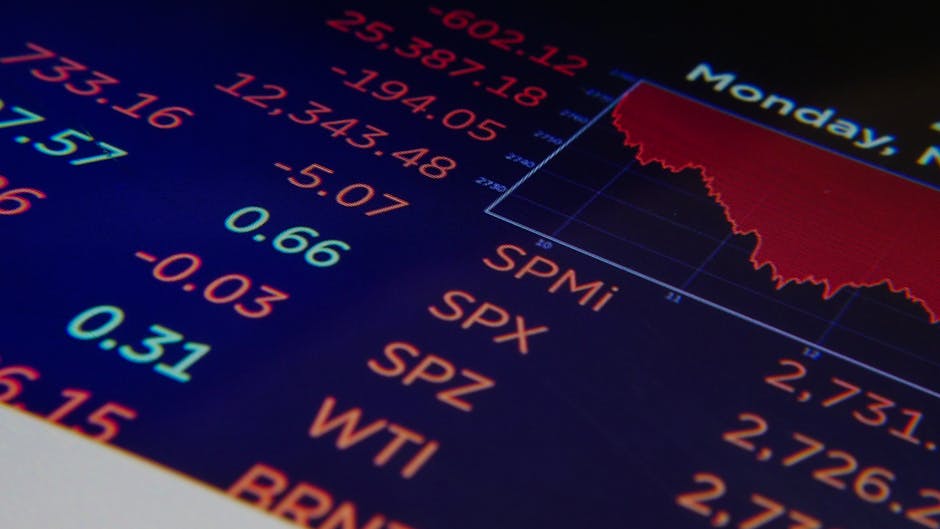
The global financial markets often act as a giant, incredibly complex supercomputer, constantly processing information and predicting future events. When geopolitical tensions surge, like those recently seen between Iran and Israel, the market quickly attempts to price in potential outcomes – from oil supply disruptions to wider regional conflict. But what if this intricate system, for all its sophistication, miscalculated the true trajectory? What if the collective wisdom of millions of investors got the “Iran war” narrative profoundly wrong, leading to an unexpected market pivot?
The War Premium Unravels
After an initial flurry of activity – perhaps a sudden spike in oil prices, a flight to safe-haven assets like gold and specific currencies, and a dip in global equities – the market might have anticipated a deeper, more prolonged conflict. If the reality instead involved de-escalation, limited retaliation, or a return to proxy skirmishes rather than direct, full-scale warfare, then the “war premium” built into asset prices would begin to unravel. This isn’t just about stocks; it’s about the entire risk landscape. Energy futures could recede sharply, safe havens could lose their luster, and the sectors previously punished by fear (e.g., travel, discretionary consumer goods) might see a rapid rebound. It’s a powerful reminder that markets react not just to events, but to the anticipation of events, and correcting a misjudgment can be as dramatic as the initial reaction.
Beyond the Headlines: Economic Ripples
A miscalculation about the conflict’s scope would send ripple effects far beyond immediate commodity prices. Think about central bank policy. If initial fears of a massive energy shock pushing inflation higher were priced in, central banks might have been expected to maintain a hawkish stance. If the war risk subsides, the pressure for interest rate cuts could suddenly intensify, particularly if the global economy was already showing signs of slowing. Furthermore, investor confidence, initially rattled, could see a strong surge. Investment projects previously put on hold due to geopolitical uncertainty might be revisited. This scenario highlights how deeply geopolitical events are interwoven with economic fundamentals, and how a shift in one can cascade through the other. Suddenly, previously bearish outlooks might pivot, fueled by renewed optimism for stability and growth.
Reassessing Risk and the Future Landscape
This hypothetical market misjudgment offers critical lessons. For individual investors and institutional funds alike, it underscores the danger of knee-jerk reactions to fast-moving geopolitical events. The old adage, “buy the rumor, sell the news,” might evolve into “buy the rumor, then swiftly reassess the reality.” It forces a re-evaluation of how risk is quantified and absorbed into portfolio strategies. A “war that wasn’t” might make future market participants more skeptical of immediate doomsday scenarios, or paradoxically, more prone to complacency if a real threat emerges later. As one seasoned portfolio manager, observing such rapid shifts, noted, “The market’s biggest challenge isn’t just predicting the future, but accurately interpreting the present when fear and speculation are at their peak.” This kind of event can redefine investor psychology, making everyone recalibrate their internal risk meters, hopefully leading to more resilient and nuanced approaches to global instability.
Ultimately, if the stock market indeed “got the Iran war wrong”—meaning it over-discounted or misread the nature of the conflict—the ensuing correction would be a profound testament to its adaptive, albeit sometimes fallible, nature. It would demonstrate the immense power of collective investor sentiment and the swiftness with which capital flows can reverse direction. For TrendLyric.com readers, it’s a powerful reminder that navigating today’s volatile markets requires not just keen analysis of economic data, but also a nuanced understanding of geopolitical nuances and, crucially, the ability to question prevailing narratives when new information emerges. The market is a learning machine, and sometimes its lessons come from getting things wrong.

