


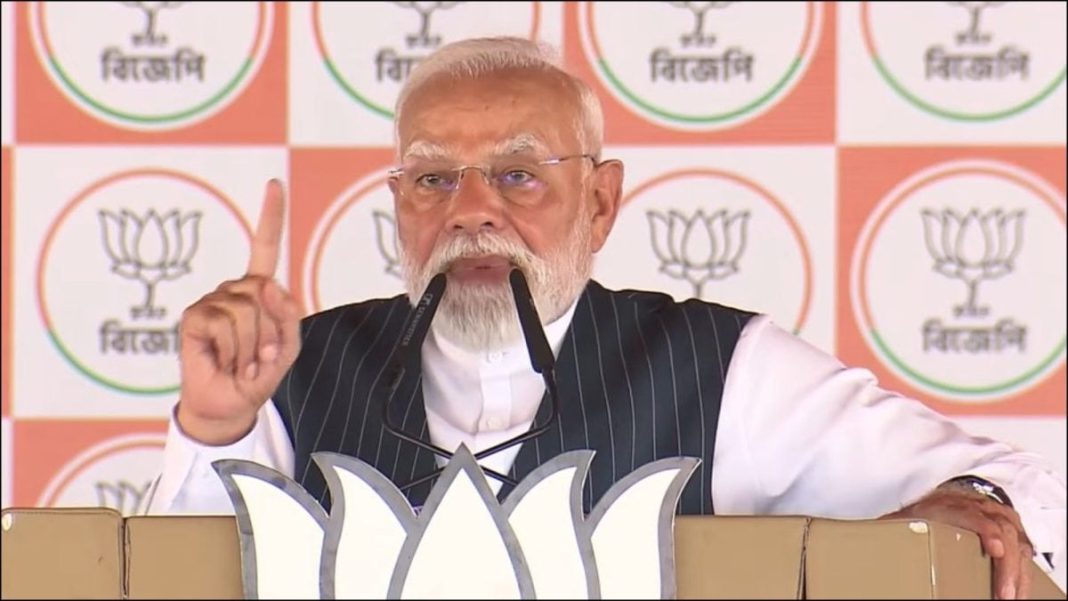
The political mercury in West Bengal has soared dramatically as the Lok Sabha elections progress, fueled by a fiery statement from Prime Minister Narendra Modi. During a recent campaign rally, PM Modi issued what he termed a “last warning” to alleged “TMC goons,” a move that has further intensified the already acrimonious electoral battle in the state. His declaration, “‘Surrender Or You Won’t Be Spared’,” aimed squarely at elements he claimed were disrupting the democratic process and intimidating voters, has reverberated across the political landscape, setting the stage for an even more charged conclusion to the multi-phase elections.
West Bengal has long been a crucible of intense political rivalry, and the current election cycle is no exception. With the Bharatiya Janata Party (BJP) making significant inroads in the state over the past few years, challenging the Trinamool Congress’s (TMC) entrenched dominance, every statement by top leaders carries immense weight and is scrutinized for its potential impact on voter sentiment and ground-level dynamics. PM Modi’s latest strong rebuke is seen by many as a clear strategy to energize his party’s cadre and supporters, while simultaneously putting pressure on the ruling state government and its affiliates.
The Incendiary Warning and Immediate Repercussions
Addressing a large gathering, Prime Minister Modi’s words were unambiguous. He accused certain individuals, referred to as “TMC goons,” of engaging in electoral malpractices, violence, and intimidating opposition workers and voters. His stark message was delivered with a tone of finality: “Those who are involved in looting the future of the youth and intimidating people, listen carefully: surrender, or you won’t be spared after June 4.” This declaration, made just weeks before the final phases of polling and the vote counting, immediately sparked a flurry of reactions.
BJP leaders in West Bengal were quick to amplify the Prime Minister’s message, interpreting it as a promise of strict action against those who allegedly undermine democracy. They argued that the statement reflects the widespread public frustration with what they claim is a climate of fear and lawlessness perpetuated by the ruling party. Conversely, the Trinamool Congress vehemently condemned the remarks, dismissing them as inflammatory election rhetoric designed to provoke unrest and polarize the electorate. TMC spokespersons accused the Prime Minister of attempting to create a narrative of instability and of directly inciting his party workers, rather than focusing on development issues. Some critics within the TMC even labeled the statement as undemocratic and an attempt to intimidate the opposition through threats.
Bengal’s Volatile Political Landscape
The backdrop to PM Modi’s strong statement is West Bengal’s long and often violent political history. The state has witnessed numerous instances of political clashes, particularly during election periods, with accusations of booth capturing, intimidation, and post-poll violence frequently surfacing from all major parties. For years, the BJP has consistently accused the TMC government of failing to maintain law and order, alleging that political opponents are routinely targeted and that state machinery is often misused to suppress dissent.
The Trinamool Congress, on its part, has always refuted these allegations, often attributing incidents of violence to pre-existing local feuds or to attempts by the opposition to create a distorted image of the state for political gain. They frequently counter-accuse the BJP of attempting to disturb peace and communal harmony, especially through divisive rhetoric. This exchange of accusations has become a recurring feature of Bengal politics, particularly acute during elections when control over local bodies and influence at the grassroots level are paramount.
The intensity of the rhetoric from both sides underscores the high stakes involved in West Bengal. The BJP views the state as crucial for its national ambitions, while for the TMC, holding its ground in Bengal is vital for its regional dominance and national presence. PM Modi’s “last warning” can be interpreted as a strategic move to rally his base, project strength, and perhaps even to deter potential electoral malpractices, or at least frame the narrative around them.
Conclusion: A Fiery Finish to Bengal’s Polls
As West Bengal inches closer to the culmination of the Lok Sabha elections, PM Modi’s unequivocal statement has undoubtedly added another layer of intensity to an already charged atmosphere. It serves as a stark reminder of the deeply entrenched political rivalries and the fierce battle for every vote in the state. Whether this “last warning” will be perceived by voters as a firm promise of accountability or dismissed as aggressive electioneering remains to be seen. What is clear, however, is that the political temperature in West Bengal will remain exceptionally high until the final results are declared on June 4th, with every political actor acutely aware of the implications of these hotly contested parliamentary seats.

