


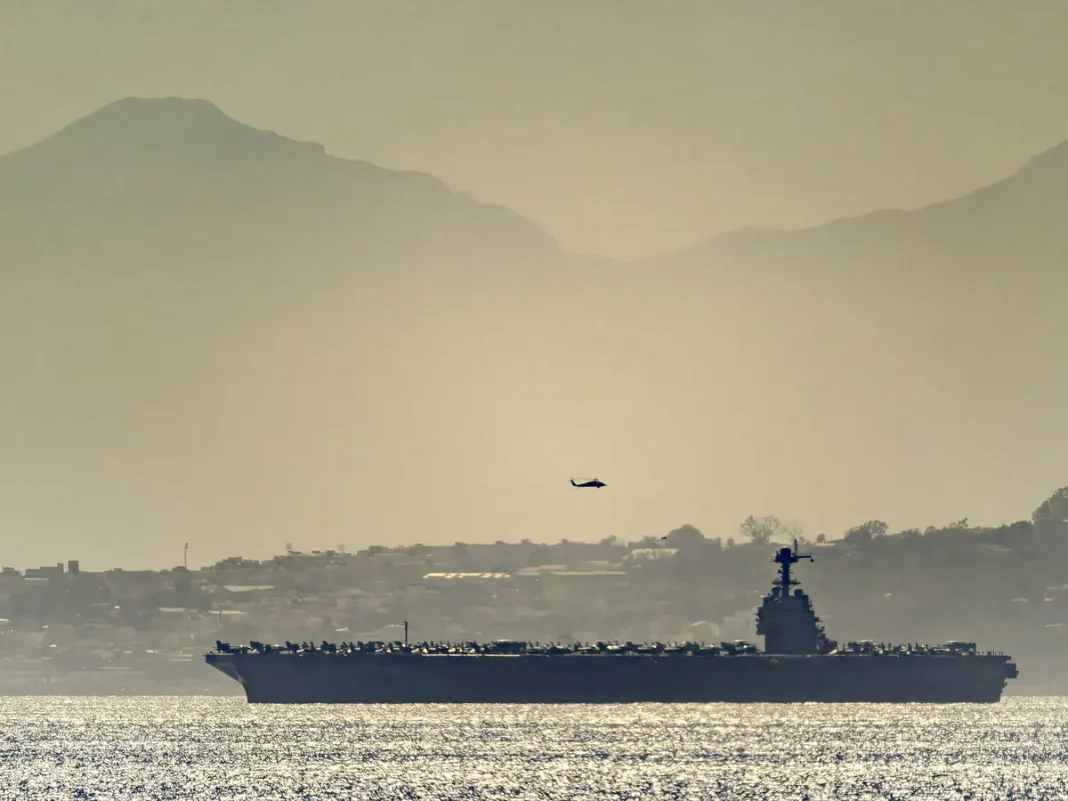
The Eastern Mediterranean, a region perpetually at the cusp of geopolitical volatility, is currently a focal point of global attention. Its waters now host an undisputed symbol of American military might: the USS Gerald R. Ford. This formidable aircraft carrier, the lead ship of its class and the world’s largest warship, arrived near Israel, a deployment interpreted by many as a clear message of deterrence and support amidst escalating tensions with Hamas and the lingering shadow of potential broader conflict, including a speculative strike against Iran.
Yet, even as this behemoth projects power, a less glamorous, though potentially significant, narrative has emerged: reports of persistent sewage and sanitation issues onboard, quietly downplayed by the US Navy. For India, a nation deeply invested in regional stability due to economic, energy, and diaspora interests, these developments paint a complex picture of power projection, operational realities, and the precarious balance of peace in its extended neighborhood.
USS Ford’s Strategic Deployment Amidst Middle East Tensions
The arrival of the USS Gerald R. Ford Carrier Strike Group in the Eastern Mediterranean is no ordinary naval transit. It represents a potent display of force, designed to underscore American commitment to regional allies and deter potential adversaries. Equipped with a state-of-the-art air wing comprising F/A-18 Super Hornets, electronic warfare aircraft, and a host of support vessels, the Ford is a mobile, sovereign airbase capable of projecting significant power across vast distances. Its presence is directly linked to the recent flare-up in the Israel-Hamas conflict, providing a visible assurance of US support to Israel and a clear warning against any state or non-state actor contemplating opportunistic escalation.
The implicit target of this deterrence is often Iran, a nation frequently accused by the US and its allies of destabilizing the region through proxy groups and its nuclear ambitions. While direct confrontation remains a high-stakes scenario, the deployment of such a powerful asset sends an unequivocal message about the potential consequences of further regional destabilization. From an Indian perspective, the intensification of military posturing in this vital region raises concerns about the safety of maritime trade routes, particularly those crucial for crude oil imports, and the potential for a wider conflict to disrupt global energy markets and supply chains.
Behind the Headlines: The ‘Sewage’ Issue and Naval Readiness
Amidst the grand narrative of strategic deployments, reports have surfaced regarding internal challenges on the USS Gerald R. Ford, specifically persistent problems with its waste management systems. Crew members have reportedly faced issues ranging from overflowing toilets to sewage backing up into living quarters, forcing some facilities to be shut down. While the US Navy has acknowledged “some issues” as part of the shakedown period for a new, complex vessel, they have consistently downplayed the extent, characterizing them as manageable and routine for a first-in-class carrier. The official stance is that these problems do not impact the ship’s operational readiness or mission capability.
However, for a crew of over 4,500 sailors, quality of life issues, especially those concerning basic sanitation, can significantly impact morale and, by extension, long-term operational effectiveness. A former naval officer, speaking on condition of anonymity due to sensitivity of the issue, remarked, “While a modern warship is designed to operate through numerous challenges, persistent issues with crew basic amenities can become a silent drain on morale and focus. It’s a test of resilience, but also an operational consideration that commands attention.” The contrast between the Ford’s external might and these internal, logistical frustrations offers a unique glimpse into the complexities of maintaining advanced military platforms under high-pressure deployments.
India’s Stakes in a Volatile Neighborhood
For India, a nation with deep historical and contemporary ties to the Middle East, the current situation is observed with a keen, pragmatic eye. The stability of the Gulf region directly impacts India’s energy security, with a significant portion of its crude oil imports transiting these waters. Any major disruption, particularly one involving Iran, could send global oil prices spiraling, directly impacting India’s economy and inflation.
Furthermore, a substantial Indian diaspora resides and works across the Middle East, contributing significantly to India’s remittance inflows. Their safety and well-being are paramount concerns for New Delhi. India has consistently advocated for de-escalation and diplomatic resolutions to regional conflicts, maintaining a delicate balancing act with all stakeholders. The deployment of the USS Ford, while a show of US resolve, also signifies an increased potential for miscalculation, making India’s diplomatic efforts to foster stability even more critical. New Delhi understands that while power projection is a tool, sustained peace requires more than just military might; it demands intricate diplomatic engagement and a keen understanding of regional sensitivities.
Conclusion
The presence of the USS Gerald R. Ford near Israel serves as a powerful reminder of the intricate and often perilous geopolitical landscape of the Middle East. It embodies the United States’ commitment to its allies and its strategy of deterrence against potential aggressors, even as it navigates internal operational challenges. For India, these developments are a critical reminder of the interconnectedness of global security, underscoring the necessity for robust diplomatic engagement and a vigilant watch over a region that remains central to its strategic interests. The waters of the Eastern Mediterranean, therefore, do not merely reflect the might of a superpower, but also the delicate balance upon which regional and global stability precariously rests.

