


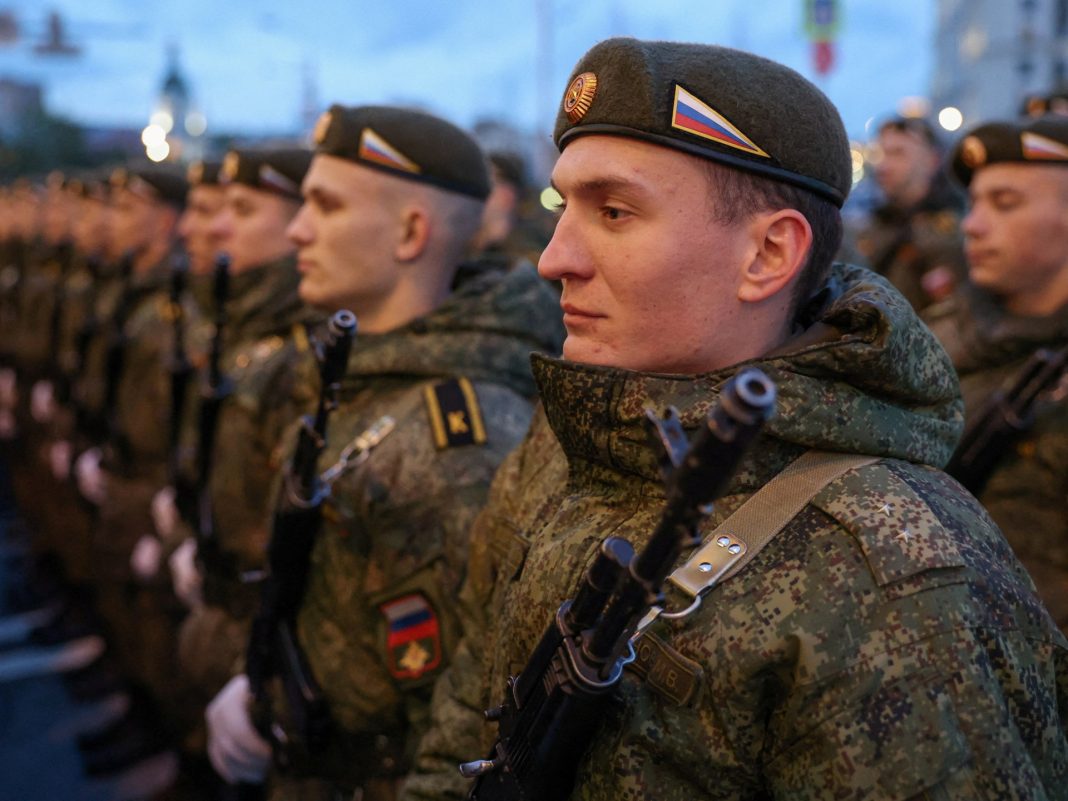
Every year, Victory Day in Russia has been a monumental spectacle, a carefully choreographed display of military might, national unity, and historical triumph. Tanks rumble through Red Square, intercontinental ballistic missiles are paraded, and thousands march in lockstep, projecting an image of unwavering strength and resolve. It’s a day steeped in potent symbolism, meant to remind the world, and indeed its own citizens, of Russia’s formidable power and its historical victories.
This year, however, a different tune is playing. The grand orchestrations are being dialed back, the public displays scaled down, and in some regions, parades are being canceled altogether. The reason isn’t a sudden shift in cultural preference, but rather a direct consequence of the escalating conflict in Ukraine. Ukraine’s increasingly daring and effective assaults are forcing Russia to reconsider the very nature of its most important national celebration, turning what was once a monolithic projection of strength into a more nuanced, and perhaps uneasy, reality.
The Shadow Over Red Square
The decision to curtail Victory Day celebrations isn’t one taken lightly. It signals a deep concern within the Russian establishment, driven primarily by the escalating security threats posed by Ukrainian forces. From long-range drone strikes reaching deep into Russian territory to cross-border incursions and targeted sabotage, Ukraine has demonstrated a growing capacity to disrupt and challenge Russia on its own soil. These aren’t just isolated incidents; they represent a persistent and evolving strategy designed to keep Moscow on edge.
Imagine the spectacle of a parade marred by a security incident, or the optics of fighter jets roaring overhead while news breaks of another successful Ukrainian drone attack. Such scenarios would not only be a severe security breach but a catastrophic blow to Russia’s carefully cultivated image of invincibility. Consequently, the scaling back is a pragmatic response, an attempt to mitigate risks and avoid inadvertently providing targets or showcasing vulnerability during a period when the nation traditionally seeks to project absolute strength.
Ukraine’s Disruptive Strategy
Ukraine’s approach has been relentless and multifaceted. By targeting military infrastructure, logistics hubs, and even symbolic locations within Russia, they’re not just inflicting physical damage; they’re also creating psychological pressure. The goal is to force Russia to divert resources, sow doubt, and expose vulnerabilities. The impact on Victory Day is a tangible manifestation of this strategy’s success. It shows that Ukraine has achieved a level of operational reach that forces Russia to consider its domestic security in ways it hasn’t had to before.
This isn’t just about avoiding a drone strike; it’s about the broader message. When a nation is compelled to reduce its most significant national display due to external threats, it sends a clear signal. It suggests that the conflict is not contained, that its adversary is capable of reaching behind the front lines, and that even deeply symbolic events are not immune to the pressures of war. As Dr. Anya Petrova, a geopolitical analyst, remarked, “The scaling back isn’t just about security; it’s a symbolic concession, an acknowledgment that the conflict is far from a triumphant march and has intruded even on their most sacred displays of power.”
A Narrative Under Revision
Victory Day is more than just a parade; it’s a cornerstone of Russia’s national narrative, a reaffirmation of its historical triumphs and its role as a powerful global player. For a nation that has consistently portrayed its military actions in Ukraine as a victorious campaign, scaling back these celebrations presents an inherent contradiction. It complicates the narrative of a swift and successful operation, instead subtly hinting at the difficulties and ongoing challenges faced on the ground.
From grand display to guarded restraint, the shift in Victory Day celebrations is a potent barometer of the conflict’s intensity and Ukraine’s growing capacity to influence events beyond the immediate front lines. It underscores how the daring assaults by Ukrainian forces are not just tactical victories, but strategic ones, compelling Russia to adjust its public face and implicitly acknowledge the profound challenges it faces in this protracted conflict.

