


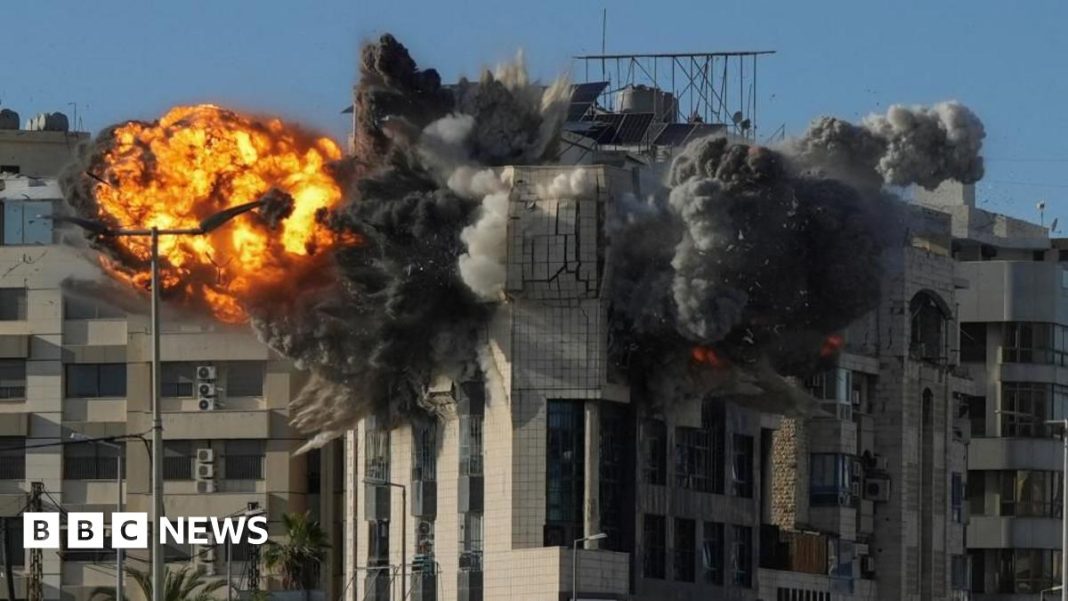
The political landscape is never dull, but some pronouncements arrive like a lightning bolt, shaking the foundations of international relations. Such was the case with former President Trump’s recent declaration: the US is “pulling out of Iran in two or three weeks, deal or no deal.” It’s a statement loaded with implications, delivering a powerful punch that leaves many wondering about the immediate future of one of the world’s most volatile regions.
The Clock, The Bluff, Or The Bomb-shell?
A timeline of “two or three weeks” for such a significant geopolitical shift is extraordinarily tight. It immediately begs the question: is this a genuine, firm intention to recalibrate US foreign policy with unprecedented speed, or a strategic maneuver designed to apply immense pressure? The “deal or no deal” addendum further complicates matters, suggesting either an ultimate disinterest in negotiation or an attempt to force a pre-emptive agreement on America’s terms.
For decades, US policy toward Iran has been a complex web of sanctions, diplomacy, military posturing, and proxy conflicts. To declare a near-immediate “pullout” without specifying what this entails – whether it refers to military presence in the broader region related to containing Iran, a full diplomatic disengagement, or a complete abandonment of previous alliances and strategies – creates a vacuum of understanding. This ambiguity, however, might be precisely the point, designed to sow uncertainty and test the reactions of both allies and adversaries.
One might argue this is a play from a familiar playbook: disrupt the status quo, demand new terms, and force all players to react. But the stakes in the Middle East are notoriously high, and miscalculations can have catastrophic consequences. What kind of vacuum would such a rapid shift create, and who would rush to fill it?
Regional Ripple Effects and Uncharted Waters
The implications of such a statement reverberate far beyond Washington and Tehran. US allies in the region, particularly Saudi Arabia and Israel, who view Iran as their primary regional threat, would undoubtedly be scrutinizing every word. A perceived withdrawal of American commitment could force them to reassess their own defense strategies, potentially leading to increased regional militarization or new, unexpected alliances.
Conversely, this could be seen as an emboldening signal for Iran, potentially giving it more latitude to pursue its nuclear ambitions or expand its influence through proxy groups. The fate of the Joint Comprehensive Plan of Action (JCPOA), even if largely defunct, and the future of international efforts to curb Iran’s nuclear program, would also hang in the balance. Oil markets, ever sensitive to Middle Eastern stability, would likely react with volatility.
As one geopolitical analyst, Dr. Lena Khan, recently remarked, “A sudden, unilateral withdrawal from a complex geopolitical chess game doesn’t simplify it; it merely rearranges the pieces in unpredictable ways. The ‘deal or no deal’ aspect implies a readiness to let the chips fall where they may, which is a high-stakes gamble in a region already brimming with unresolved tensions.”
The declaration also challenges global diplomatic norms. Is this a new paradigm for international relations, where long-standing commitments can be discarded almost overnight? Or is it a singular instance, born of a specific political philosophy, that will ultimately yield to the grinding realities of diplomacy and power dynamics?
The Path Ahead: Speculation vs. Strategy
Ultimately, Trump’s statement leaves us in a state of informed speculation. Is it a negotiating tactic designed to extract concessions? A genuine intention to reduce US involvement in what he perceives as endless foreign entanglements? Or perhaps a bit of both, a calculated gamble to shake up a stagnant situation?
Regardless of the underlying motive, the declaration has thrown a significant curveball into the complex dynamics of the Middle East. The next few weeks, or perhaps months, will reveal whether this is merely a rhetorical flourish designed for domestic consumption or the precursor to a fundamental realignment of US foreign policy with profound, lasting global consequences. The world watches, waiting to see if this swift declaration leads to a path of de-escalation, or inadvertently ignites new fires.

