


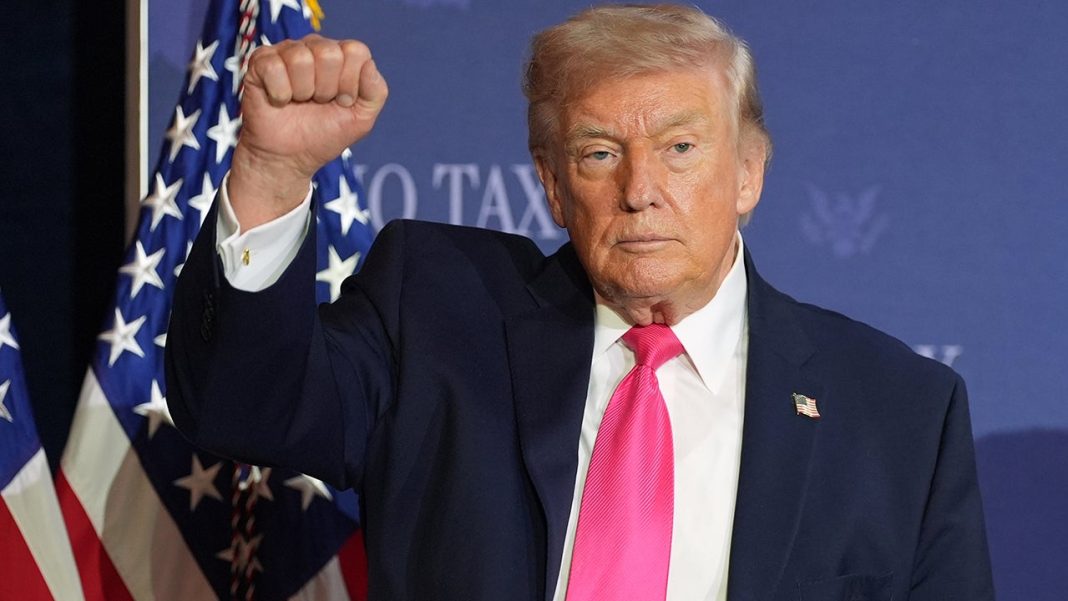
The Strait of Hormuz – a narrow, vital artery for global oil and gas – is often a focal point of international headlines. Recently, former President Trump declared it “completely open.” A bold statement, especially when juxtaposed with the ongoing, impactful US sanctions regime targeting Iranian ports. This isn’t just about political rhetoric; it’s about the tangible reality of trade, energy, and the intricate dance of international relations.
The Strait: A Lifeline Under Scrutiny
Imagine a critical bottleneck through which a significant portion of the world’s energy supply must pass. That’s the Strait of Hormuz. Connecting the Persian Gulf to the open ocean, it’s indispensable for oil tankers carrying crude from major producers. When a figure like former President Trump makes a sweeping declaration about its openness, it raises eyebrows, particularly for those familiar with the complex layers of restrictions currently in place. His statement suggests an unhindered flow, a frictionless passage for all.
The Strait, situated between Iran and Oman, is undeniably a strategic chokepoint. Its physical passage is a matter of international law, allowing for freedom of navigation. However, the concept of “openness” can be interpreted differently when economic pressures dictate which ships can use it freely and for what purpose, especially concerning trade with specific nations.
Sanctions vs. Open Seas: A Tangled Web
Here’s where the waters get a bit murkier. While the Strait itself might be physically navigable, the concept of being “completely open” becomes a nuanced point when specific nations are under stringent economic sanctions. The US, through its “maximum pressure” campaign, has imposed broad restrictions on Iran’s oil exports, shipping, and banking sectors. These measures aren’t physical barriers in the water, but they create immense financial and logistical hurdles for any vessel attempting to do business with Iranian ports.
Companies risk severe penalties for violating these sanctions, leading to a de facto blockage for Iranian trade. “It’s like saying a highway is open while simultaneously fining anyone who tries to deliver goods to a specific town on that highway,” notes a maritime logistics consultant. “The road is physically there, but economically, for that town, it’s effectively cut off.” This intricate web of financial pressure fundamentally alters the “openness” Trump describes, especially for Iran and its trading partners.
Beyond the Headlines: The Economic Ripple Effect
This situation extends far beyond political statements. For ordinary businesses, energy markets, and even humanitarian aid efforts, the interplay of sanctions and declarations of “openness” creates uncertainty. Shippers face higher insurance premiums, longer routes to avoid sanctioned areas, and constant vigilance against potential compliance breaches. The true measure of the Strait’s “openness” isn’t just about whether a ship can physically pass, but whether it can do so without facing crippling economic repercussions for its cargo or its destination.
The global economy thrives on predictability and stability. When a major waterway is declared “open” while simultaneous policies effectively restrict trade for one of its key littoral states, it sends mixed signals. This impacts the price of oil, the stability of regional economies, and ultimately, the livelihoods connected to global trade.
The Strait of Hormuz remains a critical artery, and its physical navigation is indeed possible. However, the claim of it being “completely open” glosses over the significant economic realities shaped by US sanctions on Iranian ports. This isn’t just semantics; it’s a stark contrast between a political declaration and the intricate, often challenging, landscape of international commerce. Understanding this distinction is crucial to grasping the true state of play in one of the world’s most vital waterways, where policy and practical reality often sail in different directions.

