


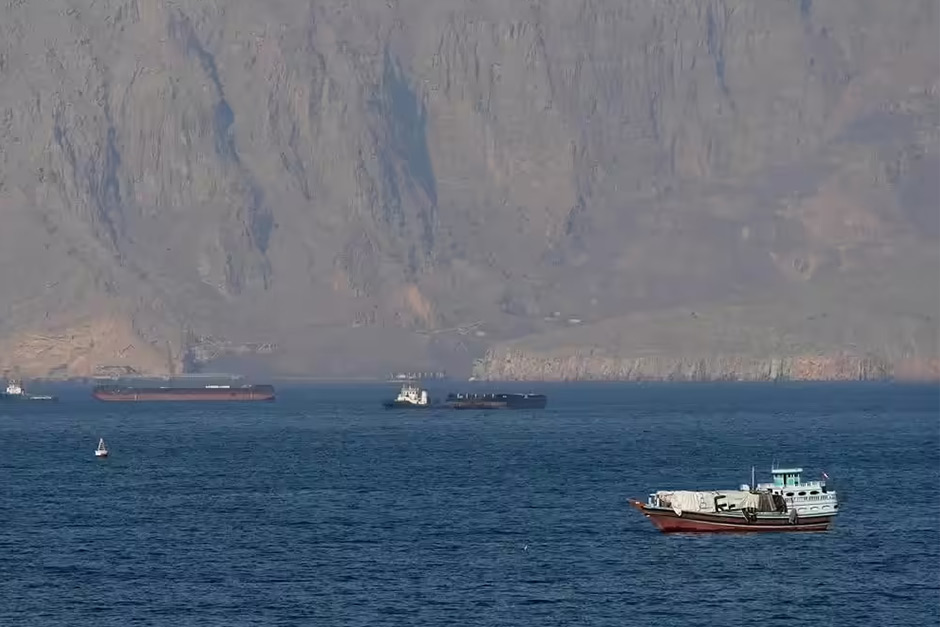
The Strait of Hormuz, a narrow waterway connecting the Persian Gulf with the Arabian Sea, has once again become a focal point of international concern as an Indian-flagged commercial vessel recently completed its transit amidst reports of harassment by Iranian gunboats. This incident marks the tenth time an Indian ship has navigated these volatile waters under such challenging circumstances in recent months, underscoring the persistent security challenges in a region critical to global trade and India’s energy security.
The latest episode, confirmed by Indian maritime authorities, involved Iranian Revolutionary Guard Corps (IRGC) naval vessels reportedly firing warning shots and attempting to impede the Indian ship’s passage. While the vessel ultimately proceeded safely, the recurring nature of these confrontations raises significant questions about the freedom of navigation and the delicate geopolitical balance India must maintain in this crucial maritime chokepoint.
Navigating a Volatile Chokepoint: The Strait of Hormuz
The Strait of Hormuz is not merely a shipping lane; it is a vital artery for global commerce, particularly for oil and liquefied natural gas (LNG) shipments. Approximately one-fifth of the world’s total petroleum consumption, and roughly 80% of India’s crude oil imports, pass through this narrow strait, which is barely 21 nautical miles wide at its narrowest point. Any disruption here has immediate and profound implications for global energy markets and the economies of nations heavily reliant on Middle Eastern oil, like India.
The recent actions by Iranian gunboats fit into a pattern of escalating tensions in the Gulf region, often linked to broader geopolitical dynamics, including sanctions against Iran, regional rivalries, and the ongoing conflict in the Red Sea. While Iran has consistently asserted its right to monitor traffic in its territorial waters and protect its sovereignty, these aggressive intercepts of commercial shipping, especially those adhering to international maritime law, create an environment of uncertainty and risk for global shipping lines.
For India, the stakes are exceptionally high. As the world’s third-largest oil consumer and importer, the uninterrupted flow of energy resources through the Strait of Hormuz is fundamental to its economic stability and growth. The persistent threats necessitate a robust and nuanced approach, balancing diplomatic engagement with a firm stance on protecting its national interests and ensuring the safety of its maritime trade.
India’s Steadfast Stance and Maritime Resilience
In response to the evolving security landscape, India has proactively strengthened its maritime security measures in the region. Since 2019, the Indian Navy has maintained a continuous presence through Operation Sankalp, deploying warships to ensure the safety of Indian-flagged merchant vessels and the well-being of Indian seafarers. This proactive deployment, alongside enhanced surveillance capabilities, reflects India’s unwavering commitment to safeguarding its maritime interests in an increasingly unpredictable environment.
The Indian government has, on multiple occasions, engaged with Iranian authorities through diplomatic channels, stressing the importance of upholding international maritime law and ensuring the freedom of navigation. While maintaining historically strong ties with Iran, India has also been clear about its non-negotiable stance on protecting its commercial shipping and energy lifelines.
A senior official from India’s Ministry of External Affairs, speaking on condition of anonymity, stated, “India remains committed to ensuring the safety and security of its maritime trade and personnel. While we advocate for diplomatic resolutions to regional tensions, the freedom of navigation through international waters is non-negotiable for our economic lifelines. Our naval presence and continuous diplomatic outreach are geared towards de-escalating tensions and fostering stability in this crucial region.” This statement underscores India’s dual strategy of diplomatic engagement and visible defensive posture.
Balancing Diplomacy with Deterrence
India’s approach in the Strait of Hormuz is a delicate balancing act. It seeks to de-escalate tensions and prevent the region from becoming a flashpoint, while simultaneously ensuring its economic lifelines remain secure. This involves continuous monitoring, intelligence sharing with friendly nations, and the readiness to protect its assets. The nation’s foreign policy prioritizes strategic autonomy, enabling it to engage with all regional stakeholders without being drawn into their conflicts.
The repeated incidents highlight the enduring volatility in the Middle East and the complex challenges faced by non-aligned powers like India. The need for international cooperation in ensuring maritime security has never been more evident, as the ripple effects of disruptions in key waterways reverberate across the global economy.
Conclusion: Sustained Vigilance Ahead
The safe passage of the tenth Indian ship through the Strait of Hormuz amidst Iranian gunboat activity is a testament to India’s sustained vigilance and diplomatic efforts, coupled with the robust presence of its naval assets. As the geopolitical currents in the Middle East continue to shift, the importance of this vital waterway will only grow, making India’s consistent and firm approach critical.
New Delhi understands that ensuring maritime security in the Strait of Hormuz is not merely about protecting individual ships; it is about safeguarding the nation’s energy security, sustaining economic growth, and upholding the principles of freedom of navigation in international waters. The coming months will undoubtedly demand continued diplomatic dexterity and strategic foresight from India to navigate these treacherous waters successfully.

