


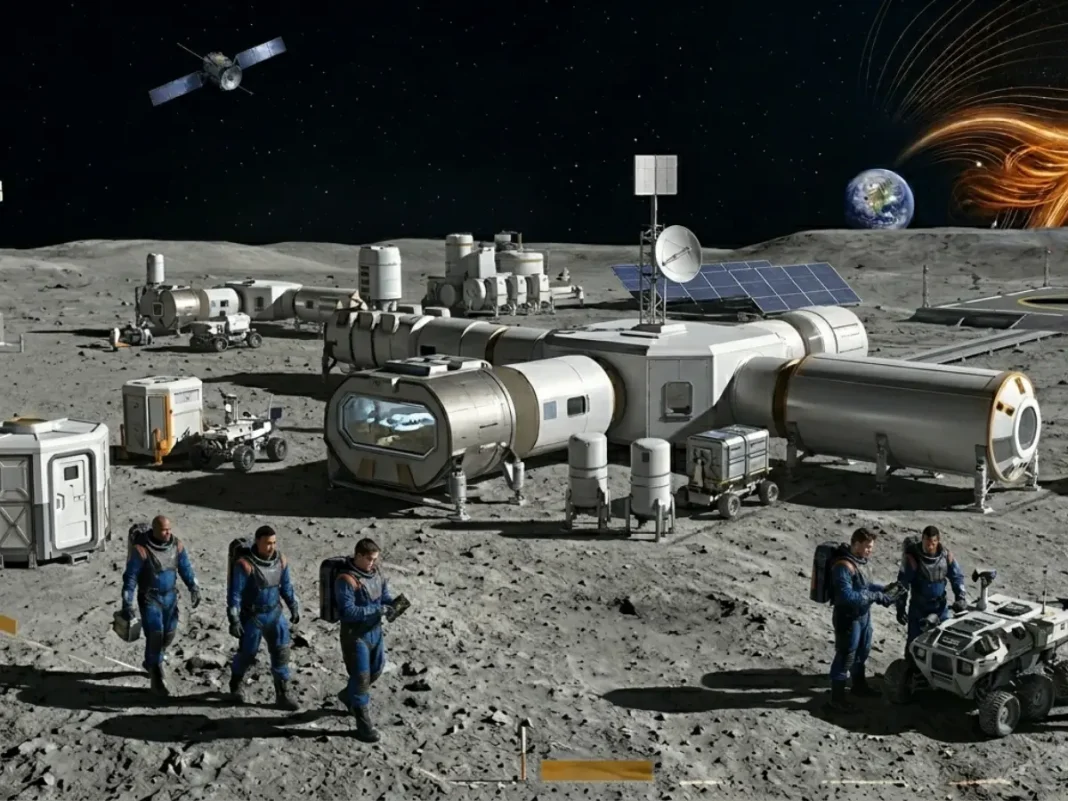
The cosmic theatre is witnessing a new act, one where the celestial stage of the Moon is becoming the next frontier for geopolitical rivalry. As nations increasingly look beyond Earth’s orbit, a prominent think tank has issued a stark warning: the United States, and indeed the global community, needs actual ‘Guardians of the Galaxy’ to prevent an unregulated scramble for lunar resources, especially as China rapidly expands its space ambitions. The provocative phrase “Treaty poopers” highlights a growing concern that existing international space laws are inadequate or, worse, being deliberately circumvented, paving the way for potential conflict rather than cooperation in the final frontier. For India, a rising power with its own ambitious space agenda, this developing narrative underscores the critical need for a stable, rules-based cosmos.
The Lunar Lure: A New Geopolitical Hotbed
For decades, the Outer Space Treaty of 1967 served as the bedrock of space law, declaring space a “province of all mankind” and prohibiting national appropriation of celestial bodies. However, the current landscape of space exploration has far outpaced the treaty’s foresight. Both the United States, through its Artemis program, and China, with its ambitious International Lunar Research Station (ILRS) initiative, are not merely aiming for flags and footprints but for sustained human presence and resource utilization. The Moon, rich in potential resources like water ice at its poles (crucial for propellant and life support) and Helium-3 (a potential fuel for future fusion reactors), is no longer just an object of scientific curiosity but a strategic asset.
China’s rapid advancements, including successful lunar sample returns and the deployment of rovers to the Moon’s far side, have demonstrated its technological prowess and long-term vision. The ILRS, envisioned as a joint venture with partners like Russia, aims for a permanent base by the 2030s. This proactive approach, coupled with Beijing’s often opaque intentions regarding dual-use technologies, fuels concerns among Western nations and others about potential unilateral claims. The “Treaty poopers” label implicitly refers to nations that might interpret or ignore the spirit of existing agreements to advance their strategic interests, potentially leading to a de facto partitioning of lunar territories based on “first-come, first-served” principles.
Beyond Treaties: The Need for Cosmic Custodians
The call for “Guardians of the Galaxy” is not a whimsical plea for superheroes, but a serious metaphor for the urgent need for robust, enforceable international governance in space. The Outer Space Treaty, while foundational, lacks specific provisions for resource extraction, orbital debris management, or the detailed mechanisms for dispute resolution that are critical for an era of commercial and national lunar operations. “The existing legal framework, while noble in its intent, was designed for an era of limited state-sponsored exploration, not the complex, multi-actor, resource-driven future we face today,” observes Dr. Priya Sharma, a leading Indian space policy analyst. “Without a clear, multilateral consensus on property rights and conduct, the Moon risks becoming a Wild West, eroding the very principles of peaceful exploration we hold dear.”
The think tank’s warning underscores the vacuum in global space governance. Without an international body or a universally accepted framework with the authority to mediate disputes, enforce agreements, and regulate activities, the risk of escalation grows. This “Guardians” concept implies a collective responsibility – perhaps an expanded UN Outer Space Affairs (UNOOSA) mandate, a new international agency, or a globally recognized code of conduct – to ensure equitable access, prevent militarization, and manage the shared heritage of outer space for the benefit of all humanity. The Artemis Accords, led by the US, represent one attempt to establish norms, but their unilateral origin and opt-in nature mean they don’t yet command universal adherence, particularly from major space powers like China and Russia.
India’s Stake in a Rules-Based Cosmos
India, with its own impressive strides in space – from Chandrayaan missions to ambitious plans for Gaganyaan, its human spaceflight program – has a significant stake in the establishment of a stable, rules-based lunar environment. As a responsible and rapidly advancing space power, India has consistently advocated for the peaceful uses of outer space and the prevention of an arms race in space. An unregulated Moon, where powerful nations make unilateral claims or exploit resources without international oversight, directly threatens India’s long-term space interests and the broader principle of equitable access.
India’s participation in international collaborations and its emphasis on multilateralism position it as a potential bridge-builder in this evolving space dynamic. New Delhi understands that while national interests are paramount, the challenges of lunar exploration and resource management require global solutions. Ensuring that the benefits of space exploration are shared, and that future generations have equitable access to celestial resources, aligns with India’s ethos of global welfare. The call for “Guardians of the Galaxy” resonates with India’s vision for a collaborative space future, urging a collective re-evaluation of how humanity governs its expansion into the cosmos before competitive claims irrevocably alter the lunar landscape.
The intensifying race to the Moon, coupled with the limitations of existing international law, presents a critical juncture for global space policy. As nations like India continue their journey into the cosmos, the imperative for robust governance, fostering cooperation over contention, becomes ever more apparent. The future of the Moon, and indeed outer space, hinges on whether the international community can evolve beyond “Treaty poopers” to become true “Guardians,” ensuring that humanity’s expansion into the stars is marked by shared prosperity, not unilateral dominion.

