


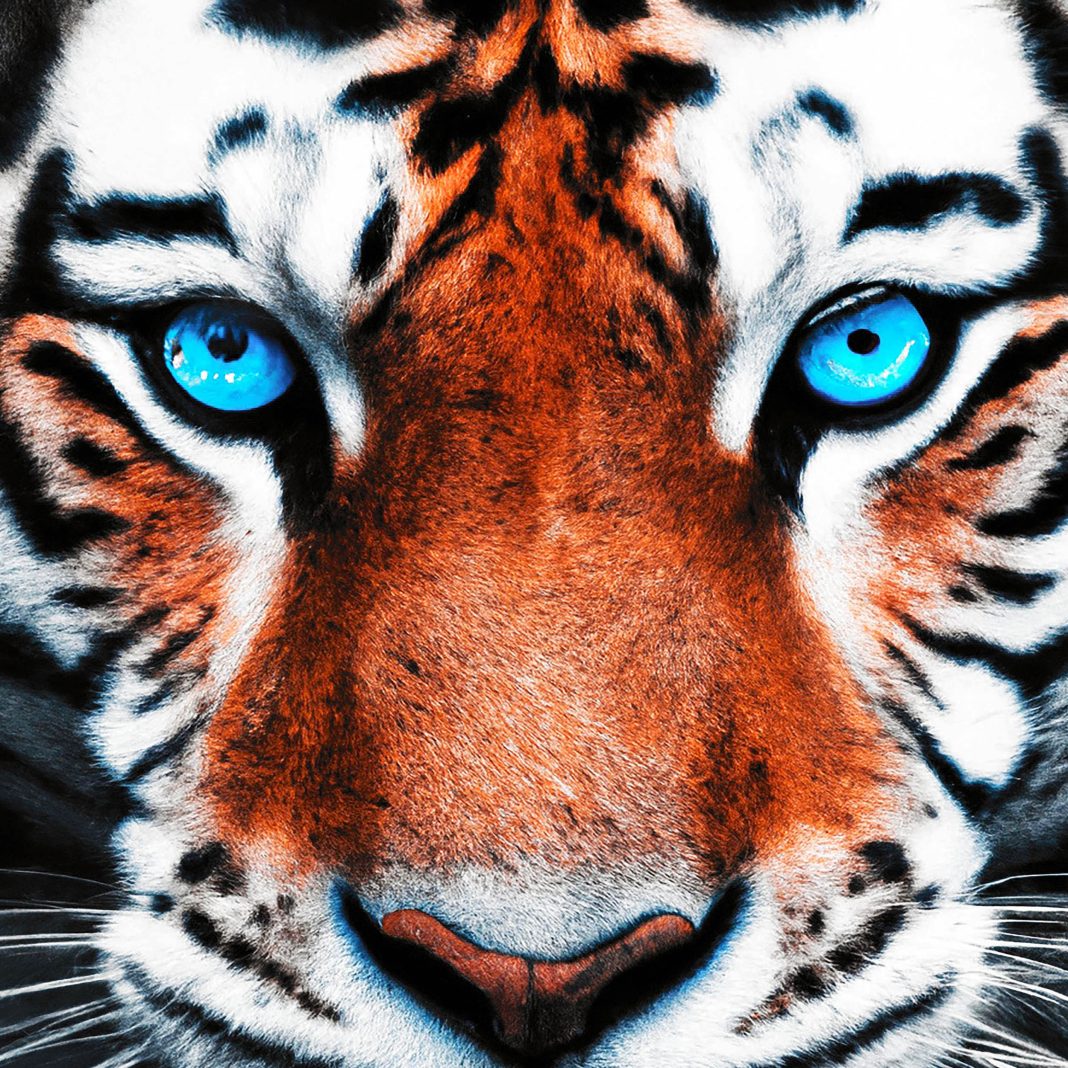
Our perception of the world is largely defined by what our senses can detect. For humans, sight is a dominant sense, allowing us to marvel at a vibrant spectrum of colors. Yet, this spectrum is just a sliver of the electromagnetic radiation that surrounds us. What if we told you that many animals experience a vastly different, often more colorful, reality than we do?
A new wave of camera technology is now offering us an unprecedented glimpse into these hidden worlds, revealing incredible colors and patterns that have long remained beyond human comprehension. This isn’t just a gimmick; it’s a scientific tool that is fundamentally changing how we understand animal behavior, ecology, and even evolution.
Beyond the Human Rainbow
For humans, the visible light spectrum ranges from red to violet. Colors like infrared and ultraviolet (UV) are simply invisible to our eyes. However, a significant portion of the animal kingdom perceives light outside this narrow band. Bees, for instance, are renowned for their ability to see UV light. To them, a flower that appears uniformly yellow to us might display intricate UV patterns, acting as a “nectar guide” pointing directly to its reward. Many birds, reptiles, and fish also possess UV vision, using it for everything from distinguishing mates and recognizing predators to locating food sources.
Consider a bird’s plumage. What might look like a plain brown feather to a human could, to another bird, be an iridescent spectacle of UV-reflective patterns, crucial for species recognition and courtship displays. This camera technology acts as a translator, taking these invisible wavelengths and presenting them in a way our human eyes can process, effectively showing us what a bee or a bird experiences.
How This Vision Translator Works
So, how does a camera capture something our eyes cannot? These specialized cameras are equipped with sensors designed to detect wavelengths beyond our visible spectrum, particularly in the ultraviolet range. They often employ specific filters that block out visible light, allowing only UV light to reach the sensor. The camera then processes this UV data and assigns it a color within our visible spectrum, effectively creating an image where UV information is represented by a color we can see, such as blue or purple.
This isn’t about seeing UV directly, but rather about visualizing its presence and intensity. The resulting images are not just scientifically valuable; they are often breathtakingly beautiful, showcasing patterns and hues that challenge our preconceived notions of the natural world.
“It’s like peeling back a layer of reality we never knew existed,” explains Dr. Elena Petrova, a biophotonics researcher. “Suddenly, the world around us is bursting with new information, invisible to the naked human eye but crucial for countless species. This technology allows us to truly empathize with their sensory experience.“
Implications for Science and Beyond
The impact of this technology extends across various scientific disciplines. Ecologists can gain deeper insights into plant-pollinator interactions, understanding precisely how flowers advertise to their intended visitors. Ethologists can better decode animal communication signals, revealing the nuances of mate selection or territorial displays. For conservationists, understanding an animal’s visual world can inform strategies for habitat preservation or species reintroduction.
Beyond scientific research, these cameras offer a profound shift in perspective. They invite us to reconsider the limitations of our own senses and to appreciate the astounding diversity of life’s sensory experiences. By allowing us to glimpse the world through animal eyes, this technology not only expands our understanding of nature but also fosters a deeper connection to the intricate, often hidden, beauty that surrounds us.
The development of cameras that reveal unseen colors marks an exciting frontier in our exploration of the natural world. It reminds us that there’s always more to see, more to understand, and countless incredible perspectives waiting to be unveiled.

