


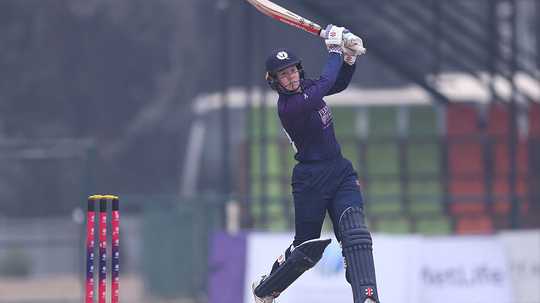
Cricket, often dubbed a religion in India, sees its fervent followers keenly observing not just the titanic clashes between Test-playing nations but also the compelling narratives emerging from the associate world. It was against this backdrop that Scotland delivered a resounding statement in the tri-series opener, ruthlessly crushing the Netherlands by nine wickets. The dominant performance has sent a clear message to their rivals and captivated fans globally, including a significant section of Indian enthusiasts who appreciate the growing competitiveness across all tiers of international cricket.
The match, a pivotal start to the multi-nation tournament, saw Scotland showcase a blend of disciplined bowling and aggressive batting that left the Dutch side with little to no answer. The comprehensive victory wasn’t merely about the two points; it was a testament to Scotland’s intent and preparation, setting a formidable benchmark for the series ahead.
The Dutch Batting Conundrum: A Relentless Scottish Attack
Winning the toss and electing to bat first, the Netherlands were expected to set a challenging total, leveraging their known batting prowess. However, from the outset, Scotland’s bowlers had other plans. Spearheaded by a fiery spell from their pace attack and complemented by intelligent spin, the Scottish unit choked the Dutch batsmen for runs and picked up wickets at regular intervals.
The opening overs saw the Netherlands struggle to find rhythm against a tight line and length, with both openers falling cheaply. Key middle-order batsmen attempted to stitch together partnerships, but the relentless pressure from Scotland prevented any significant recovery. Michael Leask, with his off-spin, proved particularly effective in the middle overs, breaking crucial stands and stifling scoring opportunities. Supported by the pace and accuracy of Brad Wheal and Safyaan Sharif, who consistently hit the right areas, the Scottish bowlers shared the spoils, dismantling the Dutch innings for a paltry 120 runs within their allotted overs. The lack of significant contributions meant that the Netherlands never truly built a platform, their innings concluding well short of a competitive total, leaving their bowlers with a monumental task.
Scotland’s Clinical Chase: An Exhibition of Aggression and Control
Chasing a modest target of 121, Scotland approached their innings with a clear strategy: aggression mixed with calculated risks. The opening pair of George Munsey and Michael Jones set the tone early, unleashing a flurry of boundaries that quickly negated any pressure the target might have imposed. Their partnership was a masterclass in modern white-ball batting – Munsey, known for his audacious strokeplay, found the gaps with ease, while Jones provided a solid, equally attacking foil.
The duo put on a rapid 80-run stand, effectively taking the game away from the Netherlands within the powerplay itself. The solitary wicket to fall was that of Michael Jones, who departed after a well-made 45, attempting to accelerate further. However, this only brought Brandon McMullen to the crease, who, alongside a well-set Munsey (who remained unbeaten with a commanding 60*), ensured there were no further hiccups. The Scottish batsmen continued to score at a brisk pace, reaching the target with an astounding nine wickets in hand and overs to spare, underscoring the absolute dominance of their performance. The chase was not just quick but also incredibly composed, highlighting the team’s depth and confidence.
“It was a fantastic team effort right from the start,” a spokesperson for the Scottish camp remarked post-match. “Our bowlers set the tone beautifully, and the batsmen then executed the chase with clinical precision. This is the kind of momentum we aim to build on for the rest of the series.“
Implications and the Road Ahead
For Indian cricket enthusiasts, who frequently delve beyond the familiar narratives, such convincing performances by associate nations offer valuable insights into the expanding global cricket ecosystem. Scotland’s emphatic victory not only provides them with a significant net run rate boost but also instills immense confidence early in the tournament. It demonstrates their readiness to compete at a higher level and makes them formidable contenders for the tri-series title. For the Netherlands, this defeat serves as a stark reminder of the competitive demands of international cricket and the need for significant introspection, particularly concerning their batting approach and ability to withstand sustained pressure.
The remainder of the series promises intriguing contests as both teams, alongside the third participant, will vie for supremacy. Scotland will aim to maintain their winning momentum, while the Netherlands will be eager to bounce back and prove their mettle. As the cricketing world watches, these matches underscore the talent and potential that lies within the associate ranks, a fact increasingly appreciated by the global cricket community, including its vast Indian audience.
This tri-series, therefore, is more than just a battle for points; it’s a showcase of burgeoning talent and competitive spirit, offering a thrilling spectacle for all who follow the beautiful game.

