


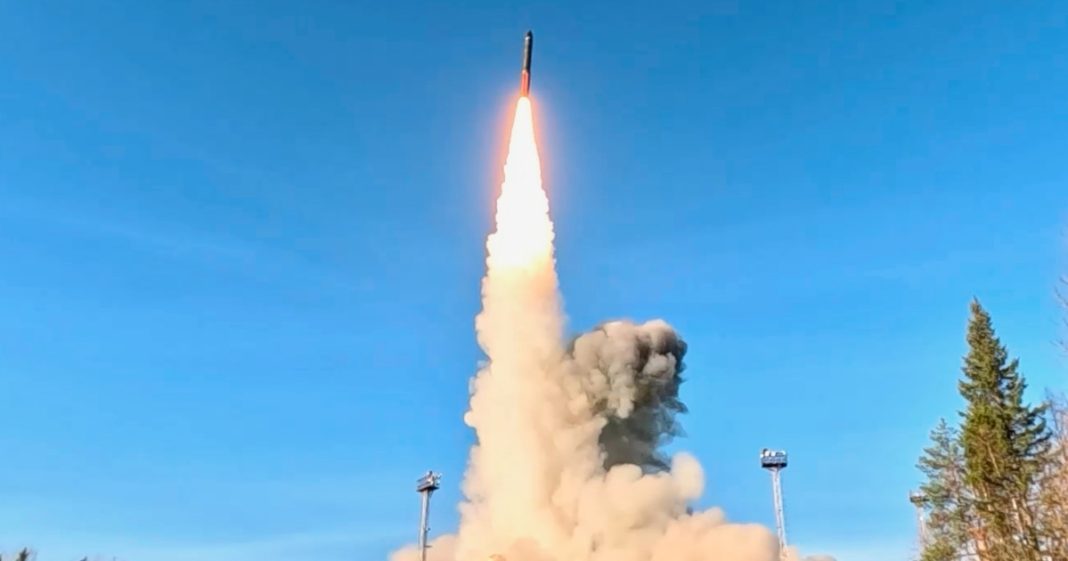
Russia’s recent announcement and execution of large-scale nuclear drills have once again cast a long shadow over global strategic stability. These exercises, involving various components of its strategic forces, are a complex and potent signal, interpreted differently across the geopolitical spectrum. While Moscow consistently frames them as routine and necessary for defense, many in the West view them with alarm, raising critical questions about escalation, deterrence, and the delicate balance of international power. TrendLyric delves into the multifaceted implications of these powerful demonstrations.
The Rationale Behind the Drills
From Moscow’s perspective, these drills are presented not merely as routine training but as a legitimate and robust response to what it perceives as growing threats to its national security. The backdrop for such powerful demonstrations includes the expansion of military alliances near its borders, coupled with significant Western support for adversaries in ongoing conflicts. Russia’s strategic doctrine consistently emphasizes deterrence against potential aggression, and these drills are a tangible manifestation of that principle.
The exercises serve multiple purposes: testing the readiness and operational capabilities of its nuclear triad (land, sea, and air-based systems), ensuring the reliability of its command and control structures, and validating the effectiveness of new equipment and doctrines. Fundamentally, they are a powerful deterrent message, signaling Russia’s resolve and its perceived willingness to use all means to protect its vital interests. It’s a classic move in great power competition, meant to remind potential adversaries of Russia’s ultimate red lines and capabilities.
As one geopolitical analyst, Anya Petrova, recently observed, “These drills are a multifaceted display, serving both an internal validation of readiness and an external communication of red lines in a highly charged international environment.” This perspective underscores the dual nature of these military exercises: a domestic show of strength and a potent international signal.
Global Repercussions and Western Concerns
The international community, particularly Western nations and their allies, invariably views these drills through a lens of deep concern. Far from being seen as purely defensive, they are often interpreted as escalatory, deliberately provocative, and contributing to heightened global tensions. The sheer scale and public nature of these exercises amplify anxieties about the current geopolitical climate.
Fears of miscalculation are paramount. In an era already fraught with tension, any large-scale military exercise involving nuclear forces carries an inherent risk of misinterpretation, accidental engagement, or unintended escalation. The potential for a localized incident to spiral into a broader conflict is a constant worry, especially when channels of communication are strained.
Critics further argue that such drills undermine efforts towards nuclear arms control and non-proliferation. By openly displaying and discussing nuclear weapons capabilities, they challenge the long-standing global taboo against nuclear use and the broader goal of reducing the prominence of these weapons in international relations. The drills invariably lead to renewed calls for transparency, de-escalation, and robust diplomatic efforts between nuclear powers to prevent accidental conflict and manage crises effectively. The display reinforces the precariousness of global security when strategic forces are openly flexed.
Conclusion: Navigating the Nuclear Shadow
Russia’s large-scale nuclear drills represent a complex interplay of national security imperatives, geopolitical signaling, and international anxiety. For Moscow, they are presented as a necessary assertion of sovereignty and a demonstration of deterrence capabilities. For much of the rest of the world, especially the West, they are a stark and unsettling reminder of the ever-present dangers of nuclear brinkmanship in a volatile global landscape.
Understanding these exercises requires looking beyond simplistic narratives, acknowledging the various motivations at play while also recognizing the significant risks they entail for global stability. In an era of heightened global tensions, the onus remains on all major powers to exercise restraint, maintain open dialogue, and prioritize de-escalation to prevent the shadows of nuclear drills from ever becoming a more devastating reality.

