


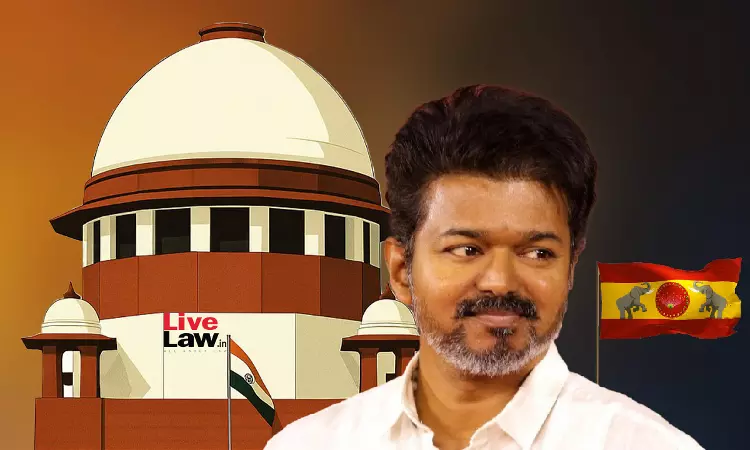
In a move that has sent ripples across political and legal circles in Tamil Nadu and beyond, a public interest litigation (PIL) has been filed in the Supreme Court of India, seeking a directive to the Tamil Nadu Governor to invite actor-politician Vijay’s recently launched party, Tamizhaga Vetri Kazhagam (TVK), to form the government. This extraordinary plea bypasses traditional electoral processes, raising significant questions about constitutional propriety, gubernatorial discretion, and the very foundations of democratic government formation in India.
The petition, lodged by a Chennai-based legal activist, has immediately captured national attention for its audacious nature. While the specifics of the hearing are awaited, the filing itself underscores a growing trend of political anticipation surrounding Vijay’s entry into active politics and highlights the complex interplay between popular sentiment and established constitutional mechanisms.
The Unprecedented Plea and Its Grounds
The petitioner, identifying as a concerned citizen and legal professional, has reportedly argued that the incumbent government in Tamil Nadu has lost the confidence of the populace, citing various socio-economic issues and governance challenges. While no formal no-confidence motion has been passed in the legislative assembly, the plea attempts to interpret widespread public sentiment and perceived popularity as a legitimate basis for government formation, even in the absence of a general election.
The core of the argument rests on the assertion that Tamizhaga Vetri Kazhagam (TVK), led by superstar Vijay, represents the emerging aspirations of the Tamil people and enjoys an unprecedented surge in public support, even before contesting any elections. The petition purportedly contends that this immense public backing should be acknowledged by the constitutional head of the state, the Governor, and translated into an invitation to form the government, ensuring a responsive and popular administration. This interpretation challenges deeply entrenched electoral and constitutional norms, where a party typically proves its majority on the floor of the legislative assembly after being elected by the people.
Legal analysts have widely acknowledged the novel, if not contentious, nature of this plea. It essentially seeks judicial intervention to circumvent the established democratic process of elections, where citizens cast their votes to elect representatives, and the party or coalition with a majority of seats subsequently forms the government. The Supreme Court’s response to such a petition will undoubtedly set significant precedents regarding the boundaries of judicial activism and the sanctity of electoral mandates.
Constitutional Provisions and Gubernatorial Discretion
The role of the Governor in government formation is a crucial aspect of India’s parliamentary democracy. As per Article 164 of the Constitution, the Chief Minister is appointed by the Governor, and other Ministers are appointed by the Governor on the advice of the Chief Minister. Traditionally, the Governor invites the leader of the party or coalition that commands a clear majority in the Legislative Assembly following a general election.
In situations where no single party secures a clear majority, the Governor exercises discretion, often inviting the leader of the largest single party or a pre-poll alliance to prove their majority on the floor of the House within a stipulated time. This exercise of discretion is firmly rooted in the outcomes of an election and the demonstrated ability to command legislative support, not merely perceived popular appeal outside the electoral framework.
“This plea is unprecedented in its nature, challenging established democratic norms and constitutional procedures regarding government formation,” remarked Dr. Anjali Sharma, a constitutional law expert based in Delhi. “Governors typically exercise their discretion post-election results, inviting parties that demonstrate a clear legislative majority. To seek such a directive from the Supreme Court before any electoral mandate sets a concerning precedent, potentially blurring the lines between popular sentiment and the constitutional requirement of a legislative majority.”
The plea’s demand for the Supreme Court to direct the Governor also raises questions about the principle of separation of powers. Courts generally refrain from interfering in matters that fall squarely within the political domain or the discretionary powers of constitutional functionaries, unless there is a clear violation of constitutional principles or a breakdown of the constitutional machinery.
The Political Context: TVK’s Emergence in Tamil Nadu
Vijay’s formal entry into politics with the launch of TVK earlier this year has undeniably created a significant buzz in Tamil Nadu. The party has announced its intention to contest the 2026 assembly elections, signaling a long-term political strategy. Vijay’s massive fan base and his critical pronouncements on existing political issues have fueled speculation about his potential impact on the state’s political landscape, long dominated by Dravidian majors.
While TVK’s emergence signifies a fresh face in Tamil Nadu politics, the current plea represents an attempt to fast-track its ascension to power, bypassing the arduous, yet democratically vital, process of electoral contestation and proving legislative majority. This highly unusual legal move might be interpreted by some as a reflection of the fervent hope and impatience among a section of Vijay’s supporters, eager to see their idol at the helm.
As the Supreme Court prepares to hear this unique petition, the legal community and political observers will be keenly watching. The verdict will not only determine the immediate fate of this particular plea but will also have profound implications for the interpretation of democratic processes, constitutional roles, and the pathway to power in Indian politics. It underscores the critical importance of elections as the legitimate means through which the will of the people is expressed and translated into governance.
—

