


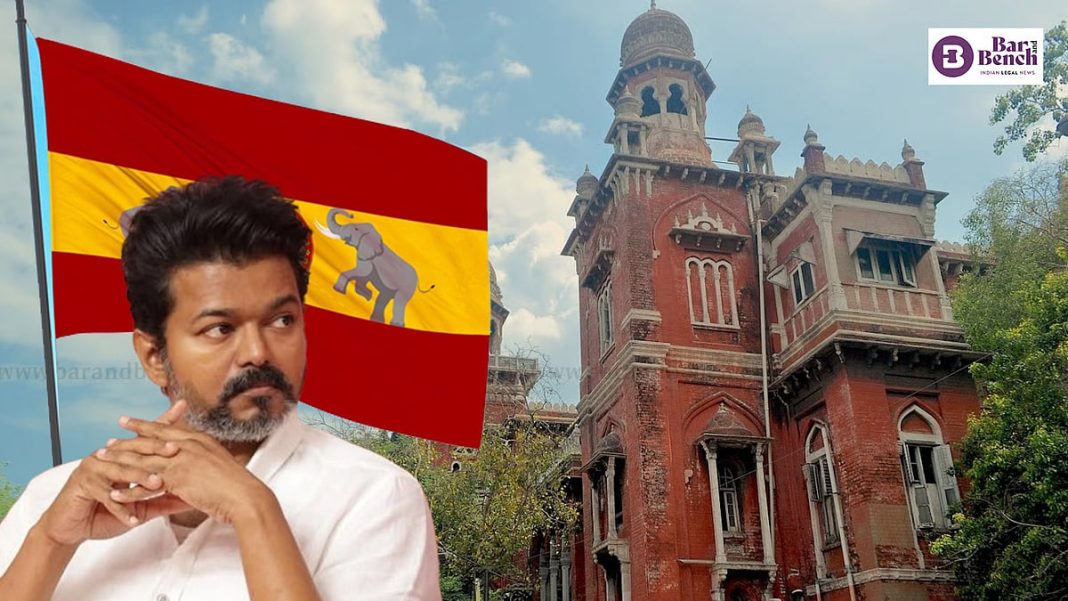
A recent appointment by Tamil Nadu Chief Minister Vijay has landed squarely in the legal spotlight, with a Public Interest Litigation (PIL) filed in the Madras High Court challenging his decision to appoint his personal astrologer as an Officer on Special Duty (OSD). The move has ignited a debate over the appropriateness of such appointments within public administration, raising pertinent questions about governance, secularism, and the utilization of state resources. As the High Court prepares to hear the matter, the unfolding developments are being closely watched by citizens and legal experts alike, eager to understand the implications for accountability and transparency in public office.
The Appointment Under Scrutiny
The controversy stems from Chief Minister Vijay’s reported decision to appoint Mr. Karuppasamy, identified in media reports and the court plea as his personal astrologer, to the post of Officer on Special Duty. While the specific duties assigned to Mr. Karuppasamy have not been publicly detailed, the OSD position is generally designated for officials tasked with assisting a high-ranking functionary on specific projects or administrative matters, often requiring specialized knowledge or administrative experience. The appointment of an individual primarily known for their astrological services to such a role has sparked considerable public discourse.
Critics argue that the nature of an OSD position demands administrative acumen, policy understanding, or expertise relevant to governmental functions, rather than a personal advisory role based on spiritual or astrological insights. The petitioner’s core contention hinges on the idea that public appointments must serve a public purpose and be based on merit and relevant qualifications, aligning with the principles of efficient and secular governance. The perceived lack of such alignment in this particular appointment has become the flashpoint for the legal challenge.
Grounds for the Legal Challenge
The Public Interest Litigation, filed by an advocate and public interest litigant, M. Subramanian, in the Madras High Court, posits several critical arguments against the Chief Minister’s decision. At its heart, the plea challenges the appointment on grounds of alleged misuse of public office and state resources. The petitioner contends that appointing a personal astrologer to a salaried government position, complete with perks and access to government machinery, amounts to an expenditure of taxpayer money for personal ends rather than public service. This, the plea argues, is a direct violation of public trust and established norms of governmental appointments.
Furthermore, the petition highlights concerns regarding the secular fabric of the state. India’s Constitution enshrines secularism, dictating that the government must remain neutral concerning religious matters. While personal beliefs are protected, the integration of an astrologer into a formal government advisory role, even if informally, is seen by many as blurring the lines between personal faith and state function.
“Public offices are not extensions of private households,” the petitioner’s counsel argued during a preliminary mention. “Every appointment, especially one funded by the exchequer, must withstand the test of public purpose and constitutional propriety. This appointment, by its very nature, appears to fail that test on multiple counts, including secular governance and meritocracy.”
The plea seeks to annul the appointment and prevent similar decisions in the future, urging the court to uphold the sanctity of public institutions.
Wider Implications and Precedents
The Madras High Court’s handling of this PIL could set a significant precedent for future governmental appointments across India. The case brings to the forefront the enduring debate about the discretionary powers of Chief Ministers and other high-ranking officials in making appointments, particularly to non-cadre or advisory roles. While political leaders are often granted latitude in choosing their immediate support staff, the question here is whether that discretion extends to formal government positions for individuals whose primary expertise lies outside conventional administrative or policy domains, especially when taxpayer money is involved.
Past instances of personal staff appointments have occasionally drawn scrutiny, but the specific nature of this role – that of a personal astrologer – adds a unique dimension to the legal and ethical debate. This case serves as a crucial reminder of the need for transparency, accountability, and adherence to constitutional principles in all facets of public administration. A ruling against the appointment could reinforce the boundaries of executive power and underscore the importance of rational criteria for all public positions. Conversely, a decision upholding it might necessitate a broader discussion on the evolving definitions of ‘public purpose’ and appropriate qualifications for governmental roles in a diverse and democratic society.
As the legal process unfolds, the Madras High Court’s deliberations will undoubtedly contribute to a clearer understanding of the checks and balances governing public appointments. The outcome will be instrumental in shaping future governance practices and reaffirming the principles that underpin India’s secular and democratic institutions.

