


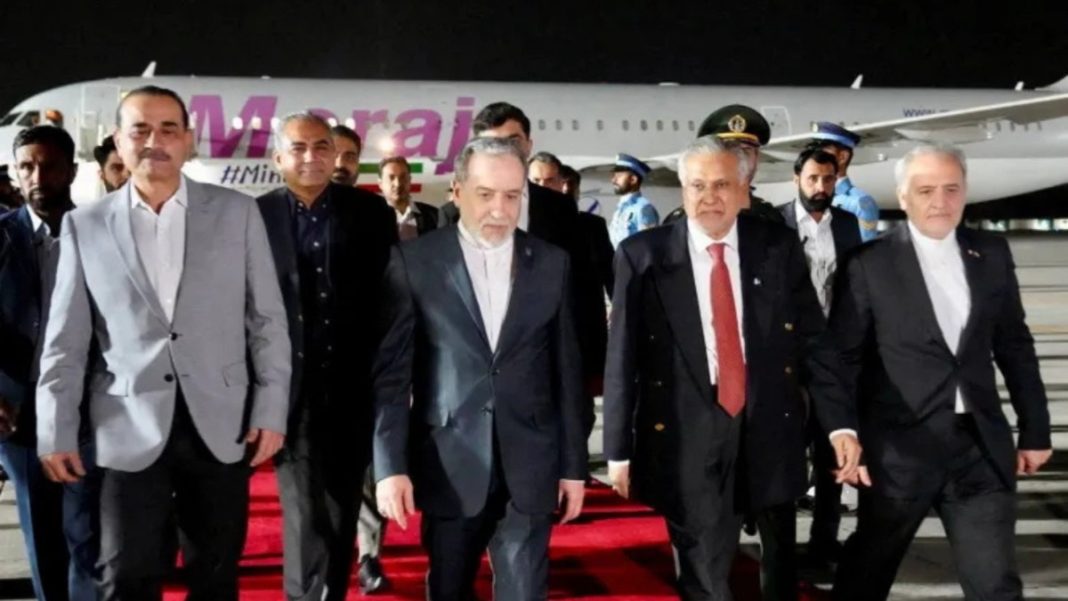
In the perpetually complex theatre of West Asian geopolitics, a new pronouncement from a prominent figure aligned with former President Donald Trump’s foreign policy vision has sent ripples through diplomatic circles. The call to exclude Pakistan from any “endgame” scenario involving the United States and Iran underscores a deep-seated distrust and a re-evaluation of regional alliances. For India, a nation with significant strategic interests in both West Asia and its immediate neighbourhood, such a development carries profound implications, necessitating a careful calibration of its foreign policy objectives.
The US-Iran dynamic remains one of the most volatile flashpoints globally, characterized by stringent sanctions, proxy conflicts, and a persistent nuclear standoff. As the discussion shifts from containment to a potential “endgame” – implying a definitive resolution or a significant reordering of relationships – the question of who sits at the negotiating table becomes paramount. It is within this charged atmosphere that voices in Washington, particularly from the more hawkish Republican factions, are advocating for a streamlined approach that bypasses traditional, and often perceived as unreliable, intermediaries.
The Rationale Behind Pakistan’s Exclusion
The suggestion to sideline Pakistan stems from a long history of perceived ambiguity in its foreign policy, particularly concerning its relationships with regional powers and non-state actors. From a hawkish American perspective, Pakistan has often been seen as playing a double game, receiving US aid while allegedly providing safe haven or tacit support to groups operating against US interests in Afghanistan. Extending this skepticism to the US-Iran equation is a logical, albeit controversial, step for those advocating a more decisive and less encumbered US foreign policy.
Proponents of this view argue that Pakistan’s complex internal dynamics, its deep-rooted institutional biases, and its historical reliance on balancing acts rather than firm alliances make it an unsuitable partner for sensitive, high-stakes negotiations concerning Iran. The argument posits that including Pakistan would only introduce additional layers of complexity and potential leakage, hindering any genuine progress towards a lasting resolution. Instead, these strategists prefer working with partners deemed more ideologically aligned or demonstrably reliable.
For Pakistan, which shares a significant border with Iran and has multifaceted historical, religious, and economic ties, being excluded from such critical regional dialogues would be a considerable blow to its aspirations for regional influence and stability. Islamabad has consistently sought a role as a responsible regional player, often positioning itself as a potential mediator. The Trump ally’s proposal directly challenges this self-perception and could isolate Pakistan further at a time when its economy faces immense pressure and its geopolitical relevance is increasingly questioned.
India’s Strategic Calculus and Regional Stability
The call for Pakistan’s exclusion, while originating from US domestic foreign policy debates, resonates deeply within India due to its intricate regional security landscape. India maintains robust, albeit carefully balanced, relationships with both the US and Iran. Its strategic partnership with the United States has grown significantly, encompassing defence cooperation, trade, and shared democratic values. Simultaneously, India has historical and economic ties with Iran, exemplified by its investment in the Chabahar Port, a vital gateway for trade with Afghanistan and Central Asia that bypasses Pakistan.
From an Indian perspective, a reduction in Pakistan’s regional leverage, particularly concerning West Asian security matters, could be viewed as strategically advantageous. It would diminish Pakistan’s ability to interfere or exert influence in a region critical for India’s energy security and connectivity initiatives. Furthermore, if the US-Iran “endgame” were to lead to a more stable, predictable West Asia, it would directly benefit India’s economic and strategic interests, reducing the risk of supply chain disruptions and regional conflicts.
However, India’s approach remains one of cautious pragmatism. While a diminished role for Pakistan might be appealing, India also recognizes the dangers of regional instability. An overly isolated or destabilized Pakistan could inadvertently create new security challenges on India’s western flank. India’s foreign policy has historically emphasized multilateralism and regional cooperation, seeking to build bridges rather than deepen divides. “As the geopolitical landscape in West Asia continues its unpredictable shifts, India must remain pragmatic, leveraging its strategic partnerships while safeguarding its independent foreign policy objectives, especially concerning energy security and regional connectivity projects like Chabahar,” observes Dr. Rohan Mehta, a Delhi-based foreign policy analyst.
The move also presents an opportunity for India to potentially enhance its own role as a trusted partner in regional dialogues. By maintaining its balanced approach with both Washington and Tehran, India could position itself as a credible interlocutor, provided such an opportunity arises and aligns with its broader strategic goals. The ongoing challenges of extremism, cross-border terrorism, and maritime security in the Indian Ocean demand a concerted effort, where stability, rather than further fragmentation, remains the ultimate goal.
Conclusion
The proposition from a Trump ally to keep Pakistan out of the US-Iran “endgame” signals a potential paradigm shift in how Washington perceives its regional partners and defines its strategic priorities. For Pakistan, it represents a significant challenge to its diplomatic standing and influence. For India, the development presents a complex mix of opportunities and potential risks. Navigating this evolving geopolitical chessboard will require deft diplomacy, a clear articulation of national interests, and a continued commitment to regional stability, ensuring that India’s strategic autonomy remains at the forefront of its foreign policy decisions.

