


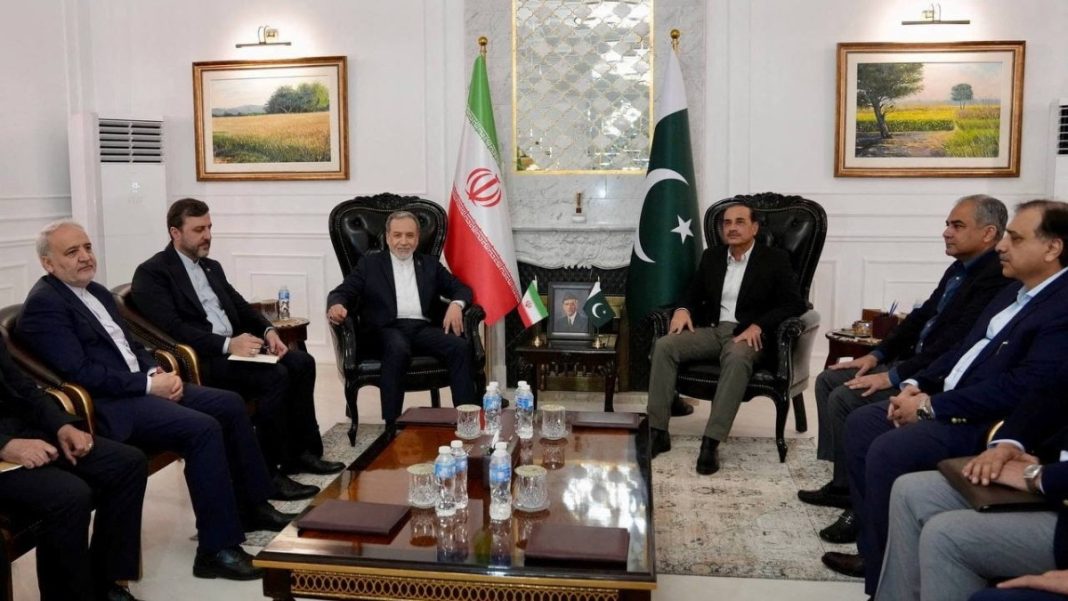
The intricate tapestry of West Asian diplomacy has seen another intriguing thread unravel, with an Iranian Member of Parliament reportedly asserting that Pakistan is no longer a suitable intermediary for stalled regional talks. This statement, emerging amid a period of dynamic geopolitical realignments and fluctuating bilateral relations, casts a fresh light on the complexities of mediation efforts and the perceived neutrality of potential facilitators in the region. For India, a significant player with deep strategic interests in West Asia, these developments warrant careful observation.
The Iranian Stance: A Shift in Diplomatic Calculus
The remarks attributed to an unnamed Iranian MP underscore a potential shift in Tehran’s diplomatic strategy and its assessment of regional partners. While specific details of the “stalled talks” remain somewhat ambiguous, the statement likely pertains to broader efforts at de-escalation or normalization within the Gulf region, where Pakistan has historically sought to play a mediating role, particularly between Iran and Saudi Arabia. The Iranian lawmaker’s contention that Pakistan lacks the necessary impartiality or influence to effectively bridge divides signals a significant erosion of trust or confidence.
This assessment is particularly noteworthy given the long-standing, albeit often complex, relationship between Iran and Pakistan. Despite being neighbours and fellow Muslim-majority nations, their ties have been punctuated by periods of cooperation and tension, including recent border skirmishes and differing alignments in regional conflicts. The perception of Pakistan’s suitability as a mediator could be influenced by a myriad of factors, including its perceived tilt towards certain Gulf monarchies, its internal political instability, or its own foreign policy priorities that may not always align with Tehran’s.
A regional analyst, speaking on condition of anonymity, noted, “When a nation explicitly questions the neutrality of a potential mediator, it suggests a deeper evaluation of that intermediary’s intrinsic biases or capabilities to genuinely foster dialogue without pushing its own agenda. This isn’t just about a specific set of talks; it’s about a foundational trust in diplomatic integrity.” This sentiment highlights the critical importance of a mediator’s perceived objectivity, a quality that appears to be in question from Iran’s perspective regarding Pakistan.
Pakistan’s Diplomatic Aspirations and Regional Realities
Pakistan has often harboured ambitions of being a significant diplomatic player in the Islamic world, frequently offering its good offices to mediate disputes. Its historical efforts to facilitate dialogue between Iran and Saudi Arabia, for instance, have been well-documented. However, the Iranian MP’s statement directly challenges this self-perception and Pakistan’s practical ability to fulfil such a role effectively in the current geopolitical climate.
The reasons behind Iran’s diminished trust could be multifaceted. Pakistan’s deep economic and military ties with Saudi Arabia and other Gulf states, which are often at odds with Iran’s regional agenda, might be a primary concern. Furthermore, internal political and economic turmoil within Pakistan could also be seen as undermining its capacity to act as a stable or credible arbiter on the international stage. Any mediator needs to project an image of strength and unwavering focus, qualities that prolonged domestic instability can erode.
This development could force Pakistan to re-evaluate its foreign policy objectives and the feasibility of its regional diplomatic ambitions. A reduced role in West Asian mediation efforts might compel Islamabad to focus more acutely on its immediate neighbourhood or to recalibrate its approach to major regional powers, including Iran, to rebuild confidence.
India’s Strategic Vantage Point and Regional Dynamics
For India, the unfolding narrative presents a complex yet familiar landscape. New Delhi maintains strong and independent relations with all major powers in West Asia, including Iran and Saudi Arabia, as well as with the UAE and other Gulf Cooperation Council (GCC) states. India’s energy security, trade interests, and the welfare of its vast diaspora in the region are intrinsically linked to West Asian stability.
The questioning of Pakistan’s mediating role by a key regional player like Iran doesn’t directly alter India’s foreign policy, which has consistently focused on bilateral engagement and multilateral cooperation through forums like the I2U2 group (India, Israel, UAE, USA) or the India-Middle East-Europe Economic Corridor (IMEC). However, it does underscore the shifting dynamics and potential for new diplomatic openings or challenges. India has often advocated for regional solutions to regional problems, emphasizing dialogue and de-escalation without taking sides.
While India has not historically sought to be a primary mediator in intra-West Asian disputes, its growing economic heft and strategic influence mean it is always a keenly observed participant. A decline in Pakistan’s perceived diplomatic utility for certain nations might indirectly create a vacuum or alter the balance of influence in regional dialogue, which India will undoubtedly monitor to safeguard its own interests and promote stability.
The Iranian MP’s assertion about Pakistan’s unsuitability as an intermediary marks a significant moment in West Asian diplomacy. It reflects a re-evaluation of trust and influence in a region already characterized by intricate alliances and rivalries. For Pakistan, it signals a challenge to its diplomatic aspirations. For the broader region and observers like India, it highlights the continuing fluidity of geopolitical partnerships and the perennial search for credible, impartial channels for dialogue in a quest for enduring peace and stability.

