


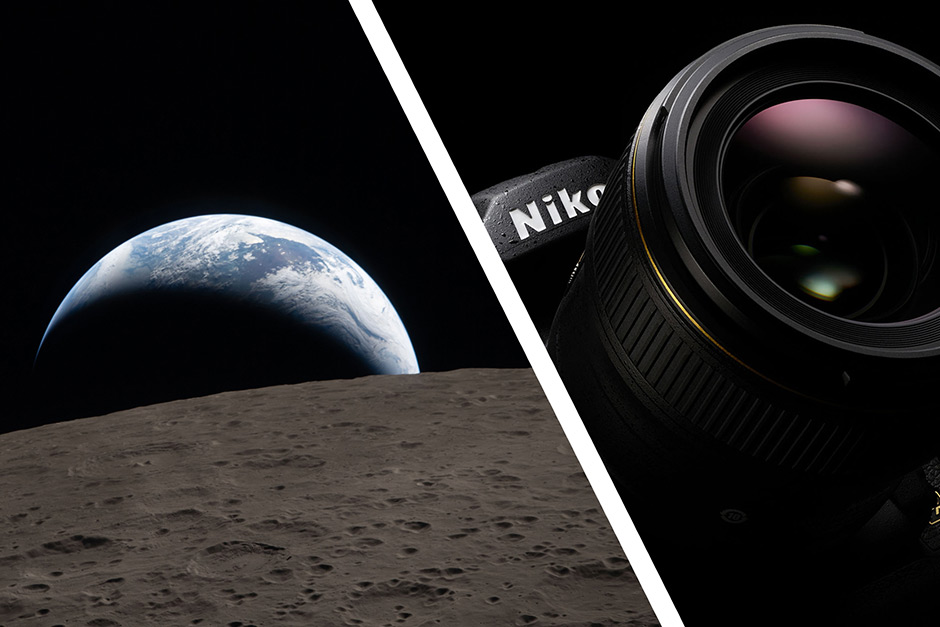
The vast expanse of space continues to beckon humanity, and with each passing mission, our understanding and visual documentation of the cosmos expand. In a development that has captured the attention of space enthusiasts and photography aficionados worldwide, NASA recently shared stunning images of the Moon and Earth, captured during the Artemis II mission’s initial phases. What makes these photographs particularly noteworthy is the camera behind them: a robust Nikon D5 DSLR, operated by the astronauts aboard the Orion spacecraft.
For India, a nation rapidly charting its own ambitious course in space exploration with missions like Chandrayaan and the impending Gaganyaan, such photographic insights from NASA’s lunar journey offer both inspiration and valuable context. These images are not just picturesque; they are a testament to human ingenuity and the enduring quest to push the boundaries of our celestial neighbourhood.
Capturing the Cosmos: The Nikon D5’s Role in Artemis II
The choice of a commercially available Nikon D5 for documenting crucial phases of the Artemis II mission underscores a pragmatic approach to space photography. While specialised scientific instruments are central to many missions, using off-the-shelf, yet professional-grade, equipment like the D5 provides astronauts with a reliable and familiar tool for capturing their experiences. Known for its exceptional low-light performance, rugged build, and high-resolution imaging capabilities, the Nikon D5 is a favourite among professional photographers, and its deployment in the harsh environment of space speaks volumes about its durability and performance.
The images released offer a captivating dual perspective: the stark, cratered surface of the Moon alongside the vibrant, swirling blues and whites of Earth. These photographs were taken by the four Artemis II astronauts – NASA’s Reid Wiseman, Victor Glover, and Christina Koch, and CSA’s Jeremy Hansen – as they piloted the Orion spacecraft through its initial trajectory towards a lunar flyby. Their mission, a crucial crewed test flight, aims to validate the spacecraft’s systems and provide invaluable operational experience before Artemis III attempts to land humans on the lunar south pole.
The clarity and detail in the photographs serve multiple purposes. Beyond inspiring awe, they provide important visual data on the crew’s perspective of their surroundings, offering insights into potential observation points for future lunar missions and contributing to public engagement by making the distant realities of space more tangible.
A Glimpse from Lunar Orbit: Significance for India and Beyond
For India, which recently achieved the historic soft landing of Chandrayaan-3 on the Moon’s south pole and is gearing up for its first human spaceflight mission, Gaganyaan, the images from Artemis II resonate deeply. NASA’s use of a standard, high-performance camera to document a crewed lunar mission can inspire Indian engineers and astronauts to consider similar practical approaches for visual documentation during future ISRO missions. The ability to capture high-quality, easily shareable images from space not only fuels public interest but also provides invaluable data for mission analysis and future planning.
These photos highlight the incredible vantage point human spaceflight offers and the importance of observation. As India expands its presence in space, collaborations with agencies like NASA become increasingly vital. Shared experiences and technological insights, even down to the choice of camera gear, foster a sense of global partnership in humanity’s collective journey beyond Earth. The visuals serve as a powerful reminder of the shared goals in space exploration: to learn, to inspire, and to prepare for a multi-planetary future.
Commenting on the broader impact of such imagery, NASA Administrator Bill Nelson stated, “These images are more than just photographs; they are a window into our future, a testament to the human spirit of exploration, and a preview of the breathtaking views our Artemis astronauts will experience on their journey to return humanity to the Moon.” This sentiment perfectly encapsulates the blend of scientific objective and profound human experience that these photographs represent.
The Path Forward: Inspiring a New Generation
The images shared by NASA are not merely static pictures; they are dynamic representations of human ambition and technological prowess. By showcasing the Moon and Earth from the vantage point of the Artemis II crew, they bring the vastness of space a little closer to home. For aspiring Indian scientists, engineers, and astronauts, these photographs serve as a powerful catalyst, igniting imaginations and reinforcing the dream of contributing to humanity’s ongoing narrative of space exploration.
As the Artemis program progresses towards its ambitious goal of returning humans to the lunar surface and eventually venturing to Mars, and as ISRO continues to push the boundaries of Indian space capabilities, the role of observation and documentation will remain paramount. The trusty Nikon D5, having delivered spectacular results from the Orion spacecraft, stands as a symbol of how familiar technology can play a pivotal role in charting humanity’s course through the cosmos.

