


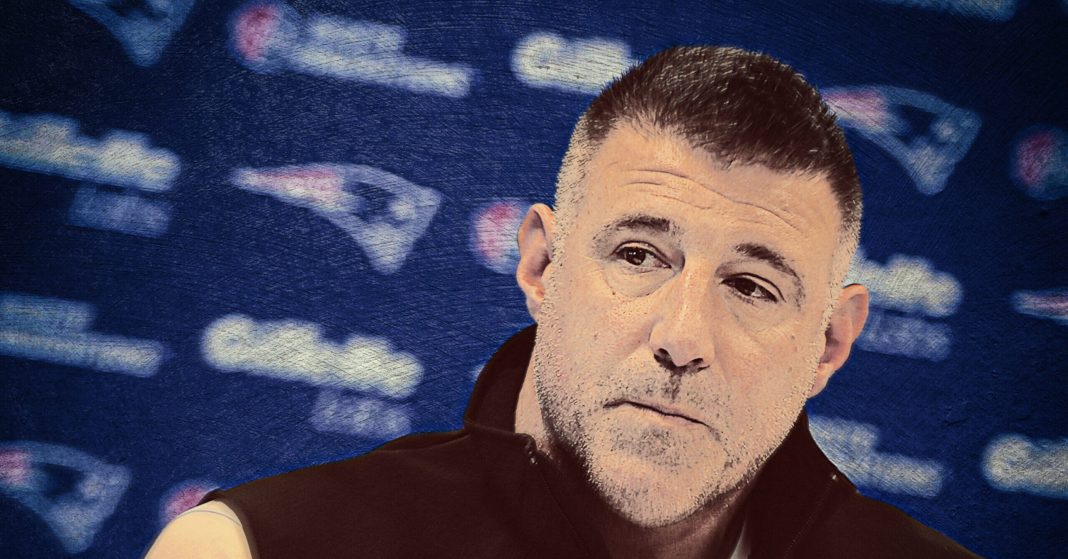
The NFL Draft is a spectacle of hope, future stars, and team-building strategy. Yet, amidst the buzz of picks and predictions, sometimes an unexpected narrative captures the spotlight. This year, for many observers, that narrative centered squarely on former Tennessee Titans head coach Mike Vrabel, whose presence on the draft floor seemed to overshadow, or at least heavily influence, the discourse. Was it a calculated power play, a lingering shadow, or simply a misunderstood farewell from a franchise icon? Let’s dissect the optics and the underlying dynamics.
The Optics of a Sideline Figure
Mike Vrabel, known for his intense demeanor and commanding presence, was visible during the Titans’ selections, particularly alongside new head coach Brian Callahan. For many, his body language and proximity sparked immediate commentary. Social media and sports broadcasts lit up with discussions about whether Vrabel was there to genuinely support the new regime or if his presence felt more like a looming shadow over Callahan’s nascent leadership. It’s hard to ignore the perception when a figure of Vrabel’s stature, recently departed from the very organization, is so prominently featured.
The visual of him standing close, at times seemingly leaning in or whispering, fueled speculation. Was he offering insights, or was it interpreted as a subtle assertion of his enduring influence? In the high-stakes world of professional football, every gesture is analyzed, and Vrabel’s strong personality naturally draws attention. This immediate scrutiny painted a picture for some that suggested a strong ego at play, perhaps struggling to cede the stage to the new guard.
A Veteran’s Presence or a Lingering Shadow?
While the immediate reaction leaned towards an “ego” narrative, it’s crucial to consider alternative interpretations. Vrabel spent years building a reputation, a culture, and relationships within the Titans organization. His presence could have been simply that of a former leader observing an event he’s been deeply embedded in for years. Perhaps he was offering genuine well wishes, or even just sharing a moment with people he worked with for a significant period.
There’s a subtle but important distinction between a desire to remain relevant and an innate, strong personality that naturally commands attention. A long-time scout I spoke with suggested, “Vrabel’s always had a commanding presence. It’s easy to read into his every move, especially when he’s no longer the head guy. But sometimes, a strong personality is just a strong personality, and he might have just been there to see familiar faces or support players he knew.” This perspective offers a counterbalance, suggesting that what appeared to be an ego-driven display could simply be Vrabel being himself, albeit in a context where his usual authority was no longer officially sanctioned.
Navigating the Transition in Public View
The NFL Draft is a public spectacle, making any transition, especially a high-profile one like a coaching change, incredibly tricky to navigate under the watchful eyes of fans and media. Vrabel’s exit from the Titans was abrupt and somewhat surprising to many. His subsequent presence at the draft, regardless of intent, placed him directly in contrast with the team’s new direction and leadership.
For Brian Callahan, establishing his own identity and command is paramount. Vrabel’s proximity, even if well-meaning, might inadvertently make that more challenging, at least optically. It highlights the delicate balance between respect for past contributions and the necessity for the new leadership to forge its own path without perceived interference. The narrative around Vrabel’s draft appearance serves as a potent reminder of how quickly public perception can shape reality, especially when a strong figure makes a public appearance in a context of recent change.
Conclusion
Ultimately, whether Mike Vrabel’s actions at the NFL Draft were driven by an undeniable ego or simply misinterpreted as such, the outcome was the same: his presence became a significant talking point. It underscores the challenges of high-profile transitions and the powerful role of public perception in the sports world. What one person sees as a display of lingering control, another might see as an emotional farewell or a show of support. The truth likely lies somewhere in the complex interplay of a strong personality, a public stage, and the natural human tendency to interpret and narrate events.

