


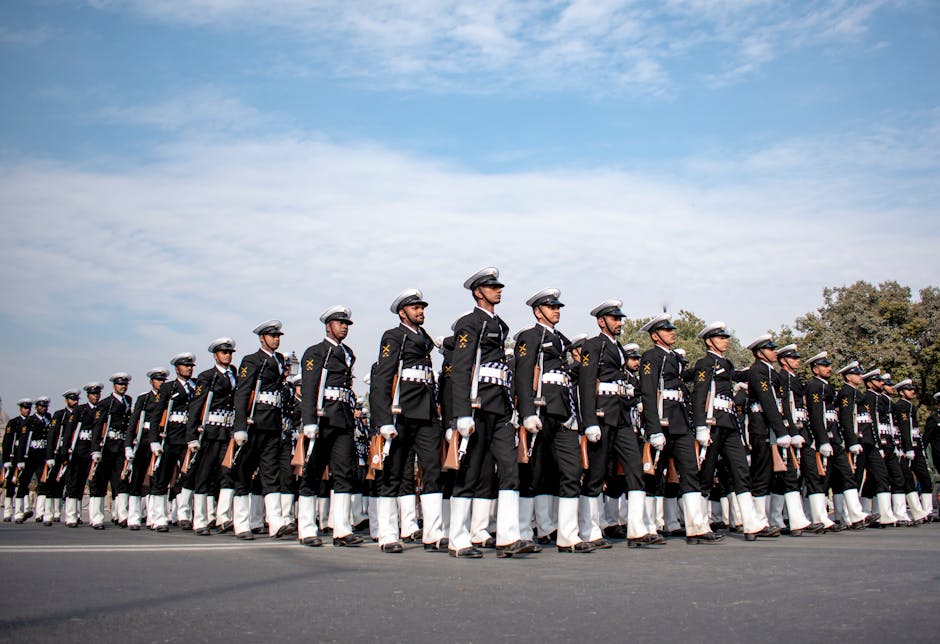
In a pivotal moment for India’s national security architecture, the nation has recently welcomed new leadership at the helm of its armed forces and naval command. The appointments of India’s new Chief of Defence Staff (CDS) and the new Navy Chief mark a significant transition, signaling continuity in strategic vision while preparing for evolving geopolitical challenges. These leaders step into their roles at a crucial juncture, tasked with enhancing military integration, modernizing capabilities, and safeguarding India’s extensive maritime and land interests.
A Unified Vision: India’s New Chief of Defence Staff Takes Charge
The assumption of office by India’s new Chief of Defence Staff underscores the nation’s steadfast commitment to fostering greater synergy and jointness across its Army, Navy, and Air Force. The CDS, a role established with the primary objective of providing single-point military advice to the government and streamlining defence planning, assumes immense responsibility. This apex military position is instrumental in driving theatre command integration, a monumental reform aimed at optimizing resource allocation and operational efficiency by unifying commands under a single commander.
The challenges facing the new CDS are multifaceted. These include accelerating the indigenization of defence production under the ‘Aatmanirbhar Bharat’ initiative, ensuring technological superiority in an era of rapid advancements, and effectively managing procurement processes. Furthermore, the CDS is tasked with fostering a cohesive strategy for confronting dynamic threats along India’s land borders and in its maritime neighbourhood. The emphasis remains on developing a future-ready fighting force capable of addressing conventional, unconventional, and hybrid warfare scenarios with agility and precision.
Charting the Course: The New Navy Chief at the Helm
Concurrently, the Indian Navy welcomes its new Chief, who takes charge of a force critical to India’s strategic autonomy and influence in the Indo-Pacific region. The Indian Ocean Region (IOR) is a geopolitical hotspot, characterized by increasing maritime traffic, resource competition, and the growing presence of extra-regional powers. The new Navy Chief’s mandate includes ensuring robust maritime domain awareness, strengthening naval capabilities to protect India’s vast coastline and economic zones, and maintaining freedom of navigation in international waters.
Key priorities for the new naval leadership will undoubtedly revolve around accelerating indigenous shipbuilding projects, including the acquisition of advanced submarines and aircraft carriers, to enhance the Navy’s blue-water capabilities. Expanding bilateral and multilateral naval exercises with friendly nations, bolstering anti-piracy operations, and strengthening disaster relief efforts are also high on the agenda. The focus will be on leveraging technology for network-centric warfare, enhancing underwater domain capabilities, and ensuring the Navy remains a formidable and credible force, projecting India’s strategic interests across the global commons.
“Ensuring the paramount security of our nation, fostering unprecedented jointmanship, and embracing self-reliance in defence are the bedrock principles guiding our path forward,” a senior defence official reportedly articulated, emphasizing the comprehensive vision for the armed forces under the new leadership.
The synergy between the new CDS and the new Navy Chief will be crucial. Their collaborative efforts will shape India’s defence strategy, ensuring that both land-based and maritime threats are addressed with a unified approach. The appointments underscore a commitment to evolving India’s defence capabilities to meet contemporary challenges and secure its position as a responsible and strong regional power.
As India continues its trajectory towards becoming a major global power, the leadership of its defence forces is more critical than ever. The new CDS and Navy Chief carry the immense responsibility of upholding the nation’s sovereignty, protecting its citizens, and modernizing its military to face the complexities of the 21st century. Their tenure promises a period of strategic evolution and continued strengthening of India’s defence prowess, ensuring peace and stability in a dynamic world.

