


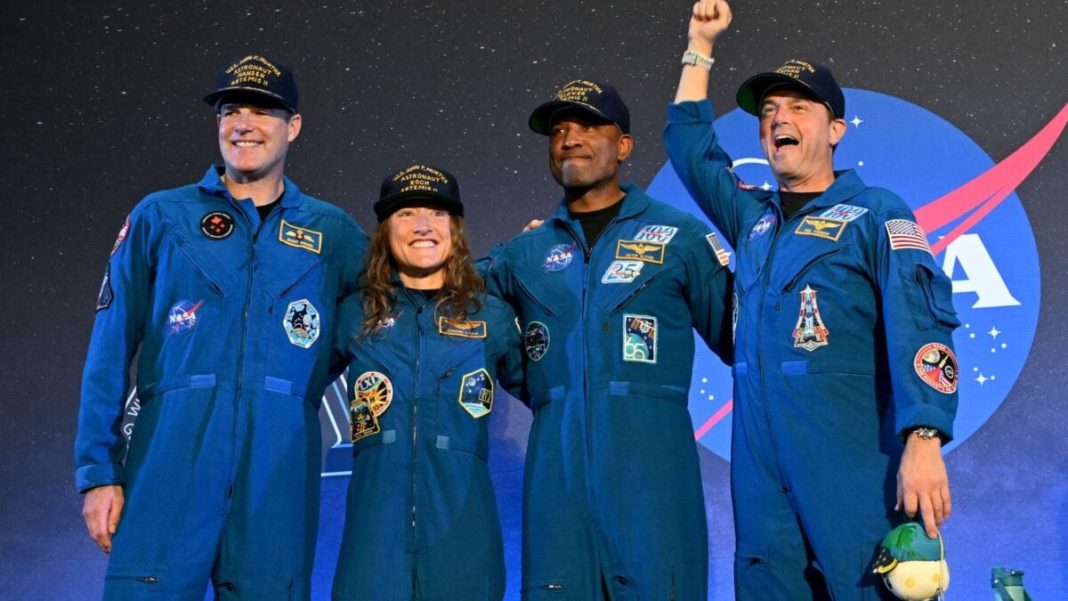
The successful conclusion of Artemis 2, marking a critical milestone in humanity’s renewed journey to the Moon, has reverberated across the global space community. While the mission primarily focused on testing the Orion spacecraft’s systems with a crew in deep space, its flawless execution has now set the stage for an unprecedented era of scientific inquiry. With the foundational capabilities validated, the gaze of scientists worldwide, including a burgeoning Indian space sector, turns towards what comes next: the deep dives into lunar mysteries that Artemis 3 and subsequent missions promise.
Unlocking Lunar Mysteries: The South Pole and Water Ice
The immediate and most compelling target for scientific investigation post-Artemis 2 is undoubtedly the Moon’s south pole. This enigmatic region, destined to be the landing site for Artemis 3, holds secrets that could redefine our understanding of the Moon and its potential for future human exploration. Previous missions, including India’s Chandrayaan-1 and NASA’s Lunar Reconnaissance Orbiter, have provided compelling evidence of water ice deposits within the permanently shadowed regions (PSRs) of the south pole’s craters. Now, with humans on the ground, direct study becomes a reality.
Scientists are eager to perform in-situ analysis of this water ice. What is its precise composition? How pure is it? What form does it take – frost, ice sheets, or mixed with regolith? Understanding these properties is crucial not just for lunar science but also for practical applications. Water ice could be a vital resource for future lunar habitats, providing drinking water, breathable air through electrolysis, and critically, rocket fuel (liquid hydrogen and oxygen). The extraction and utilisation of these resources, known as In-Situ Resource Utilisation (ISRU), could transform lunar exploration from an expensive, supply-dependent endeavour to a self-sustaining one. Discoveries here could accelerate the establishment of a long-term human presence on the Moon, a prospect that deeply interests space agencies like ISRO, which envisions its own sustained lunar missions.
Deepening Our Understanding of Lunar Geology and Formation
Beyond the allure of water ice, the lunar south pole offers a pristine geological canvas largely untouched by previous human missions. The Apollo missions primarily focused on the equatorial regions, bringing back invaluable samples. However, the south pole presents a distinct geological context, with some of the Moon’s oldest and deepest craters, potentially exposing ancient subsurface materials.
Scientists will meticulously study the lunar regolith, rocks, and geological structures unique to this polar region. Samples returned from the south pole are expected to provide unprecedented insights into the Moon’s formation, its early volcanic history, and the intense bombardment period of the early solar system. For instance, some of the PSLs are believed to be “cold traps” that have preserved volatiles, including organic molecules, delivered by comets and asteroids over billions of years. Such discoveries could shed light on the origins of water and life-forming compounds in our solar system, and perhaps even on Earth itself.
Dr. Anjali Sharma, a planetary geologist at the Indian Institute of Astrophysics, commented, “The success of Artemis 2 opens the door to truly groundbreaking lunar geology. We’re not just looking for water; we’re seeking to read the Moon’s autobiography from an entirely new chapter. Every rock, every layer of regolith at the south pole will be a piece of a cosmic puzzle that could fundamentally alter our understanding of planetary evolution.” This quest extends to understanding the Moon’s internal structure and seismic activity, which could be studied with new-generation seismometers deployed in a strategically significant location.
Preparing for Future Human and Scientific Expeditions
Artemis 2’s validation of Orion’s deep-space capabilities is not an end but a robust beginning. Its success directly paves the way for the Lunar Gateway, a planned space station in orbit around the Moon, and ultimately for longer-duration human missions to Mars and beyond. Scientists will leverage the experiences and data from Artemis 2 to refine life support systems, radiation shielding, and astronaut well-being protocols for extended stays in deep space.
The Moon itself, post-Artemis 2, becomes a critical testbed for technologies necessary for interplanetary travel. It can serve as an ideal location for low-gravity manufacturing and assembly, using lunar resources to build infrastructure. Furthermore, the far side of the Moon, shielded from Earth’s radio noise, presents an unparalleled environment for radio astronomy and other sensitive scientific observations. Scientists envision massive radio telescopes built on the lunar surface, offering a clearer view of the early universe than ever possible from Earth. The lessons learned, technologies developed, and scientific discoveries made through the Artemis program will have profound implications for humanity’s expansion throughout the solar system, with India aspiring to be a significant contributor to this grand scientific endeavour.
In conclusion, the successful completion of Artemis 2 marks a transition from proving technology to pursuing profound scientific knowledge. From unlocking the secrets of lunar water ice at the south pole to delving into the Moon’s ancient geological past and laying the groundwork for future deep-space exploration, the scientific community is on the cusp of discoveries that could reshape our cosmic perspective. The journey ahead promises not just new data, but potentially new paradigms for understanding our place in the universe.

