


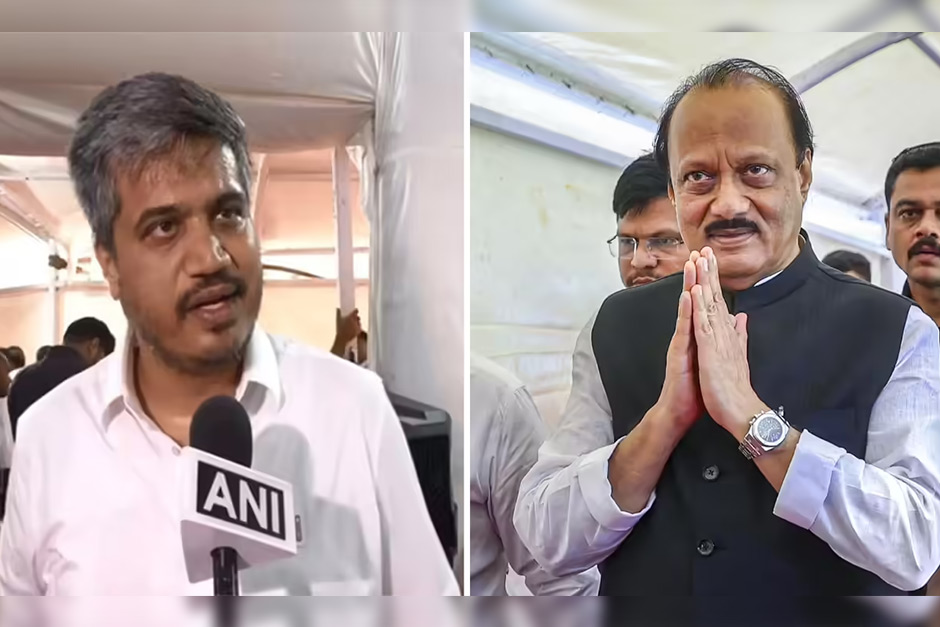
A recent aviation incident involving Maharashtra Deputy Chief Minister Ajit Pawar has escalated into a significant political debate, drawing sharp criticism and demands for accountability from opposition leaders. The incident, where a private aircraft carrying Ajit Pawar experienced a technical snag and made an emergency landing, has prompted Nationalist Congress Party (NCP) (Sharadchandra Pawar faction) MLA Rohit Pawar to write directly to Prime Minister Narendra Modi, calling for the immediate resignation of Union Civil Aviation Minister Jyotiraditya Scindia.
The incident has reignited concerns over air safety standards in India, especially given a series of recent technical glitches reported in both private and commercial flights. Rohit Pawar’s decisive action underscores a growing demand for stringent oversight and a robust response from the authorities to ensure the safety of air travel across the nation.
Emergency Landing: A Close Call for Ajit Pawar
The incident occurred on a recent evening when a private plane transporting Deputy Chief Minister Ajit Pawar from Baramati to Mumbai encountered a technical malfunction mid-air. According to reports, the aircraft was forced to execute an emergency landing at Mumbai’s Chhatrapati Shivaji Maharaj International Airport. Fortunately, all passengers and crew on board were reported safe, averting what could have been a far more serious outcome. While initial reports might have sensationalized the event, it has been widely clarified as a technical snag requiring an unscheduled landing, rather than a full-fledged crash.
This event, though ending without casualty, has cast a spotlight on the reliability and maintenance protocols of private charter operations, as well as the broader regulatory framework governing Indian airspace. The incident came shortly after a similar technical snag involving another prominent political figure, Praful Patel, further fueling the apprehension among the public and political circles about the state of aviation safety.
Rohit Pawar’s Scathing Letter and Demand for Resignation
Reacting swiftly to the incident, Rohit Pawar, a prominent voice from the opposition and Ajit Pawar’s cousin, penned a strongly worded letter to Prime Minister Narendra Modi. In his communication, Pawar expressed deep concern over the recurring nature of such aviation incidents and directly linked them to what he perceives as a failure in leadership and oversight within the Civil Aviation Ministry.
His primary demand outlined in the letter is the immediate resignation of Union Civil Aviation Minister Jyotiraditya Scindia. Rohit Pawar argued that the increasing frequency of technical snags, emergency landings, and other safety-related issues in Indian aviation points towards a systemic problem that requires urgent and decisive action. He emphasized that the safety of passengers should be paramount and any compromise on this front is unacceptable.
“The recent string of aviation incidents, including the one involving Deputy CM Ajit Pawar, highlights a disturbing trend of laxity and insufficient oversight in our civil aviation sector. It is imperative that accountability is established at the highest level to restore public trust. I urge you, Prime Minister, to demand the resignation of the Union Civil Aviation Minister, as these incidents reflect a serious failure in ensuring passenger safety.”
Pawar’s letter meticulously detailed his apprehensions about the Directorate General of Civil Aviation’s (DGCA) effectiveness in monitoring aircraft maintenance, pilot training, and overall adherence to international safety standards. He underscored the need for a comprehensive review of existing protocols and a proactive approach to prevent future occurrences rather than reacting after incidents take place.
Broader Implications for Aviation Safety in India
The Ajit Pawar incident and Rohit Pawar’s subsequent demand have sparked a broader discussion about the robustness of India’s aviation infrastructure and regulatory mechanisms. With India rapidly expanding its air travel network, both commercial and private, the pressure on existing systems, air traffic control, and maintenance facilities is immense. Critics argue that while the expansion is welcome, it must not come at the cost of safety.
The Civil Aviation Ministry and the DGCA are now under increased scrutiny to address these concerns. While authorities often attribute such incidents to isolated technical glitches, the perception of a growing trend demands a more thorough and transparent investigation into the root causes. Public confidence in air travel, a crucial component for the industry’s growth, hinges on the government’s ability to demonstrate unwavering commitment to safety.
As the political discourse intensifies, the ball is now in the government’s court to respond to these serious allegations and demonstrate concrete steps towards enhancing aviation safety. Rohit Pawar’s call for ministerial resignation serves as a powerful reminder that in matters of public safety, accountability is not just desired but demanded.

