


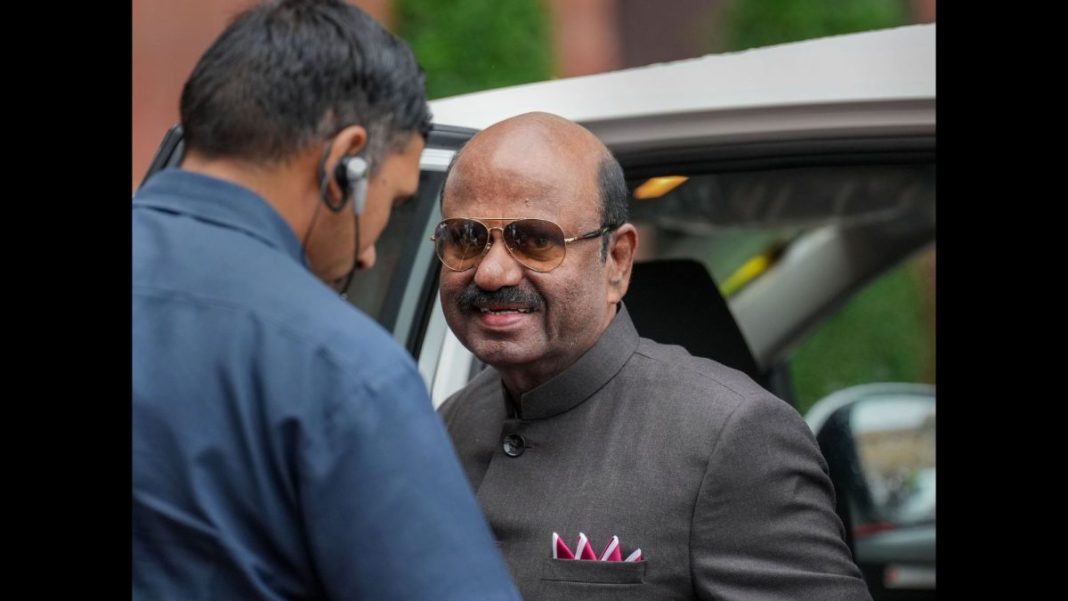
In a significant and sudden development that has sent ripples through West Bengal’s political landscape, Governor CV Ananda Bose has tendered his resignation, effective immediately. The unexpected departure, confirmed by sources within the Raj Bhavan and the Union Home Ministry, comes at a crucial juncture, less than two years before the state is set to face the fiercely contested 2026 Assembly elections. Chief Minister Mamata Banerjee, expressing palpable surprise, reportedly stated she was “shocked” by the news, indicating the lack of prior intimation and the potential political vacuum this creates.
The Governor’s Tenure and Sudden Exit
CV Ananda Bose, a retired IAS officer, assumed the gubernatorial role in November 2022, succeeding La. Ganesan. His tenure, spanning just over two years, was marked by a relatively less contentious relationship with the Trinamool Congress (TMC) state government compared to some of his predecessors. While the inherent friction points between a state government and a Governor appointed by the Centre occasionally surfaced – primarily concerning university appointments and legislative assent – the overarching narrative was one of cautious cooperation rather than outright confrontation. Bose often emphasized his role as a bridge between the Centre and the state, advocating for dialogue and constitutional propriety.
The reasons behind Governor Bose’s sudden resignation remain officially undisclosed, fueling intense speculation across political circles. While personal reasons or health concerns are often cited in such instances, the timing, just ahead of a major electoral cycle, suggests potential political undercurrents. Rumours range from a possible disagreement with the central government over certain state policies to a proactive move ahead of a potential new assignment. The abruptness of the announcement has left many bewildered, particularly the state’s ruling party, which now faces the prospect of navigating a new gubernatorial relationship.
Political Ramifications and Mamata Banerjee’s Reaction
Chief Minister Mamata Banerjee’s “shocked” reaction encapsulates the broader sentiment within the TMC camp. Governors in India, as constitutional heads of states and representatives of the central government, play a pivotal role, particularly in states with a history of Centre-state tensions like West Bengal. A new appointment could either ease existing tensions or introduce fresh challenges. The TMC has historically viewed gubernatorial actions through the lens of political partisanship, often accusing Governors of acting at the behest of the BJP-led central government.
The absence of a full-time Governor in the run-up to the 2026 polls adds an element of uncertainty. From granting assent to bills passed by the Assembly to overseeing the conduct of elections, the Governor’s office holds significant constitutional powers. The interim arrangement, usually involving the Chief Justice of the Calcutta High Court or the Governor of a neighbouring state, might not fully mitigate the political implications.
Speaking on the matter, Dr. Ritwick Sen, a prominent political analyst based in Kolkata, commented, “This sudden departure introduces an element of unpredictability into Bengal politics, especially as parties gear up for the crucial 2026 electoral battle. While the immediate impact on day-to-day governance might be minimal, the symbolic and strategic implications are profound. The nature of the next gubernatorial appointment will be closely watched, as it could signal the Centre’s approach towards West Bengal in the coming years.”
The Road Ahead: Navigating a New Chapter
The immediate task for the Union government will be to appoint an interim Governor, followed by a permanent replacement. The selection process will undoubtedly be scrutinized, with both the TMC and opposition parties keenly observing who is chosen to fill the Raj Bhavan. The next Governor will inherit a politically charged environment, characterised by intense rivalry between the TMC and the BJP, and a strong regional identity.
For Mamata Banerjee and the TMC, the focus will be on maintaining stability and ensuring that the constitutional machinery continues to function smoothly. The unexpected change also provides an opportunity for both the state and central governments to redefine their relationship, ideally fostering greater cooperation based on constitutional principles. However, given the competitive nature of Indian politics, especially with an election looming, the Governor’s office is likely to remain a focal point of discussion and, potentially, political contention.
As West Bengal prepares for a new chapter in its gubernatorial history, the sudden resignation of Governor CV Ananda Bose serves as a stark reminder of the dynamic and often unpredictable nature of Indian politics, where even seemingly administrative changes can hold significant electoral and governance ramifications.

