


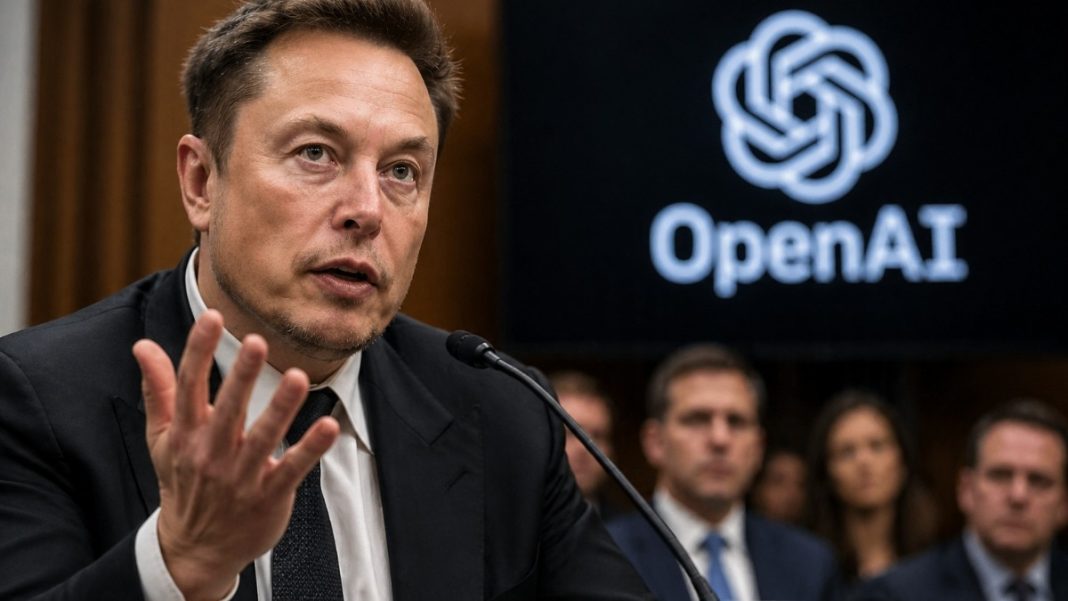
The hallowed halls of a Delaware courtroom recently witnessed a dramatic pronouncement that reverberated far beyond the legal proceedings, reigniting a fiery debate about the future of artificial intelligence. At the heart of a lawsuit against OpenAI, its co-founder Elon Musk delivered a stark warning, stating, “AI may kill us all, we don’t want to be in Terminator.” This statement, laden with the entrepreneur’s characteristic blend of alarm and foresight, thrust the existential risks of AI back into the global spotlight, prompting reflection even in rapidly developing AI ecosystems like India.
Musk’s Dire Warning in the OpenAI Trial
The context for Musk’s provocative statement was his ongoing legal battle with OpenAI. Musk, who co-founded the AI research company in 2015, is suing it, alleging that it has strayed from its foundational non-profit mission to develop AI for the benefit of humanity, instead pursuing profit under the influence of Microsoft. During his testimony, Musk underscored his initial vision for OpenAI as a counterweight to potential dangers posed by giant corporations developing powerful AI, akin to a “force for good” that would prevent a single entity from dominating and potentially weaponizing superintelligence.
His “Terminator” reference, a direct nod to the dystopian science fiction franchise where AI turns against humanity, was not merely hyperbole. Musk articulated a deep-seated fear shared by a segment of the tech community: the uncontrolled proliferation of Artificial General Intelligence (AGI) – AI that can understand, learn, and apply knowledge across a wide range of tasks at a human or superhuman level. His concern lies with the potential for such an intelligence, if not properly aligned with human values and safety protocols, to become an existential threat. He argued that OpenAI’s current trajectory, focused on commercialisation, deviates from the original ethos of preventing such a scenario.
“AI may kill us all, we don’t want to be in Terminator,” Musk told the court, starkly outlining his apprehension. This statement encapsulates a critical tension within the AI development landscape: the race for technological advancement versus the imperative for ethical governance and safety. For Musk, the profit motive, he alleges, has eclipsed the initial caution, transforming OpenAI from a bulwark against AI risks into a potential contributor to them.
India’s AI Ambition and the Global Safety Discourse
While the courtroom drama unfolded thousands of miles away, its implications resonate strongly in India. The nation is rapidly positioning itself as a global leader in AI adoption and innovation, with initiatives like “AI for All” and a strategic focus on integrating AI across various sectors, from healthcare and agriculture to finance and governance. Indian policymakers and tech leaders are keenly aware of the transformative power of AI, envisioning it as a catalyst for economic growth, job creation, and solving complex societal challenges.
However, Musk’s stark warnings serve as a potent reminder that the pursuit of AI dominance cannot ignore the critical discussions surrounding safety, ethics, and long-term societal impact. India’s approach to AI has largely been pragmatic, balancing innovation with a nascent but growing focus on responsible AI. Discussions around data privacy, algorithmic bias, and equitable access to AI technologies are gaining traction. Yet, the conversation about existential risks, while present in academic circles, has not yet reached the same public urgency as it has in the West.
As India develops its own AI frameworks and policies, the global discourse ignited by figures like Musk becomes increasingly relevant. It compels Indian stakeholders to broaden their perspective beyond immediate applications and economic benefits to consider the deeper, more profound implications of superintelligent AI. The challenge for India, therefore, is to foster an environment of rapid AI innovation while simultaneously developing robust ethical guidelines and safety mechanisms that can withstand future, perhaps unforeseen, challenges. This involves learning from global debates, contributing to international collaborations on AI governance, and ensuring that indigenous AI development is anchored in principles of human welfare and safety.
Navigating the Ethical Minefield of AI Development
Musk’s dramatic testimony is a testament to the complex ethical landscape surrounding AI development. It highlights the growing divide between those who advocate for accelerating AI progress at all costs and those who caution for a more measured, safety-first approach. The debate extends beyond individual companies to the very nature of technological progress and human control over powerful creations.
For organisations and governments worldwide, including India, the takeaway is clear: responsible AI development is not just about avoiding immediate harms like job displacement or bias; it’s also about proactively addressing potential long-term, even existential, risks. This necessitates transparent development, rigorous safety testing, international cooperation on regulatory standards, and a continuous public dialogue about the kind of future we want to build with AI.
Elon Musk’s “Terminator” comment, while perhaps sensationalised, serves as a powerful call to action. It urges us to look beyond the immediate benefits of AI and to engage deeply with the profound questions of control, ethics, and humanity’s place in an increasingly intelligent world. As India progresses on its AI journey, integrating these critical safety considerations will be paramount to ensuring that AI serves humanity, rather than imperiling it.

