


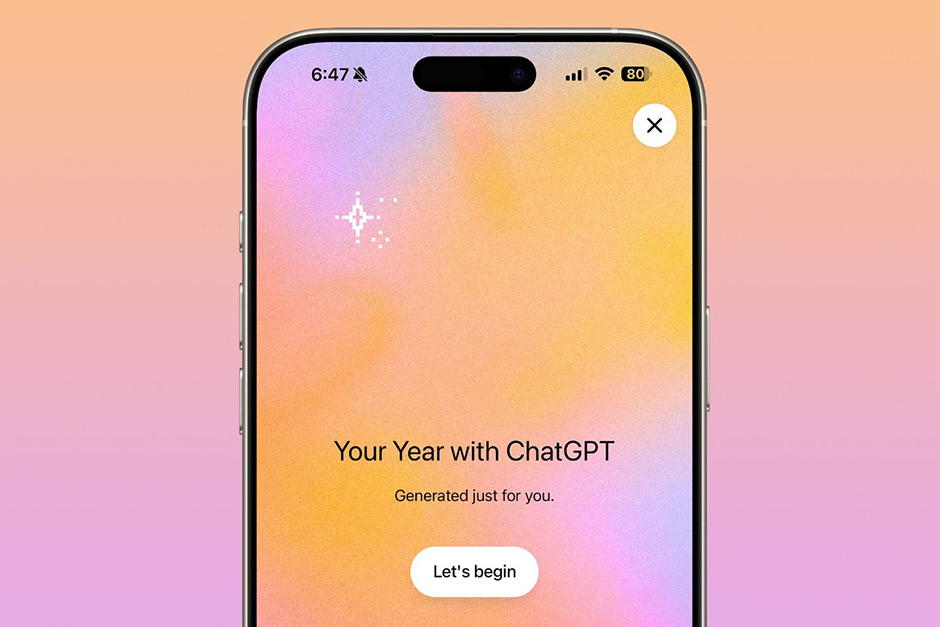
As digital tools increasingly integrate into our daily routines, a growing curiosity emerges about how we truly engage with them. For many, ChatGPT has become a regular companion for tasks ranging from drafting emails to brainstorming complex ideas. Reflecting on this interaction can offer valuable insights into our digital habits and the evolving role of AI in personal and professional spheres. The concept of “Your Year with ChatGPT” aims to provide just such a retrospective.
Understanding Your Digital Footprint with ChatGPT
The idea behind “Your Year with ChatGPT” is to offer users a personalized overview of their interactions with the AI assistant over a significant period, typically a year. It’s not merely a dry log of every prompt and response, but rather a curated summary designed to highlight usage patterns and key themes. Think of it as a personal activity report, distilling countless conversations into digestible insights.
This feature, when available, typically aggregates data to show more than just the volume of exchanges. It aims to reveal the nature of your interactions. Did you use ChatGPT primarily for creative writing, coding assistance, research, or perhaps a mix of everything? By presenting an accessible summary, it allows users to grasp the breadth and depth of their engagement without sifting through individual chat histories.
Unpacking Your Digital Dialogues: What Insights Emerge?
Delving into a summary of your year with ChatGPT can unveil several fascinating aspects of your digital behavior. One of the most prominent insights often relates to topic prevalence. Users might discover which subjects they most frequently queried, indicating areas of consistent interest or recurring need. For instance, an individual might find a surprising number of interactions related to learning a new skill, even if they hadn’t consciously tracked their progress.
Beyond content, these summaries can also shed light on usage patterns. Was your interaction sporadic, or did it follow a regular cadence? Did your prompting style evolve from simple questions to more complex, multi-turn dialogues? Such trends can illustrate how one adapts to and leverages AI capabilities over time. “I was genuinely surprised to see how much I relied on it for brainstorming ideas, a task I never consciously thought to delegate to AI before,” noted one user reflecting on their digital recap. This kind of self-discovery is a core element of the experience.
Furthermore, an overview might identify the types of tasks for which ChatGPT proved most valuable to you. Perhaps it was a powerful tool for overcoming writer’s block, a quick reference for factual information, or an aid in debugging code. Recognizing these areas of effectiveness can inform future interactions, enabling users to approach AI with more intention and efficiency.
Beyond the Data: Reflection and Intentional Engagement
While the quantitative data is informative, the true value of “Your Year with ChatGPT” lies in the opportunity for qualitative reflection. Reviewing these summaries provides a moment to pause and consider your relationship with advanced AI tools. It encourages questions like: How has ChatGPT influenced your productivity or creative process? Are there areas where you could integrate it more effectively, or perhaps less so?
This reflective exercise can foster a more mindful approach to technology use. Understanding your interaction patterns allows for a more intentional engagement moving forward. It’s an invitation to optimize your prompting strategies, explore new applications, or even identify potential overuse. In an era where AI is becoming increasingly ubiquitous, taking stock of our digital dialogues is a crucial step towards harnessing these powerful tools responsibly and effectively.
Ultimately, “Your Year with ChatGPT” offers a mirror to our evolving digital selves, providing a unique vantage point from which to observe and understand our engagement with one of the most transformative technologies of our time. It’s a chance to learn from our digital conversations and shape our future interactions with greater awareness.

