


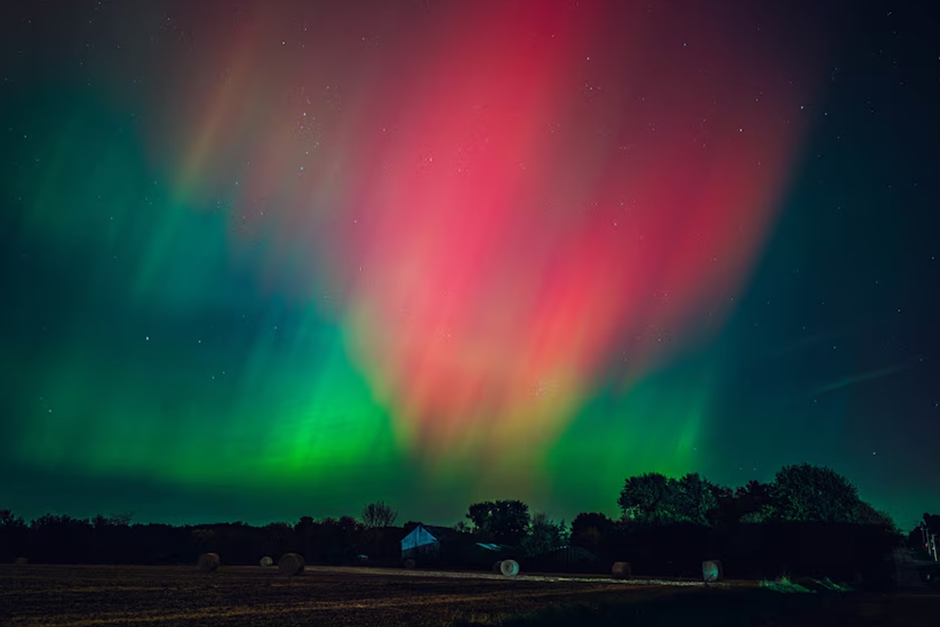
There’s a special kind of magic that settles over the world on Christmas Eve – a quiet anticipation, a glimmer of wonder. But imagine if that magic extended beyond twinkling lights and festive cheer, reaching up into the very heavens. This year, for residents in a specific band of northern states, there’s a tantalizing possibility that the night sky could ignite with the ethereal dance of the aurora borealis, painting the darkness with hues of green, pink, and violet. While never a guarantee, the potential for a dazzling Northern Lights display on such a significant night is a celestial prospect worth considering.
The Science of Celestial Spectacles
The Northern Lights, or aurora borealis, are a natural light display in the Earth’s sky, predominantly seen in high-latitude regions. They are the breathtaking result of charged particles from the sun colliding with gases in Earth’s upper atmosphere. When a solar flare or coronal mass ejection (CME) hurls these particles towards our planet, they are guided by Earth’s magnetic field towards the poles. As they interact with oxygen and nitrogen atoms, energy is released in the form of light, creating the mesmerizing curtains and arcs we know as the aurora.
The intensity and visibility of the aurora depend heavily on solar activity. A stronger solar storm means more charged particles, leading to a more widespread and vibrant display. Furthermore, Earth is currently experiencing an active period in its 11-year solar cycle, meaning geomagnetic storms are becoming more frequent and potentially more powerful. This increased activity raises the chances of seeing the aurora further south than usual, pushing the viewing zone into parts of the contiguous United States that don’t typically experience such phenomena.
Where the Lights Might Sparkle & How to Catch Them
So, which states might be granted this extraordinary Christmas Eve treat? Generally, the further north you are, the better your chances. States like Alaska are prime aurora territory almost any clear night. For the lower 48, the prime candidates include states along the northern border: Michigan, Wisconsin, Minnesota, North Dakota, Montana, Idaho, Washington, Maine, New Hampshire, and Vermont. In exceptional circumstances, strong geomagnetic storms can push the aurora’s visibility even further south, potentially reaching parts of New York, Pennsylvania, and even Iowa, though this is less common.
Seeing the aurora isn’t just about location; it’s also about timing and conditions. You’ll need dark skies, far away from urban light pollution. The moon phase also plays a role – a new moon or a crescent moon provides a darker canvas for the lights to shine. Crucially, the sky needs to be clear of clouds. Even with a strong aurora, an overcast sky will hide the spectacle. Patience is also key; the aurora can be fickle, appearing suddenly and fading just as quickly, or dancing for hours.
As one seasoned aurora observer put it, “It’s all about patience and being in the right place at the right time. A strong solar storm combined with clear, dark skies is the golden ticket.” Keeping an eye on space weather forecasts, which predict geomagnetic activity levels (often using the Kp-index), can significantly improve your odds.
A Christmas Eve to Remember?
The prospect of seeing the Northern Lights on Christmas Eve adds an unparalleled layer of wonder to an already magical night. While it requires the perfect alignment of solar activity, clear skies, and a dash of luck, the possibility itself is thrilling. For those in the northern states, it’s a reminder to cast your gaze skyward, away from the glow of festive lights, and perhaps witness nature’s most spectacular light show. Whether the celestial ballet unfolds or not, the mere chance of such a phenomenon is a beautiful testament to the awe-inspiring power of our universe, offering a truly unique gift of cosmic proportions.

