


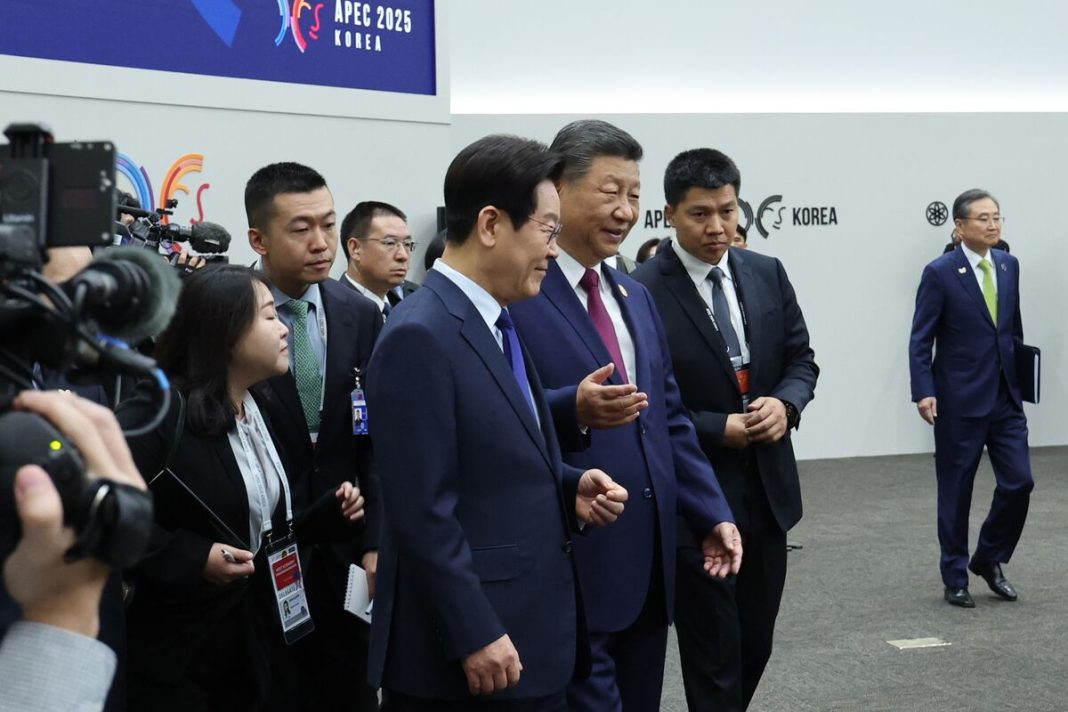
The geopolitical stage is set for a pivotal encounter in South Korea this Saturday, as leaders Xi and Lee prepare to meet. This isn’t just another diplomatic handshake; it’s a high-stakes effort to mend a relationship that has weathered significant storms. For two nations intertwined by history, economics, and regional security, the conversation couldn’t be more crucial. The world will be watching to see if this meeting can truly reset the tone and forge a more stable path forward for Northeast Asia.
The Geopolitical Tightrope: Navigating Past Tensions
The relationship between Beijing and Seoul has often resembled a diplomatic tightrope, requiring delicate balance and careful footing. In recent years, that balance has been profoundly tested. The deployment of the THAAD missile defense system in South Korea, perceived by China as a threat to its own security interests, triggered a period of significant strain. Beijing responded with informal economic measures that deeply impacted South Korean businesses, from tourism to entertainment, leaving a lasting imprint on public sentiment and economic confidence.
Beyond this specific flashpoint, both nations grapple with broader geopolitical currents. South Korea finds itself in a challenging position, balancing its long-standing security alliance with the United States against its indispensable economic ties with China. Beijing, in turn, seeks to assert its regional influence while navigating its own complex relationship with Washington. The unpredictable nature of North Korea adds another layer of complexity, often forcing both Seoul and Beijing to recalibrate their strategic priorities. This meeting is an opportunity to acknowledge these persistent challenges and, hopefully, begin to forge common ground where national interests align.
Economic Imperatives: Why Dialogue is Non-Negotiable
Despite the geopolitical friction, the economic ties binding China and South Korea are undeniable and, for many, non-negotiable. China remains South Korea’s largest trading partner, a vital market for its technological exports, from semiconductors to automobiles. Conversely, South Korean innovation and manufacturing capabilities are critical components of global supply chains, many of which run directly through China. The economic headwinds generated by past diplomatic spats proved costly for both sides, highlighting the intrinsic value of a stable, predictable commercial environment.
A successful meeting could unlock renewed cooperation in critical sectors. From climate change initiatives to advanced manufacturing and digital transformation, there are immense opportunities for mutual benefit. This isn’t necessarily about returning to an era of unbridled warmth, but rather establishing a practical, working relationship built on respect and mutual economic advantage. As Dr. Anya Sharma, a Seoul-based East Asia analyst, recently observed, “This isn’t about grand gestures, but about practical steps to ensure stability and predictability in a complex region, especially when economic interdependence is so profound.” Both leaders understand the profound impact their relationship has on their respective economies and, by extension, on regional prosperity.
A Fragile Détente, A Hopeful Horizon
The upcoming meeting between Xi and Lee is more than just a ceremonial event; it’s a critical juncture. It offers a chance to move beyond past grievances and focus on the future, fostering a more constructive dialogue. While no single meeting can erase all historical tensions or resolve every geopolitical dilemma, it can certainly lay the groundwork for a more mature and resilient relationship. For South Korea, it’s about navigating its unique position in a shifting global order. For China, it’s about securing regional stability and ensuring its economic partnerships remain robust. The path ahead will undoubtedly be complex, but the willingness to meet, talk, and seek common ground is, in itself, a significant step toward a more stable and cooperative Northeast Asia.

