


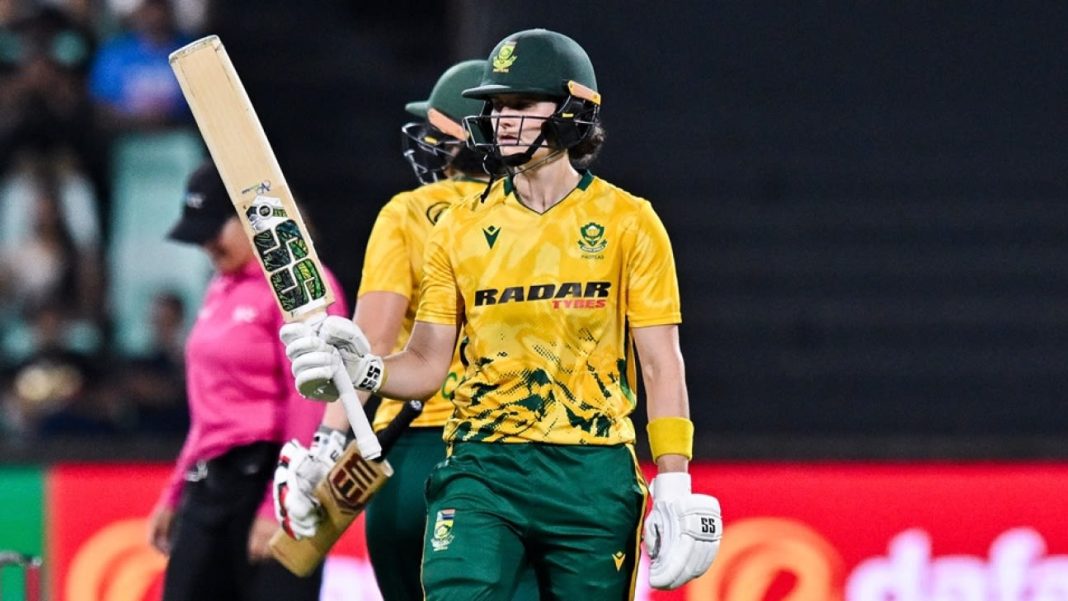
In a gripping one-day international encounter that kept cricket enthusiasts on the edge of their seats, the South African Women’s team orchestrated a remarkable chase against India, sealing a hard-fought victory. The match, which saw India’s batting lineup falter after promising starts, ultimately hinged on the calculated brilliance of South African captain Laura Wolvaardt and the emerging talent of Anneke Dercksen, who combined to navigate a tricky run-chase with composure and tactical acumen. For the Indian side, it served as a crucial lesson in converting strong positions into substantial totals and maintaining bowling discipline under pressure.
India’s Batting Struggle: A Tale of Missed Opportunities
The stage was set for India to post a formidable total, particularly on a track that offered a good balance between bat and ball. Opting to bat first, the openers displayed glimpses of aggression, but the momentum was short-lived. A series of untimely wickets, often after a batter had settled in, plagued the Indian innings. While seasoned campaigners like Harmanpreet Kaur and Deepti Sharma attempted to steady the ship with patient partnerships, the middle order struggled to accelerate consistently, leaving too much to do in the death overs.
The innings saw a promising foundation crumble under disciplined South African bowling, particularly the pacers who exploited any hint of movement and variations. The target of 228 set by India, while not entirely indefensible, appeared modest given the starts several top-order batters had managed. The inability to convert starts into big scores, coupled with a few soft dismissals, meant India fell short of the psychological 250-run mark, which could have provided their bowlers with a more substantial cushion. This performance highlighted the team’s ongoing challenge in building comprehensive innings, a critical aspect for success in international cricket.
Wolvaardt and Dercksen Steer the Ship
Chasing 228, South Africa’s innings began cautiously, losing an early wicket which amplified the pressure. However, the experienced presence of captain Laura Wolvaardt proved to be the anchor the team needed. Displaying her characteristic elegance and unflappable temperament, Wolvaardt steadily accumulated runs, piercing the field with precision and rotating the strike effectively. Her ability to absorb pressure and maintain a healthy run rate without taking undue risks was instrumental in laying a solid foundation for the chase.
The pivotal moment arrived when Anneke Dercksen joined Wolvaardt at the crease. Dercksen, often lauded for her all-round capabilities, played a knock of immense maturity. She blended aggression with caution, taking on the Indian spinners when opportunities arose, but also respecting the good deliveries. Their partnership blossomed into a match-winning stand, punctuated by well-timed boundaries and smart running between the wickets. They systematically dismantled India’s bowling plans, converting singles into twos and ensuring the required run rate remained within their grasp, ultimately steering South Africa to a comfortable victory with overs to spare.
The partnership between Wolvaardt and Dercksen was a masterclass in modern white-ball batting, demonstrating how to negate spin and pace alike under pressure. They meticulously chipped away at the target, never allowing the asking rate to spiral out of control. This composure, especially against a home crowd and a determined Indian bowling attack, spoke volumes about their mental fortitude and strategic execution.
Lessons Learned and Future Outlook
This match served as a significant learning curve for the Indian women’s team. While individual flashes of brilliance were evident, the collective effort, particularly in the batting department, needs refinement. The inability to build sustained partnerships and accelerate effectively in the middle overs proved to be costly. On the bowling front, despite some early breakthroughs, the bowlers found it challenging to break the formidable partnership that developed, underlining the need for more diverse wicket-taking options and tactical flexibility.
“This game truly underscored the importance of sustained pressure, both with bat and ball. India had moments, but couldn’t capitalize fully. South Africa, on the other hand, showed remarkable resilience and clinical execution in the chase,” noted a prominent cricket analyst post-match, reflecting on the dynamics of the game.
For South Africa, this victory will instill immense confidence, showcasing the depth of their squad and the leadership qualities of Wolvaardt. It highlights their capability to perform under pressure and chase down competitive totals. As both teams look ahead, India will be keen to address their batting inconsistencies and bowling strategies, ensuring that the promising starts translate into winning performances. The encounter was a testament to the growing competitiveness in women’s cricket, promising more thrilling contests in the future.
The cricketing world will be watching closely as India aims to bounce back, armed with the lessons from this encounter. The journey for both teams continues, with each match offering new insights and opportunities for growth.

