


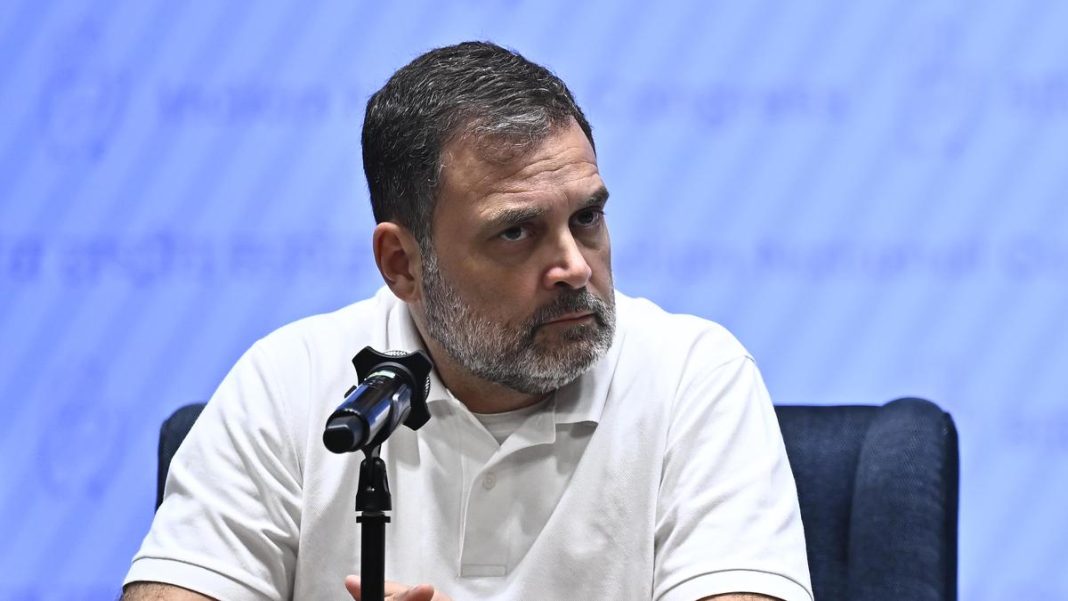
The intricate dance of international trade negotiations often brings to the forefront the delicate balance between economic growth and the protection of domestic livelihoods. In India, a nation where agriculture remains the backbone for millions, any trade deal that touches upon its farming sector becomes a subject of intense scrutiny and debate. Recently, this conversation was reignited by prominent political leader Rahul Gandhi, who voiced strong concerns about a potential U.S. trade deal, asserting that it could lead to the “betrayal of Indian farmers.” His statements have cast a spotlight on the vulnerabilities of India’s agricultural sector and the complexities involved in forging global economic partnerships.
The Allegation: Farmers’ Interests at Stake in Trade Talks
Rahul Gandhi’s criticisms specifically centered on the potential concessions India might make in a bid to secure a trade agreement with the United States. While the specifics of such negotiations are often kept under wraps until official announcements, general discussions frequently revolve around market access for U.S. agricultural products, particularly dairy and certain cash crops. Gandhi alleged that the Indian government was contemplating terms that could open up India’s vast agricultural market to heavily subsidized American farm produce, thereby jeopardizing the economic stability of millions of Indian farmers.
India’s agricultural landscape is characterized by a predominance of small and marginal farmers, whose livelihoods are often precarious, dependent on fluctuating market prices, monsoons, and access to credit. The prospect of facing competition from large-scale, technologically advanced, and government-subsidized American farms raises immediate alarms. Critics argue that such a scenario could depress domestic prices, making farming economically unviable for a significant portion of India’s agricultural workforce, potentially leading to increased distress and displacement.
Dairy Sector: A Special Concern for Indian Farmers
Among the various agricultural commodities, the dairy sector frequently emerges as a particularly sensitive point in U.S.-India trade discussions. The United States has long sought greater access for its dairy products into the Indian market. However, India’s dairy industry is a colossal, largely unorganized sector, supporting an estimated 80 million rural households, many of whom are small-scale dairy farmers. India is the world’s largest milk producer, a feat achieved primarily through a cooperative model that empowers millions of small producers.
Concerns have been raised about the potential import of U.S. dairy products, particularly those from animals fed non-vegetarian feed, which conflicts with the dietary and religious sentiments of a significant segment of the Indian population and dairy farmers. More broadly, an influx of cheaper foreign dairy could severely undermine the cooperative structure and the incomes of Indian dairy farmers. Rahul Gandhi underscored this vulnerability, stating, “Our farmers will be completely destroyed if we allow U.S. dairy to enter. India is a land of farmers, and we will not allow any deal that harms them.” This statement encapsulates the deep-seated apprehension within the farming community regarding the perceived threat to their traditional livelihoods and market share.
Navigating the Dilemma: Trade Ambition vs. Domestic Protection
The Indian government, on its part, has often emphasized the need to balance trade liberalization with the protection of vital domestic interests. While pursuing trade agreements offers potential benefits such as increased exports for Indian goods, access to foreign technology, and attracting investments, the agricultural sector presents a unique challenge. Unlike many developed nations, a substantial portion of India’s population remains directly dependent on agriculture, making it a critical social and political issue, not merely an economic one.
The current global economic climate further complicates these negotiations. Nations are increasingly looking inward, prioritizing domestic industries and employment. For India, a country already grappling with agrarian distress, any perceived move to compromise the interests of its farmers for the sake of a trade deal could face significant political backlash. The challenge lies in crafting a trade agreement that opens new avenues for economic growth without disproportionately burdening the most vulnerable sections of society. Striking this delicate balance requires shrewd diplomacy and a deep understanding of the ground realities faced by Indian farmers.
As discussions around the U.S.-India trade deal continue, Rahul Gandhi’s strong remarks serve as a potent reminder of the inherent tensions between global trade ambitions and the imperative to safeguard the livelihoods of India’s vast farming community. The outcome of these negotiations will undoubtedly have far-reaching implications, shaping not only India’s economic trajectory but also the future of its farmers.

