


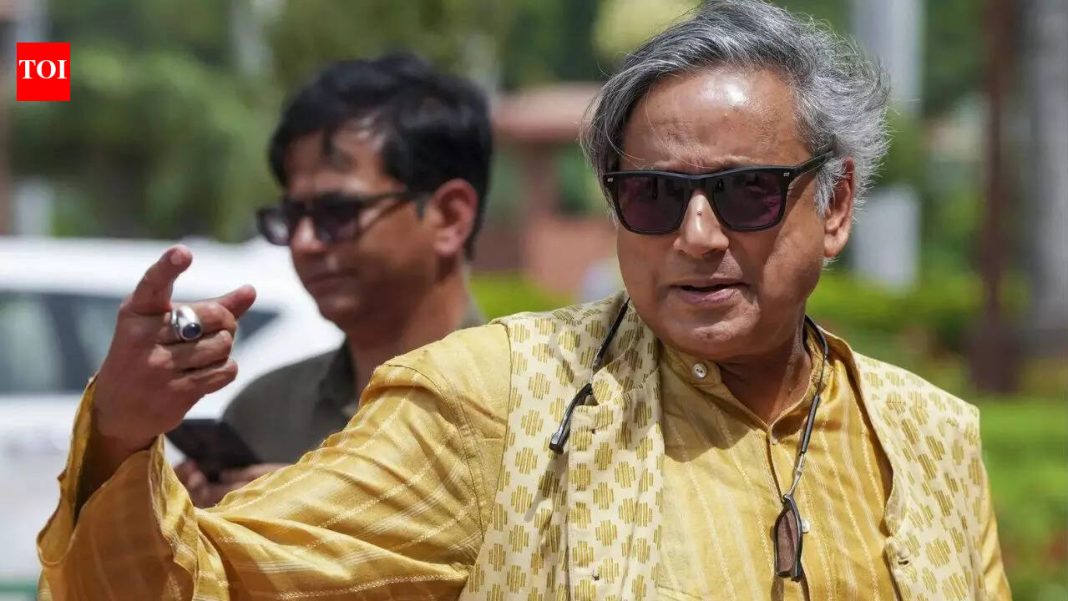
As the political temperature in Kerala rises with impending elections, the crucial issue of candidate selection often brings to the fore deeper questions about representation and equity. A recent statement by veteran Congress leader and Thiruvananthapuram MP, Shashi Tharoor, has reignited a critical debate regarding the presence of women in the political fray. Tharoor acknowledged that while there is a strong desire for greater female representation, ‘winnability’ remains a significant factor influencing parties’ decisions on ticket allocation, particularly in Kerala.
This observation by Tharoor, a prominent voice often associated with progressive thought, underscores a persistent challenge faced by Indian political parties across the spectrum. Despite consistent calls for gender parity and empowering women in decision-making roles, the actual numbers often paint a different picture, leaving many to question the sincerity of such commitments when it comes to electoral contests.
The ‘Winnability’ Conundrum in Candidate Selection
Shashi Tharoor’s remarks came amidst discussions about the relatively low number of women candidates fielded by major political fronts – the ruling Left Democratic Front (LDF) and the opposition United Democratic Front (UDF) – for the upcoming Lok Sabha elections in Kerala. While both alliances feature women candidates, their proportion remains significantly lower than their male counterparts, prompting criticism from civil society groups and women’s rights advocates.
From a political party’s perspective, ‘winnability’ is often presented as the ultimate metric. This factor encompasses a multitude of considerations: the candidate’s public appeal, their caste and community equations in the constituency, financial resources, organizational strength, and prior electoral performance. Parties frequently argue that in highly competitive elections, opting for a candidate perceived to have the highest chance of victory, irrespective of gender, is a pragmatic necessity. However, critics contend that this emphasis on ‘winnability’ can inadvertently perpetuate a cycle where women, often starting with fewer opportunities to build political capital and networks, are less likely to be seen as ‘winnable’ candidates in the first place.
In the complex tapestry of Kerala politics, where voter demographics and loyalty often play a decisive role, parties are hesitant to experiment, especially in seats they deem crucial. Tharoor’s statement reflects this internal party calculus, suggesting a tension between aspirational goals of gender equality and the perceived realities of electoral success.
Kerala’s Landscape and Women’s Political Presence
Kerala, often lauded for its high social development indicators, including literacy and women’s empowerment in various sectors, presents a nuanced scenario in terms of political representation. While women have historically been active in social movements and local self-governance institutions in the state, their entry into higher legislative bodies remains constrained. The state has seen iconic women leaders, but their numbers in the Parliament and State Assembly have rarely been proportionate to their population.
The argument for increased women’s representation extends beyond mere optics; it’s about bringing diverse perspectives to policymaking and ensuring that issues specific to women are adequately addressed. Many believe that a greater number of women in legislative bodies could lead to more inclusive governance and a focus on social welfare policies that truly impact a broader section of society. The current debate around Tharoor’s comments highlights the deep-seated structural barriers that still exist, even in a progressive state like Kerala, preventing women from achieving parity in top-tier political roles.
The call for internal reforms within political parties is growing louder. Activists argue that parties must move beyond token representation and actively mentor, promote, and provide resources to women aspirants to ensure they can compete effectively. As Ms. K. Ajitha, a prominent women’s rights activist in Kerala, once remarked in a local media interaction, “Winnability is often an excuse to maintain the status quo. If parties are serious about women’s empowerment, they must invest in making women ‘winnable’ candidates, not just pick the few who manage to break through despite all odds.“
Moving Towards Equitable Representation
The discussion sparked by Shashi Tharoor’s comments is not unique to Kerala or to the Congress party. It mirrors a nationwide debate about women’s representation in Indian politics. While the Women’s Reservation Bill, proposing 33% reservation for women in the Lok Sabha and state assemblies, has been a long-standing demand, its implementation continues to face delays. In the interim, the onus falls on political parties to voluntarily commit to fielding more women candidates.
Achieving equitable representation requires a multi-pronged approach. It involves challenging patriarchal mindsets within party structures, creating supportive environments for women politicians, and perhaps most importantly, a genuine political will to prioritize gender equality over short-term electoral gains. The ‘winnability’ factor, while seemingly pragmatic, risks becoming a perpetual barrier if not consciously addressed and mitigated through proactive measures. As Kerala prepares for another electoral battle, the spotlight on gender representation serves as a timely reminder of the unfinished agenda in India’s democratic journey.
The road to true gender parity in Indian politics is long, but the ongoing dialogue, even if sparked by contentious statements, keeps the issue alive and presses for greater accountability from those who shape the nation’s political future.

