


The Horn of Africa, a region steeped in ancient history and modern strategic importance, is once again at the nexus of a complex geopolitical discussion. At its heart lies Somaliland, a self-declared independent state that broke away from Somalia in 1991 but remains largely unrecognised internationally. Recent developments, particularly Israel’s burgeoning interest in potentially acknowledging Somaliland’s sovereignty, have thrust this region into the global spotlight, prompting critical questions about the US response – especially with the prospect of Donald Trump’s potential return to the White House.
For India, a nation with significant maritime trade flowing through the Red Sea and Gulf of Aden, and a growing strategic footprint in the Indian Ocean Region, the stability and diplomatic shifts in the Horn of Africa are not mere academic exercises. They hold tangible implications for its security and economic interests.
The Unfolding Geopolitical Tapestry: Somaliland, Israel, and Ethiopia
Somaliland, a former British protectorate, has functioned as a de facto independent state for over three decades, boasting its own government, currency, and military, often contrasted with the instability plaguing its southern neighbour, Somalia. Despite its relative stability and democratic progress, international recognition has remained elusive, largely due to concerns over violating Somalia’s territorial integrity and setting a precedent for secessionist movements elsewhere.
However, the diplomatic landscape is shifting. Israel, always keen to forge new alliances and expand its strategic influence, particularly in the Red Sea region, has reportedly been in discussions regarding Somaliland’s recognition. This move could be a part of a broader strategy, perhaps an extension of the Abraham Accords framework, aimed at normalising relations with more non-Arab nations and strengthening its regional standing. Securing access or influence in the strategically vital Bab el-Mandeb strait, through which much of global trade, including India’s, passes, would be a significant advantage.
Adding another layer of complexity is Ethiopia’s recent memorandum of understanding (MoU) with Somaliland, granting landlocked Ethiopia access to the port of Berbera in exchange for a potential stake in Ethiopian Airlines. This agreement, fiercely condemned by Somalia as an act of aggression, underscores Somaliland’s growing strategic value and Ethiopia’s desperate need for sea access. The convergence of these interests – Israel’s diplomatic expansion and Ethiopia’s logistical imperative – creates a potent cocktail that challenges traditional diplomatic norms and puts the US in a delicate position.
The current US foreign policy officially upholds Somalia’s territorial integrity and generally discourages unilateral declarations of independence without a broader regional consensus. A shift in this stance would carry significant weight, potentially reshaping the regional order and impacting international law.
The Trump Factor: Transactional Diplomacy and Regional Realignment
Donald Trump’s approach to foreign policy, characterised by a transactional mindset and a willingness to upend established diplomatic norms, introduces a unique dimension to this discussion. While Trump has not directly commented on the specific scenario of Israel recognising Somaliland, his past actions and statements provide a strong indication of how a second Trump administration might respond.
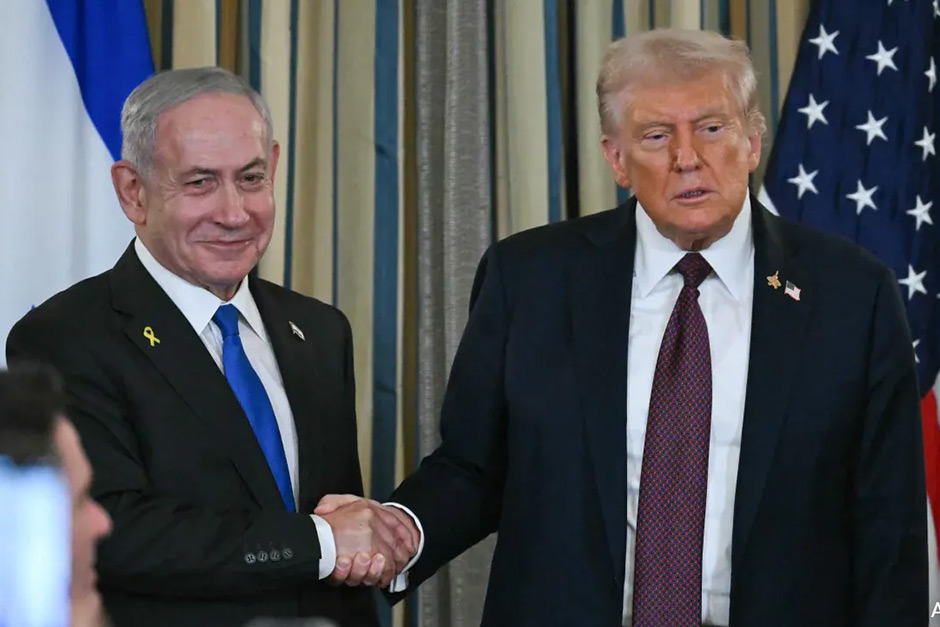
During his first term, Trump demonstrated a readiness to pursue “deals” that he believed served American interests, often prioritising immediate gains over traditional diplomatic frameworks. His administration was instrumental in brokering the Abraham Accords, which saw several Arab nations normalise relations with Israel, a move that bypassed the traditional Palestinian-Israeli peace process. This precedent suggests that a Trump White House might view Israeli recognition of Somaliland through a similar lens: if it’s perceived as a mutually beneficial “deal” for the parties involved, particularly Israel and potentially the US, the adherence to international legal norms regarding territorial integrity might be secondary.
“A second Trump administration would likely view the Somaliland recognition through a purely transactional lens, similar to the Abraham Accords,” notes Dr. Rohan Puri, a geopolitical analyst based in Delhi. “If it serves perceived U.S. interests – perhaps in countering Chinese influence in the Horn of Africa, or as a diplomatic win for Israel – traditional diplomatic norms might take a backseat in favour of a ‘deal’ that can be touted as a foreign policy success.”
Such a move by the US, if it were to back Israel’s recognition, would mark a significant departure from decades of US policy. It would signal a prioritisation of pragmatic, often bilateral, arrangements over multilateral consensus and international legal precedent, potentially empowering other breakaway regions globally.
Implications for India and Global Stability
For India, the unfolding situation presents a complex diplomatic puzzle. On one hand, India traditionally adheres to the principle of territorial integrity and non-interference, making unilateral recognition of breakaway states a difficult proposition. Any US backing of Somaliland’s recognition could set precedents that India would view with caution, given its own internal and regional sensitivities.
On the other hand, stability in the Horn of Africa is paramount for India’s strategic interests. The region lies along critical shipping lanes connecting Europe and Asia, through which a substantial portion of India’s energy imports and trade passes. Any escalation of conflict between Somalia and Somaliland, or regional instability spurred by the recognition, could disrupt these vital arteries, impacting India’s economy and maritime security. India has also been expanding its engagements in Africa, and a destabilised Horn would complicate its broader outreach efforts.
Furthermore, India maintains robust ties with both the US and Israel, as well as with Ethiopia. Navigating a situation where its key partners take a potentially contentious stance on a sensitive regional issue would require astute diplomacy. India would likely advocate for dialogue, adherence to international law, and solutions that promote regional peace and stability.
Globally, a US endorsement of Somaliland’s recognition, especially under a Trump administration, could signal a further erosion of multilateralism and a move towards an era where great power interests dictate diplomatic norms. It would test the international community’s commitment to principles of sovereignty and self-determination, potentially opening a Pandora’s Box of similar claims worldwide.
The question of whether the US will back Israel’s recognition of Somaliland is not merely a regional matter; it is a test of evolving international relations, the strength of established norms, and the unpredictable impact of transactional diplomacy. As the world watches, the Horn of Africa remains a critical barometer of global power shifts, with ripple effects extending far beyond its shores, including to distant yet deeply connected nations like India.

