


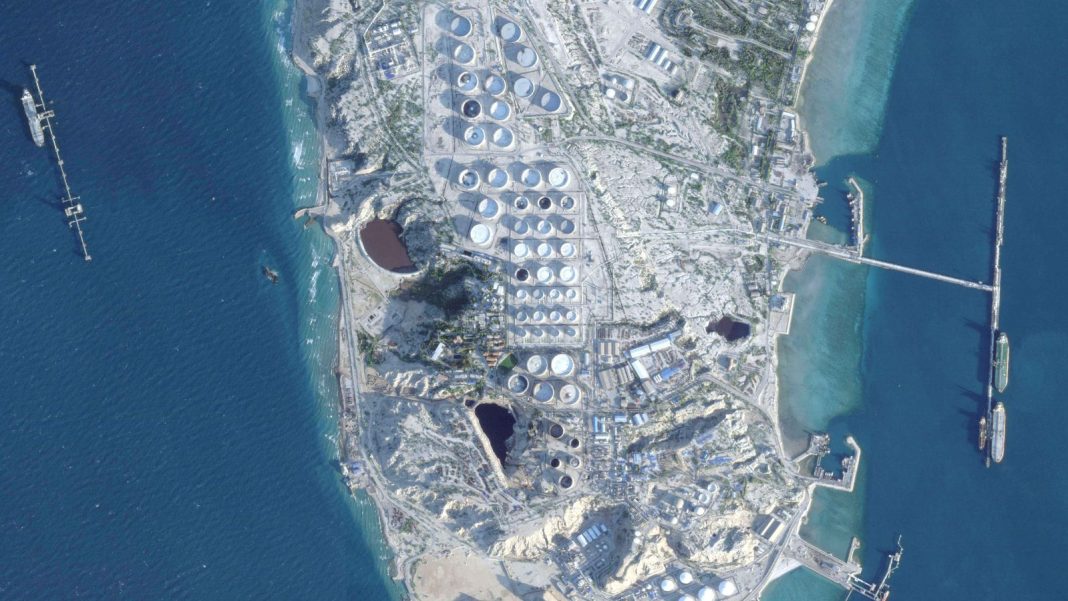
The Strait of Hormuz, a narrow choke point at the mouth of the Persian Gulf, is arguably the world’s most critical oil transit pathway. Each day, a significant portion of the world’s seaborne oil passes through its waters. Central to this strategic geography, and Iran’s crucial role within it, is Kharg Island. Located off the coast of Iran, this island serves as the primary terminal for Iranian crude oil exports. The hypothetical scenario of a US plan to seize Kharg Island, while a matter of speculative geopolitical discussion, raises alarming questions about its potential to trigger an unprecedented global energy meltdown, with profound implications for energy-dependent nations like India.
Kharg Island: The Arterial Node of Iranian Oil
Kharg Island is more than just an island; it is the beating heart of Iran’s oil industry. Boasting deepwater berths capable of accommodating supertankers, it handles the vast majority of Iran’s crude oil exports. The island’s infrastructure is specifically designed for the massive undertaking of loading, storing, and exporting crude, making it virtually irreplaceable for Iran’s energy economy. Historically, Iran has been a significant global oil producer, and even under various sanctions regimes, its capacity to export via Kharg has remained a critical factor in global oil supply dynamics. A disruption here would not merely affect Iranian revenues; it would instantaneously remove a substantial volume of crude from an already tightly balanced global market.
The sheer scale of operations on Kharg means any attempt to seize or neutralize it would undoubtedly halt all oil exports from Iran. This immediate cessation of supply would translate into an abrupt and severe shock to the international energy market. Given the world’s insatiable demand for energy and the limited spare capacity among other major producers, the sudden loss of Iranian crude would create a supply deficit that current market mechanisms would struggle to absorb. The ripple effect would be felt not just in oil prices but across the entire spectrum of global economic activities.
Geopolitical Tremors and Global Supply Shockwaves
The seizure of an asset as strategically vital as Kharg Island would be an act of war, precipitating a severe escalation of hostilities in an already volatile region. Such a conflict would almost certainly disrupt maritime traffic through the Strait of Hormuz itself, compounding the supply crisis. Insurance premiums for shipping would skyrocket, and many tankers might deem the route too dangerous, further constricting supply. Even if other Gulf producers like Saudi Arabia or the UAE wished to increase output, the security risks to their own export infrastructure and shipping lanes could severely impede their ability to do so, potentially leading to a broader regional conflict.
“Any military action in such a vital energy corridor would not merely disrupt regional stability; it would send seismic shockwaves through global markets, pushing oil prices to unprecedented levels and threatening the fragile economic recoveries of nations like India,” states Dr. Rohan Mehta, an energy security analyst at the Delhi-based Institute for Global Studies. “The economic fallout would be immediate and severe, impacting everything from transport costs to manufacturing and food prices.”
India’s Vulnerability in an Energy Crisis
For India, a nation heavily reliant on oil imports to fuel its burgeoning economy, the consequences of a Kharg Island seizure would be catastrophic. India imports over 85% of its crude oil requirements, making it the world’s third-largest consumer. A drastic surge in global crude oil prices, potentially reaching unprecedented levels of $150 or even $200 per barrel, would cripple India’s economy:
- Inflationary Spiral: Higher oil prices would directly translate to increased fuel costs, impacting transportation, logistics, and consequently, the prices of essential goods and services. Food inflation, already a concern, would worsen dramatically.
- Current Account Deficit: India’s current account deficit would balloon as its import bill soars, putting immense pressure on the Indian Rupee and potentially leading to significant capital outflows.
- Economic Slowdown: Businesses would face higher operational costs, reducing profitability and investment. Consumer spending would decline due to increased living costs, leading to a general economic slowdown or even recession.
- Geopolitical Headaches: New Delhi would face immense pressure to secure alternative supplies, navigate complex international alliances, and manage domestic unrest fueled by economic hardship.
Beyond India, the global repercussions would be equally severe. Developed economies would grapple with recessionary pressures, while developing nations, often with less economic resilience, would face humanitarian crises stemming from energy and food shortages. The interconnectedness of the global economy means that such a shock would not be contained to a single region but would cascade worldwide.
The mere prospect of military action against Kharg Island underscores the fragility of global energy security and the intricate web of geopolitical dependencies. While the scenario might be hypothetical, its potential consequences are starkly real. Ensuring stability in critical energy regions and prioritizing diplomatic solutions over military confrontation remains paramount to averting a global energy meltdown that could destabilize economies and societies worldwide, with India standing particularly vulnerable to the ensuing storm.

