


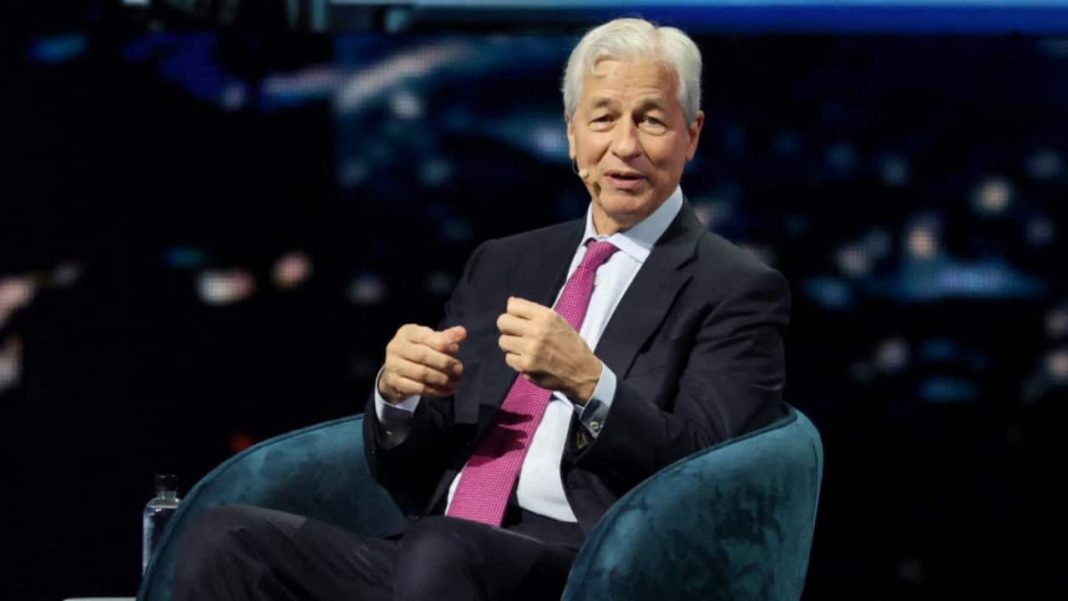
Jamie Dimon, the veteran Chairman and CEO of JPMorgan Chase, is not known for hyperbole. His pronouncements often carry significant weight, stemming from a perch that offers a panoramic view of global finance and geopolitics. Recently, Dimon has been sounding a stark warning: the ongoing conflicts, particularly the simmering tensions in the Middle East, specifically involving Iran, possess the potential to fundamentally reshape the global economic order as we know it. For a nation like India, deeply embedded in the global economy and reliant on stable energy markets, such a prediction demands close attention.
Dimon’s concerns are not merely speculative; they stem from a confluence of unprecedented global stressors. The world is grappling with two major wars—the ongoing conflict in Ukraine and the intense fighting between Israel and Hamas. These are already straining international relations, supply chains, and fiscal policies worldwide. The added dimension of a direct military confrontation involving Iran, a key player in a critical geopolitical hotspot, could, in Dimon’s view, be the catalyst for an economic upheaval unlike any seen in decades.
The Strait of Hormuz: A Global Economic Chokepoint
At the heart of Dimon’s apprehension lies the Strait of Hormuz, a narrow waterway between the Persian Gulf and the Gulf of Oman. This choke point is arguably the most strategically important oil transit channel in the world. Approximately one-fifth of the world’s total petroleum consumption, and a significant portion of its liquefied natural gas (LNG), passes through this strait daily. Iran has, in the past, threatened to close the strait in response to international pressure or sanctions.
A direct military conflict with Iran, or even widespread proxy warfare in the region, would almost certainly disrupt shipping through the Strait of Hormuz. The immediate and most severe consequence would be a massive surge in global oil and gas prices. Imagine a scenario where crude oil breaches unprecedented levels, potentially hitting $150 or even $200 per barrel. Such a price shock would reverberate through every economy, triggering runaway inflation, crippling industries, and drastically curtailing consumer spending. For India, which imports over 85% of its crude oil needs, the impact would be catastrophic. Our import bill would skyrocket, exacerbating trade deficits, weakening the rupee, and fueling domestic inflation to unbearable levels. Transportation costs would surge, affecting everything from food prices to manufacturing output.
Beyond oil, a regional conflict would severely disrupt global supply chains. Shipping routes would become perilous, insurance premiums would soar, and maritime traffic would either slow down or seek longer, more expensive alternative paths. This would affect the movement of a vast array of goods, from electronics components to essential raw materials, leading to widespread shortages and further inflationary pressures. Dimon points out that the world is already facing challenges from de-globalisation and supply chain re-shoring efforts, and a major conflict would amplify these trends, making goods more expensive and less readily available.
Beyond Energy: Geopolitical Shifts and India’s Strategic Imperatives
Dimon’s warning extends beyond immediate economic shocks to the potential for a deeper, systemic shift in the global order. A prolonged, high-stakes conflict could foster greater geopolitical fragmentation, accelerate the trend of de-dollarization among certain nations, and force countries to re-evaluate their alliances and economic dependencies. India, as a rapidly growing economy with significant geopolitical aspirations, would find itself navigating an increasingly complex and fractured international landscape.
The Middle East is also a crucial source of remittances for India, with millions of Indian expatriates working in Gulf countries. A regional destabilization could jeopardize these remittances, impacting millions of households back home and reducing foreign exchange inflows. Furthermore, India’s trade relations with the Gulf, spanning various sectors from agriculture to infrastructure, would face significant headwinds.
“We are facing so many unprecedented and often unpredictable global challenges,” Dimon recently cautioned, emphasizing that a major escalation could have “extraordinarily difficult consequences for the global economy.” This underscores the idea that the existing global economic framework, already strained by recent crises, might not withstand another major shock without significant restructuring.
For India, the implications are profound. It necessitates a strategic pivot towards greater energy security through diversification of sources and accelerated adoption of renewables. It demands strengthening domestic supply chains and fostering economic resilience against external shocks. Moreover, India’s diplomatic efforts in maintaining peace and stability in the Middle East, while protecting its own interests, become even more critical in such a volatile environment.
Conclusion: A Call for Vigilance and Resilience
Jamie Dimon’s stark predictions serve as a potent reminder of the fragility of the current global economic order. A potential conflict involving Iran is not merely a regional issue; it is a global economic earthquake waiting to happen, with cascading effects on energy markets, supply chains, and geopolitical alignments. For India, a nation deeply intertwined with global trade and energy dynamics, understanding and preparing for such potential shifts is paramount. The path forward for India lies in strategic foresight, robust economic planning, and diplomatic agility to navigate what could be a dramatically reshaped global landscape.

