


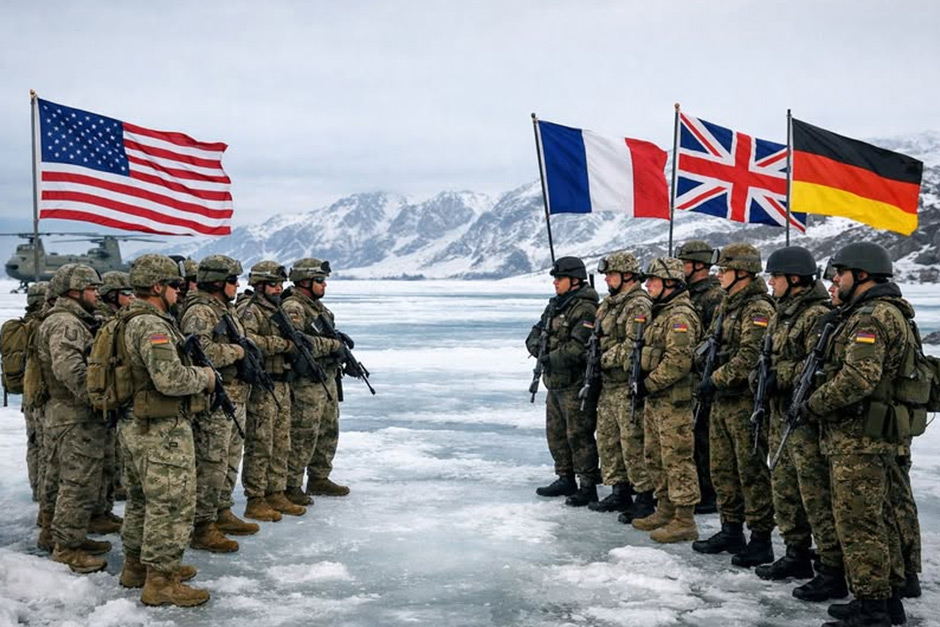
The Arctic, once a distant, frozen frontier, is rapidly thawing into a crucible of global geopolitical tension. While India grapples with its own complex regional dynamics, developments in the far north are drawing significant attention from capitals worldwide. Recent reports of Germany, France, and Canada dispatching troops to Greenland, an autonomous Danish territory, might seem perplexing at first glance. However, a deeper dive reveals a nuanced strategic calculus, significantly influenced by lingering tensions from former US President Donald Trump’s audacious proposal to purchase the island.
The Arctic: A Melting Pot of Geopolitics and Resources
The strategic importance of the Arctic region has escalated dramatically in recent years. Climate change is the primary driver, causing vast swathes of ice to melt, thereby opening up new shipping lanes – notably the Northwest Passage and the Northern Sea Route. These routes promise significantly shorter transit times between Asia and Europe, offering immense economic benefits. Beyond transit, the Arctic seabed is believed to hold an estimated 13% of the world’s undiscovered oil and 30% of its undiscovered natural gas, along with critical rare earth minerals essential for modern technology.
This immense potential has sparked a renewed scramble for influence. Russia has been aggressively militarising its Arctic coastline, reactivating Cold War-era bases and deploying advanced military hardware. China, though not an Arctic nation, has declared itself a “near-Arctic state” and is actively pursuing its “Polar Silk Road” initiative, investing in research stations and infrastructure. For Western powers, particularly European nations and Canada, maintaining stability and ensuring a rules-based order in this critical region is paramount, given the converging interests of these global players.
Trump’s Greenland Gambit and Allied Reaffirmation
The catalyst for the current heightened allied activity can be traced back to August 2019 when then-President Donald Trump publicly expressed interest in buying Greenland from Denmark. The proposal, though dismissed as “absurd” by Copenhagen, ignited a diplomatic spat and underscored Washington’s strategic focus on the vast island. Greenland, with its strategic location, massive ice sheet, and potential mineral wealth, is a vital piece in the Arctic puzzle. It hosts the Thule Air Base, the US military’s northernmost base, crucial for missile defence and space surveillance.
For Germany, France, and Canada, Trump’s unilateral proposition was not just an affront to Danish sovereignty but also a stark reminder of the potential for unpredictable actions that could destabilise the region. Their current troop deployments are, therefore, multifaceted responses:
- Reinforcing Sovereignty and Stability: By increasing their military presence and engaging in joint exercises, these nations are sending a clear message of solidarity with Denmark and reaffirming their commitment to the territorial integrity of NATO allies in the region. It’s about ensuring that any future discussions or developments concerning Greenland occur within a multilateral, collaborative framework.
- Protecting Economic and Strategic Interests: As Arctic shipping lanes become more viable, nations with significant maritime trade stand to gain or lose. Establishing a presence helps protect potential economic interests in these routes and ensures a voice in their governance. Furthermore, a presence in Greenland allows for better monitoring of resource exploitation and environmental changes.
- Scientific Cooperation and Climate Research: Greenland is on the frontline of climate change, offering invaluable data on ice melt and sea-level rise. Many of these deployments include scientific components, facilitating research and collaboration on climate monitoring, which is a shared priority for European nations and Canada.
- Counterbalancing Geopolitical Shifts: The increased Russian and Chinese activity in the Arctic necessitates a robust Western response. By coordinating efforts, Germany, France, and Canada aim to present a united front, ensuring that the Arctic does not become solely a theatre for great power competition but remains a region governed by international law and cooperation.
These deployments are not about preparing for an invasion, but rather about what geopolitical analysts term
Conclusion: A New Era of Arctic Diplomacy
The decision by Germany, France, and Canada to send troops to Greenland signals a new, more proactive phase in Arctic diplomacy. It reflects a growing understanding that the melting ice caps are opening not just new physical frontiers but also complex geopolitical challenges. From India’s perspective, closely observing these developments is crucial. The stability of global shipping routes, the implications for climate change, and the evolving dynamics of major power competition in the Arctic all have far-reaching consequences that could eventually ripple across the Indian Ocean and beyond. These deployments are a measured assertion of collective interests, aiming to ensure that the future of the Arctic remains one of cooperation and stability, rather than unchecked competition.

