


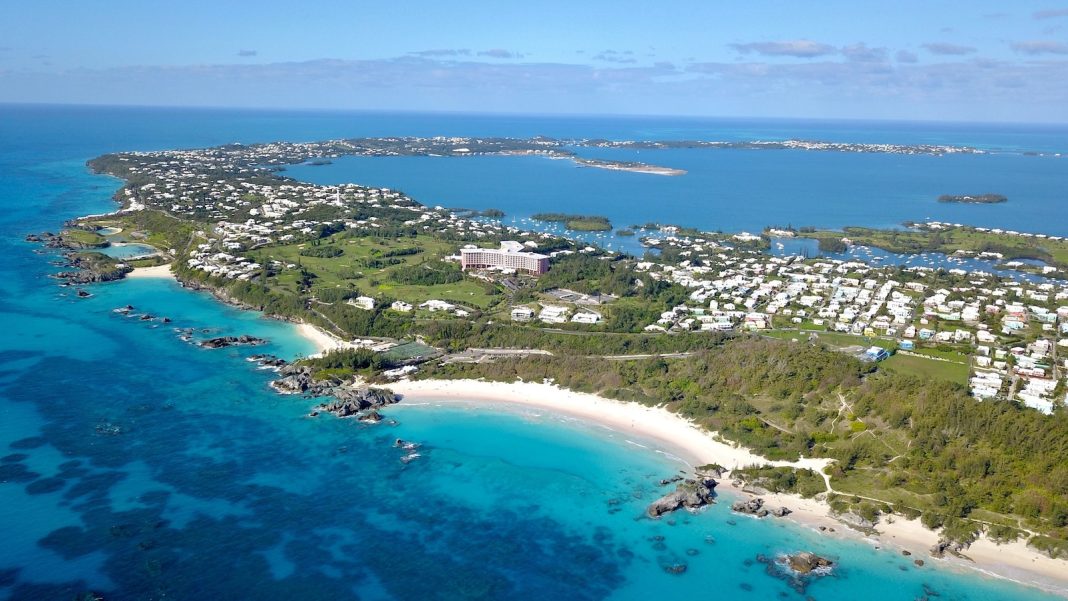
The name Bermuda conjures images of pristine pink-sand beaches, crystal-clear turquoise waters, and enigmatic maritime legends. Yet, beyond its allure, the archipelago presents a striking visual paradox to those who observe it from a distance or study its geological profile: it appears to float, rising dramatically from the vast, deep expanse of the Atlantic Ocean. For generations, this optical illusion has piqued curiosity, but now, thanks to cutting-edge scientific exploration, the answer to Bermuda’s seemingly gravity-defying presence may finally be at hand.
This isn’t a literal levitation, of course, but a perception rooted in Bermuda’s extraordinary geological foundation. Recent discoveries are unravelling the deep history of this isolated landmass, revealing a spectacular tale of Earth’s dynamic forces at play, far removed from continental landmasses.
The Illusion of Ascent: Bermuda’s Unique Position
To understand why Bermuda appears to float, one must first grasp its immediate surroundings. The archipelago sits atop an enormous, submerged plateau known as the Bermuda Pedestal. This colossal structure rises thousands of metres from the abyssal plain of the Atlantic, an ocean floor that plunges to depths of over 5,000 metres in many areas. The visible islands, themselves relatively small, are merely the coral-capped summit of this gargantuan submarine mountain range.
Imagine standing on the edge of a vast, flat desert, and suddenly encountering a mountain range that erupts from the sand. Bermuda presents a similar visual contrast; its shallow, vibrant reefs give way to an incredibly steep drop-off into the crushing depths. This abrupt transition makes the islands seem like they are perched precariously, almost weightlessly, on the ocean’s surface, detached from the deep seabed below. It’s a geological wonder, formed by processes far more profound than simple sediment accumulation.
A Mantle Plume’s Legacy: The Volcanic Revelation
The “floating” phenomenon, scientists now confirm, is directly attributable to Bermuda’s volcanic origins. Unlike many islands formed at plate boundaries, Bermuda is a classic example of “hotspot volcanism” – a phenomenon occurring far from the tectonic action of spreading ridges or subducting zones. Roughly 30 to 35 million years ago, a mantle plume – an upwelling of superheated, buoyant rock from deep within Earth’s mantle – punched through the oceanic crust.
This plume created a massive submarine volcano that erupted for millions of years, slowly building the vast seamount that now forms the Bermuda Pedestal. Over geological timescales, as the plume’s activity waned and the oceanic crust moved over it, the volcano became extinct, cooled, and began to subside. However, its immense bulk remained significantly elevated compared to the surrounding abyssal plains. On top of this subsiding volcanic edifice, coral polyps began to thrive, building layer upon layer of limestone that eventually formed the visible islands we know today. Scientists have used seismic imaging and deep-sea drilling to map these ancient volcanic layers, confirming the bedrock’s igneous composition beneath the coral cap.
“Bermuda is a geological anomaly, a testament to the dynamic forces deep within our planet,” says Dr. Ananya Sharma, a prominent Indian marine geophysicist. “Understanding its formation not only solves a long-standing mystery but also provides crucial insights into mantle dynamics and hotspot volcanism worldwide. It reminds us that our Earth is a living, breathing entity, constantly reshaping itself.”
Global Echoes: Unravelling Earth’s Dynamic Crust
The scientific discoveries concerning Bermuda’s formation extend far beyond the archipelago itself. They provide invaluable data for understanding how other oceanic islands, such as the Hawaiian chain or the Galápagos, are formed and evolve. Bermuda stands as a unique case study, its isolation and the clear evidence of its deep-seated volcanic origins offering a natural laboratory for geophysicists.
These studies contribute significantly to our broader understanding of plate tectonics, the movement of Earth’s crustal plates, and the role of mantle plumes in shaping planetary surfaces. Such research is vital for predicting seismic activity, understanding deep ocean currents, and even modelling the long-term impacts of climate change on vulnerable island ecosystems globally. The sophisticated techniques employed, from sub-seafloor mapping to geochemical analysis of rock samples, underscore the collaborative and increasingly global nature of modern scientific inquiry.
Ultimately, the enigma of Bermuda’s “floating” appearance is being demystified by the relentless pursuit of knowledge. It is not an act of magic, but a grand monument built over millions of years by Earth’s internal heat and geological processes. This scientific elucidation not only resolves a curious visual puzzle but also offers profound lessons about our planet’s relentless and awe-inspiring geological journey, reminding us of the wonders still hidden beneath our oceans.

