


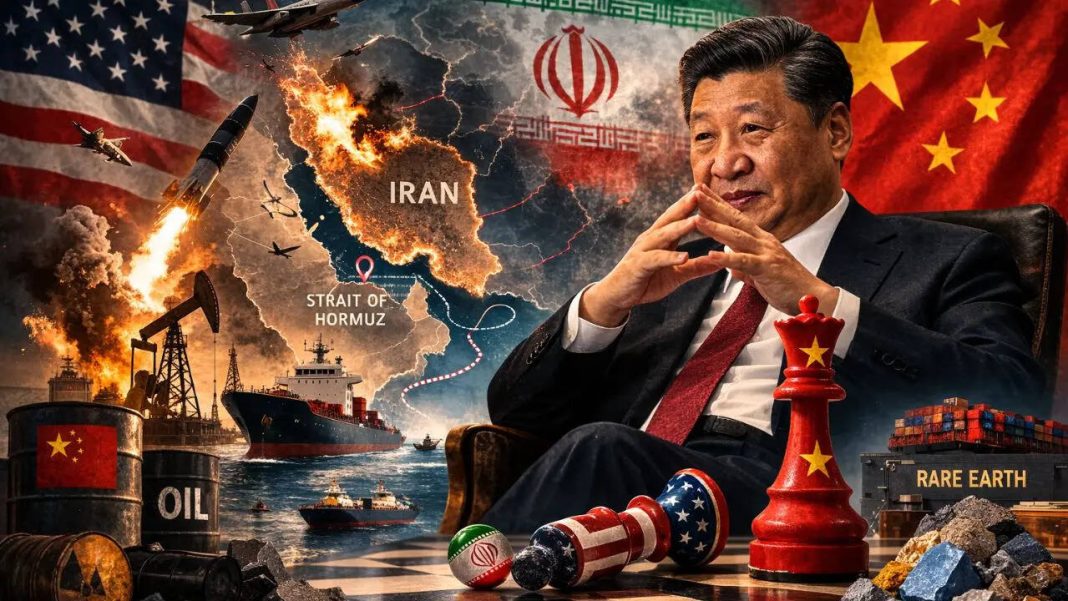
The Middle East remains a geopolitical tinderbox, its volatility a constant source of global anxiety. For nations like India, heavily reliant on the region for energy and trade routes, any significant escalation involving Iran sends shivers down the spine of policymakers and economists alike. Yet, amidst the potential chaos and human tragedy of an “Iran War” – whether a direct conflict or an intense proxy struggle – one major global power might quietly be positioning itself to emerge not just unscathed, but strategically stronger: China.
While the world grapples with the immediate fallout of such a scenario, Beijing’s long-term, calculated strategy in the region, coupled with its deepening ties with Tehran, suggests a unique capacity to weather the storm and even profit from it. This isn’t about military intervention but about economic leverage, diplomatic maneuvering, and the exploitation of geopolitical vacuums.
China’s Deep Economic Foothold and Sanctions Immunity
China’s relationship with Iran is not new, but it has intensified dramatically in recent years, particularly in the face of escalating Western sanctions. The cornerstone of this relationship is the 25-year “Comprehensive Strategic Partnership” signed in 2021, a multi-billion dollar agreement encompassing investments in Iran’s energy, infrastructure, military, and telecommunications sectors. This deal effectively grants China preferential access to Iranian oil and gas, often at discounted rates, while shielding Tehran from the full impact of US-led sanctions.
Should tensions escalate into an outright conflict, Western nations would likely impose even harsher sanctions and attempt to isolate Iran economically. However, China, with its vast economy and independent financial systems, is uniquely placed to continue trade and investment. While other global players, including India, might find their options severely restricted by international pressure and logistical challenges, China could continue to be Iran’s primary market for oil, potentially securing even more advantageous prices as other buyers withdraw. This ensures a steady supply of energy for China’s burgeoning economy, a strategic advantage that few others possess in such a volatile scenario. For India, this means increased competition for a dwindling pool of non-sanctioned oil and potentially higher prices, impacting its energy security significantly.
Geopolitical Realignments and US Distraction
An escalated conflict involving Iran would inevitably consume a significant portion of US diplomatic, military, and economic resources. Washington’s focus, already stretched by global challenges, would be heavily drawn to stabilizing the Middle East, managing regional alliances, and potentially confronting Iranian proxies. This diversion of attention and resources is a strategic gift for Beijing.
With the United States preoccupied, China gains invaluable strategic space to pursue its own geopolitical ambitions, particularly in the Indo-Pacific. Issues like Taiwan, the South China Sea, and its expanding influence across Africa and Latin America could be advanced with less direct scrutiny and pressure from Washington. As a seasoned strategic analyst, Dr. Vikram Singh, noted, “A prolonged conflict in the Middle East would inevitably divert Washington’s focus and resources, providing Beijing with a critical window to consolidate its influence elsewhere, particularly in the Indo-Pacific.” This shift would subtly but significantly alter the global balance of power, allowing China to deepen its economic and military reach in key regions, potentially challenging India’s own strategic interests in its neighborhood.
The Belt and Road Initiative and Post-Conflict Opportunities
Iran occupies a critical geographical position in China’s ambitious Belt and Road Initiative (BRI). As a land bridge connecting East Asia to Europe and a significant maritime player in the Persian Gulf, Iran is indispensable to China’s vision of global connectivity. While conflict might temporarily disrupt these routes, it could paradoxically create even greater long-term opportunities for China.
Post-conflict reconstruction in Iran, or in other affected regional states, would necessitate massive investments in infrastructure. Chinese companies, with their experience in large-scale projects and state-backed financial muscle, would be prime candidates for such rebuilding efforts. This wouldn’t just be about contracts; it would be about further embedding Chinese influence, standards, and even security arrangements within these nations. Moreover, a region destabilized by conflict might find itself more reliant on Chinese goodwill and investment for recovery, strengthening Beijing’s diplomatic and economic leverage. The adoption of the yuan for trade, especially if dollar transactions become cumbersome due to sanctions, could also accelerate China’s goal of de-dollarization, further solidifying its financial power.
While an Iran conflict would undoubtedly bring immense suffering and instability to the region and pose significant challenges for global economies, particularly for India’s energy and trade stability, China’s strategic patience and deep-seated economic ties position it uniquely. By maintaining its crucial economic lifeline to Tehran, benefiting from US distraction, and poised to capitalize on post-conflict reconstruction, Beijing might quietly emerge as the most significant, albeit unseen, geopolitical beneficiary. As the world watches the Middle East with bated breath, China’s calculated moves deserve close scrutiny, as they could reshape the global order for decades to come.

