


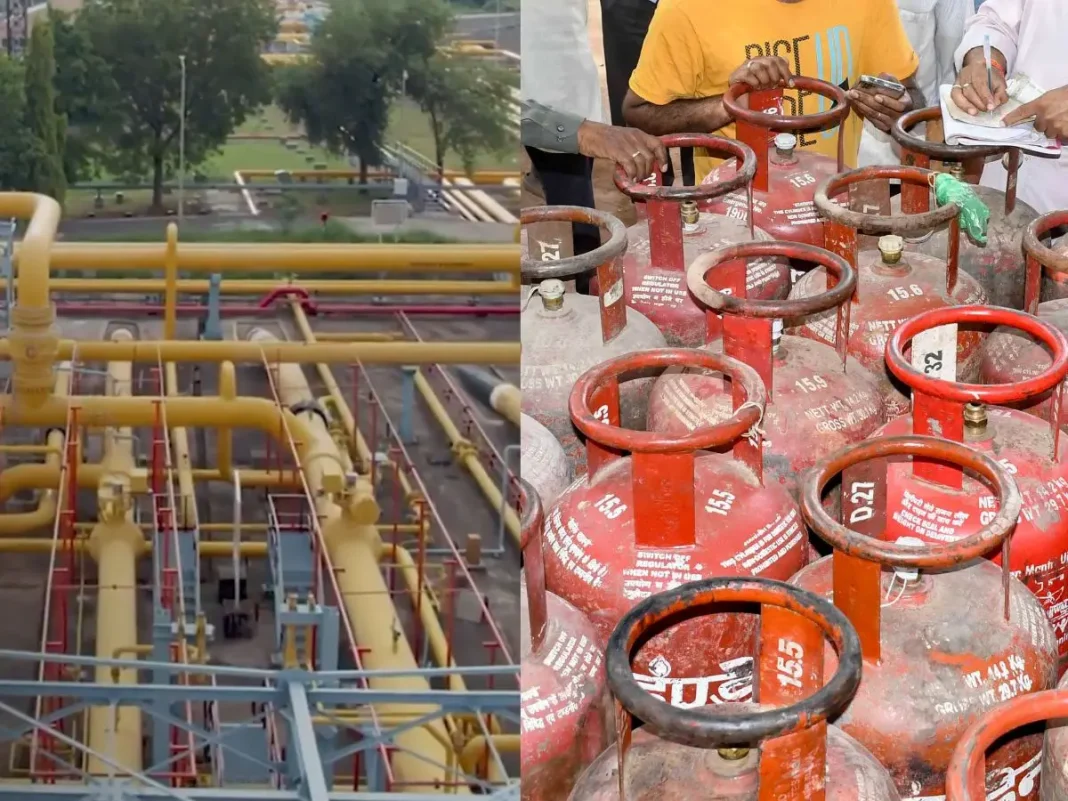
The rhythmic sizzle of a tadka, the fragrant aroma of spices, and the gentle flame beneath a kadai — these are quintessential sounds and sights of an Indian kitchen. At the heart of this culinary experience lies the fuel source, a choice that significantly impacts daily life: Liquefied Petroleum Gas (LPG) cylinders or Piped Natural Gas (PNG) connections. While both serve the fundamental purpose of cooking, they represent distinct systems, each with its own advantages and challenges, shaping how millions of Indian households manage their energy needs.
LPG vs. PNG: A Fundamental Divide
Understanding the core difference between LPG and PNG is crucial. LPG, or Liquefied Petroleum Gas, is a mixture of hydrocarbon gases, primarily propane and butane, that are compressed and stored as a liquid in metal cylinders. When released, it vaporizes into a gas, ready for combustion. Its primary characteristic is its portability – a cylinder can be transported and used wherever needed, making it accessible even in remote areas.
In contrast, PNG, or Piped Natural Gas, is predominantly methane, delivered directly to homes through a network of underground pipelines. Unlike LPG, it remains in a gaseous state throughout its journey from the source to the burner. This constant flow eliminates the need for storage units within the household, presenting a stark contrast in logistics and user experience.
Beyond their chemical composition and delivery mechanisms, other distinctions are significant. LPG is typically heavier than air; in case of a leak, it tends to settle near the floor, posing a potential safety hazard if not ventilated. PNG, being lighter than air, dissipates more readily into the atmosphere, often making it inherently safer in residential settings. Billing for LPG is on a per-cylinder basis, requiring advance payment, whereas PNG operates on a metered system, similar to electricity or water, where consumers pay for the exact volume consumed, usually on a monthly or bi-monthly cycle.
Convenience, Cost, and Connectivity: The Indian Kitchen’s Choice
For Indian households, the choice between LPG and PNG often boils down to a blend of convenience, cost-effectiveness, and availability. LPG has historically been the backbone of Indian kitchens, reaching even the most rural pockets through an extensive distribution network. Schemes like the Pradhan Mantri Ujjwala Yojana have further expanded its reach, bringing clean cooking fuel to millions who previously relied on traditional, polluting sources.
However, LPG comes with its own set of logistical challenges. Running out of gas often means booking a cylinder, waiting for delivery, and the physical effort of replacing an empty cylinder with a full one. Price fluctuations, driven by global crude oil prices and government subsidies, can also impact household budgets. Despite these, its ubiquity ensures it remains a vital energy source for a vast majority.
PNG offers a seamless, uninterrupted cooking experience. The primary advantage is the continuous supply; there’s no risk of running out of gas mid-meal or the hassle of booking and storing cylinders. Its direct pipeline delivery also frees up valuable kitchen space. While the initial installation cost for a PNG connection can be a deterrent for some, the long-term operational costs are often perceived as more economical and predictable due to lower unit prices and the absence of delivery charges. “The shift towards cleaner cooking fuels is not just about convenience; it’s a significant leap towards improving public health and reducing indoor air pollution, a vision central to India’s energy future,” states a prominent energy analyst, highlighting the broader societal impact of this transition.
The major limitation for PNG is its infrastructure dependency. It is primarily available in urban and semi-urban areas where City Gas Distribution (CGD) networks have been established. While these networks are rapidly expanding across various cities, they still don’t match the nationwide reach of LPG. This disparity means that for many, particularly in smaller towns and rural areas, LPG remains the only viable modern cooking fuel option.
India’s kitchens are a dynamic landscape, reflecting the nation’s energy journey. Both LPG cylinders and PNG pipelines play indispensable roles in this evolution. While LPG continues to provide essential access to clean cooking fuel across diverse geographies, PNG is increasingly becoming the preferred choice for urban households seeking convenience, safety, and potentially greater cost efficiency. The continued expansion of both these networks, supported by government initiatives and technological advancements, will undoubtedly shape the future of cooking in India, moving towards a cleaner, more efficient, and accessible energy ecosystem for all.

